
Reviewed · CROSS-BORDER BALKANS TRIPS
Montenegro, Kosovo & North Macedonia in 3 Days from Tirana
Kotor’s stone lanes, Budva’s seaside walls, Prizren’s old bazaar, and Ohrid’s lakefront churches give this trip its punch. In just three days, you cross four Balkan countries, with a guide such as Engjell or Redi Boraj explaining the history, politics, and daily life behind the sights.
I like the small maximum group of eight, which makes a long road trip easier to manage, and I like that two hotel nights with breakfast, entry fees, taxes, transport, and guiding are bundled into the price. The trade-off is time: you will cover a lot of ground, and several stops are short introductions rather than relaxed visits.
Key points at a glance
- Four countries in three days: Albania, Montenegro, Kosovo, and North Macedonia fit into one tightly planned route.
- Kotor gets the longest first-day visit: Allow roughly four hours for the old town, with extra time at the Sea Gate and St. Tryphon Cathedral.
- A small group helps on long drives: The vehicle carries no more than eight people, and pickup is offered from your Tirana hotel.
- Two nights are included: You sleep in Shkoder after the first day and Skopje after the second, with breakfast both mornings.
- Ohrid is the grand finish: The final day combines the old city, Tsar Samuel’s Fortress, and the famous Kaneo bay.
- The pace is the main concern: Lunch and dinner are extra, and the published route does not describe a return to Tirana after Ohrid.
Four countries, one very full Balkan route
This is not a slow holiday built around long lunches and free afternoons. It is a compact regional sampler that links some of the most recognizable old towns and cultural centers in the western Balkans.
You begin at 7:00 am in Tirana, travel north through Albania, cross into Montenegro, return to Albania for Shkoder, then continue through Kosovo and North Macedonia. By the end, you have seen Adriatic towns, inland Ottoman-era streets, modern capitals, medieval fortifications, and Lake Ohrid.
That variety is the chief reason to book. If you have only a few days and want to understand how close these countries are to one another, the route gives you a useful first look. You will not study any one city at leisure, but you will see how quickly the scenery, language, architecture, and historical focus change across borders.
The experience is offered in English, with hotel pickup and an air-conditioned vehicle. A group limit of eight matters here. Long drives and border crossings are much more tolerable when you are not moving a large coachload of people.
More cross-border Balkan runs:
- Semi-Private Tour of North Macedonia: Ohrid & Struga from Tirana
★ 5.0 · 170 reviews - North Macedonia: Ohrid & Saint Naum Day Tour from Tirana
★ 5.0 · 151 reviews - Day Tour of Kosovo from Tirana, Pristina and Prizren
★ 5.0 · 93 reviews
Day 1: Rozafa, Kotor, Budva, and Shkoder
The first morning begins with an early departure from Tirana. Northern Albania starts out fairly flat, passing through the trading and industrial zone around Lezha before the route follows the Buna River toward Montenegro.
There is a quick stop near Rozafa Castle. The time listed is brief, so treat this as a chance to stretch your legs and take in the setting rather than a full castle visit. Rozafa is closely tied to the legends and identity of northern Albania, and it gives the day an Albanian opening before the route crosses the border.
Kotor’s Sea Gate and old town
Kotor is the day’s main event. The town sits at the head of the Bay of Kotor, a striking setting that helped make it a strategic and trading center for centuries. Its strongest architectural character comes from the period under Venetian rule, though the town’s story reaches much further back.
The walk begins near the marina and enters the old city through the Sea Gate. From here, expect a guided stroll through small squares, narrow lanes, and historic buildings. The old center is compact enough to explore on foot, but its stone paving and uneven surfaces call for sensible shoes.
The schedule gives Kotor about four hours, including the old town. That is a useful amount of time for a first visit. You can see the principal streets and monuments without feeling that you have only stepped out of the vehicle for a photograph.
St. Tryphon Cathedral receives a shorter visit of about 20 minutes. It is one of Kotor’s oldest major buildings and one of the key sights in the old center. The short stop works well if your guide gives you the essential background, though anyone wanting a detailed look at every interior feature may find the timing tight.
Kotor is also the point where the trip’s pace becomes clear. The bay, walls, churches, and old lanes could easily fill a day. Here, you get a focused introduction before moving on.
Budva’s walls and coastal old town
After Kotor, the vehicle follows Montenegro’s southern coast toward Budva. The drive includes views of the Riviera and small rocky beaches, though the route is primarily a transfer between sights rather than a beach stop.
Budva has a long past, with origins reaching back about 2,600 years, but it is also one of Montenegro’s main resort towns. That mix gives the visit two different moods: old stone lanes inside the walls and a modern tourism center outside them.
The tour spends about an hour at the city walls, followed by a short visit to the dancing girl statue, Roman remains, and the coastal fortress. The old town’s narrow streets are well suited to wandering, and you have some free time for local shops and lunch.
Lunch is not included, so plan to pay separately. The schedule does not name a restaurant or set a meal menu, which gives you flexibility but also means you should not count on a long sit-down meal. Keep your stop efficient if you want time to look around.
Budva is a good contrast with Kotor. Kotor feels more enclosed and layered around its old squares, while Budva brings in the sea, fortress walls, and a stronger resort-town feel. The visit is short, but it offers enough to decide which place you would like to revisit at a slower pace.
A few more Tirana half-days to weigh up
- Hiking Tour of Valbona, Theth & Blue Eye in 3 Days from Tirana
★ 5.0 · 73 reviews - Semi-Private Hiking Tour; Theth, Valbona & Koman Lake in 3 Days
★ 5.0 · 28 reviews - Self-Guided Hiking Tour: Theth, Valbona & Koman Lake in 3 Days
★ 5.0 · 26 reviews - Albanian Riviera in 3 Days;Semi–Private Tour with Tour Leader&Car
★ 5.0 · 16 reviews
Shkoder after the border crossing
The route returns to Albania for the final stop in Shkoder, known as the capital of the north. The city is described as one of Albania’s oldest, with links to the Illyrian Kingdom, Lake Shkoder, and the stories surrounding Rozafa Castle.
About three hours are allocated here, and the night is spent in Shkoder. This overnight is practical rather than decorative. It breaks up the long first day and positions you for the drive into Kosovo on day two.
Shkoder’s appeal is not limited to monuments. The city is also presented as a place of welcoming locals and a distinct northern Albanian character. You have more time here than at several of the day’s coastal stops, though the exact evening program is not specified. Ask your guide how the available time will be used.
Day 2: Prizren’s bazaar and Pristina’s modern edge
Day two leaves Shkoder for Kosovo. This is another substantial road day, but the character changes. You move from Adriatic and Venetian settings into towns shaped by Albanian political history, Ottoman-era buildings, modern Kosovo, and the region’s recent past.
Prizren and the Albanian League
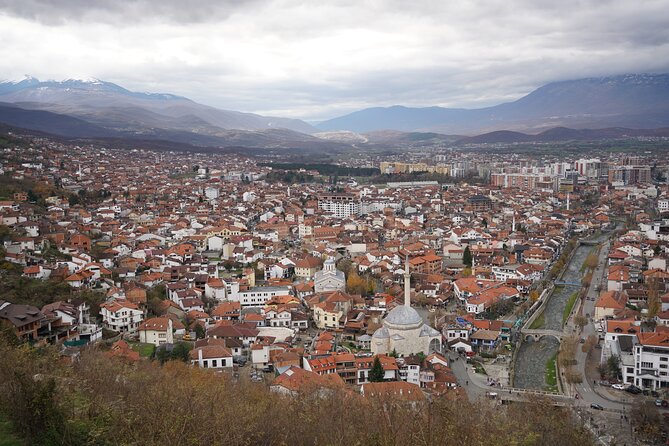
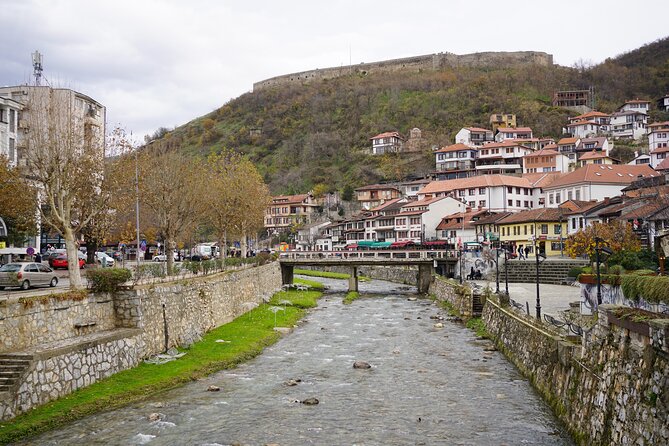
Prizren is often called Kosovo’s cultural capital, and the town’s setting makes a strong first impression. It lies along the Bistrica River below Prizren Castle, with the old streets gathered around the water and the historic center.
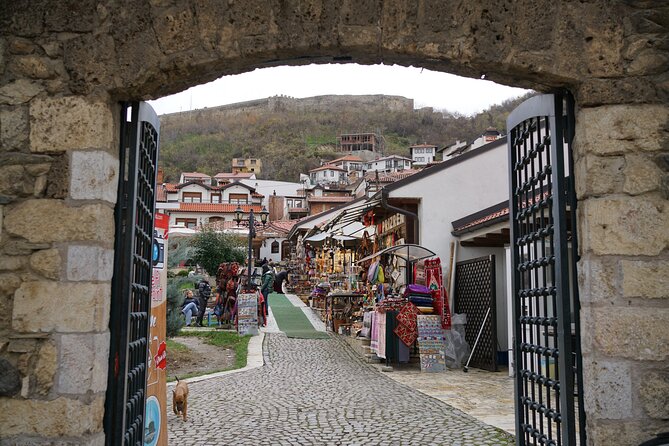
The tour allows about two hours for the town. That is enough for a useful walk through the central area, but not enough for every museum, viewpoint, and side street. The river, old bridge, castle setting, and traditional bazaar give you the basic shape of Prizren.
The House of the Albanian League of Prizren receives a separate visit of about 20 minutes. This building marks a major political moment in 19th-century Albanian history, when leaders organized around independence and the creation of a parliament and government. The ethnographic museum inside adds household and cultural context to the political story.
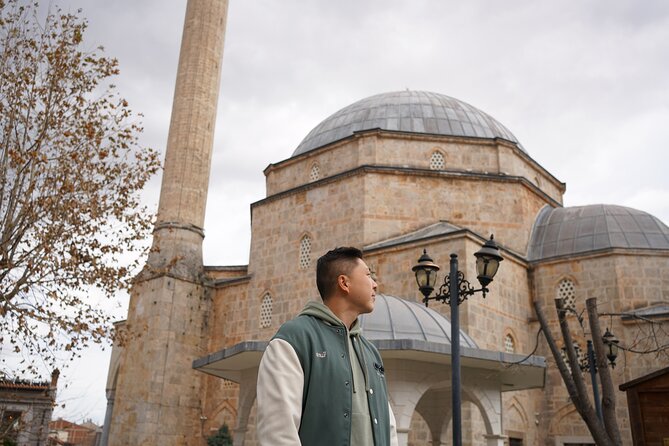
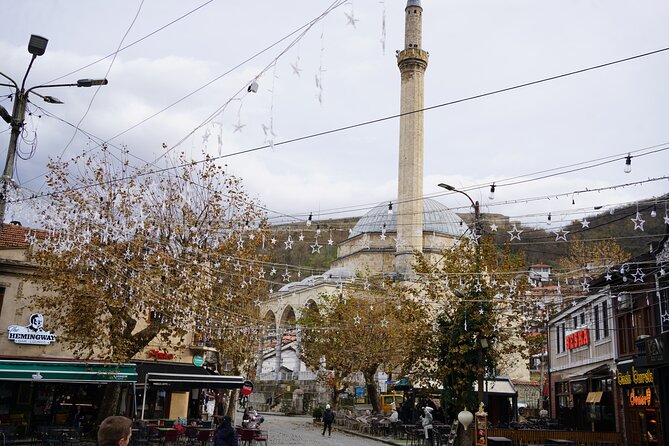
The stop at Sinan Pasha Mosque is brief, listed at about 15 minutes. From there, the route continues toward the Stone Bridge of Love and the traditional bazaar. Handcraft and perfume shops line the old streets, and this is one of the best places on the route to make room for a traditional lunch.
Prizren may be the place where you most wish for extra time. Its value comes from the way the river, mosque, bridge, bazaar, and political history sit close together. The scheduled visit gives you a strong outline, but you will need to return later if you want a slow look at the town.
Pristina and the National Library
Pristina is Kosovo’s capital and largest city. It brings a different rhythm from Prizren, with modern civic life layered over a settlement whose history reaches back to the Vinča culture and the Old Stone Age.
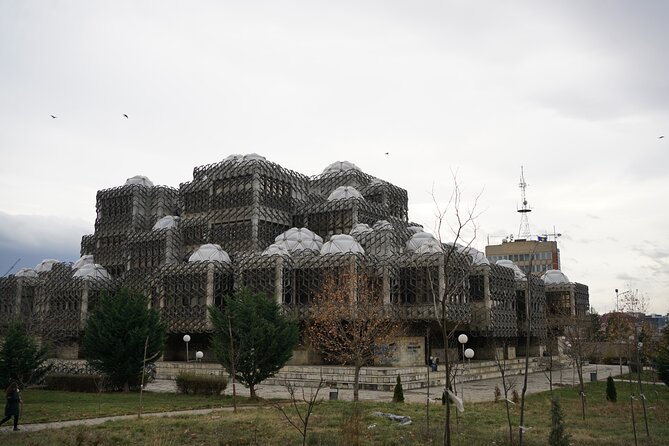
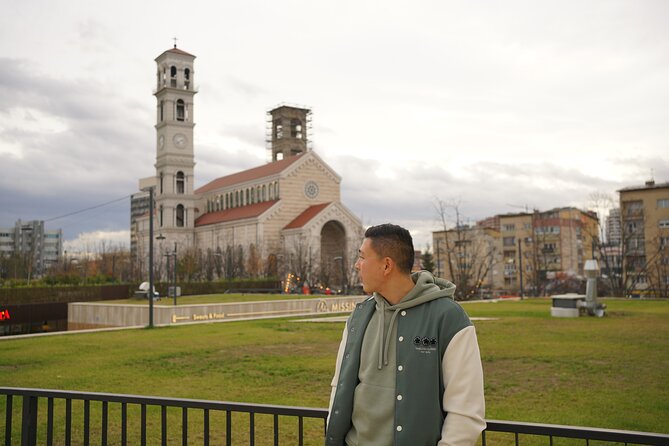
The city tour lasts about an hour, followed by another hour focused on the National University Library of Kosovo, the cathedral, and older neighborhoods. The library is a distinctive stop, and the combination of religious buildings, public architecture, and old streets gives you a broad introduction rather than a single-theme visit.
You should approach Pristina as a city tour, not as a museum day. The timing is designed to show you important parts of the capital before the route continues. If you prefer old towns and scenic viewpoints, Prizren will likely be the stronger stop. If you want a sense of present-day Kosovo and its capital, Pristina supplies that contrast.
The route then continues to Skopje, where you spend the second night. Only about an hour is assigned to the Skopje stop on day two, so the more complete city visit comes the following morning.
Day 3: Skopje’s two faces and Ohrid’s lakefront
Skopje begins early. The city is North Macedonia’s main economic, political, and cultural center, and the tour presents it as a place divided and connected by the Vardar River.
One side reflects contemporary Skopje, including rebuilding after the devastating earthquake of 1963. The other leads into the old quarter, where historic religious buildings, market streets, and the fortress tell a different part of the city’s story.
Kale Fortress and Mother Teresa
The morning starts at Skopje Fortress, also called Kale. The visit is scheduled for about an hour, giving you time to take in the fortification and its position above the city.
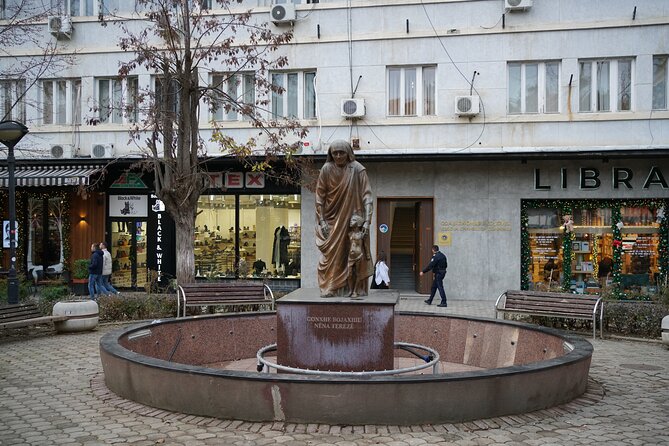
The tour then moves through bridges, the main square, and several of Skopje’s statues before visiting the Memorial House of Mother Teresa. The house honors the city’s connection with Mother Teresa and adds a personal story to a city often presented through public monuments.
Skopje is known for its many statues and memorials, so this part of the tour helps you read the city’s visual language. You will see how older structures and newer civic projects occupy the same urban space. The route is not just a list of monuments; it is a quick lesson in how Skopje has represented its past.
Kapan Han and religious landmarks
Kapan Han adds another layer. This historic inn is linked to the old commercial quarter, and the visit continues into the city’s Ottoman-era streets.
The itinerary also includes St. Clement of Ohrid Church and Mustafa Pasha Mosque. Together, these buildings show the religious variety that has shaped Skopje. The tour’s stated focus on religious tolerance is especially useful because it connects architecture with the city’s communities and changing political eras.
About 20 to 25 minutes are assigned to some of these individual sights. You will get the guide’s explanation and a look at the buildings, but you should not expect long interior visits at each one.
Ohrid and the road’s final reward
The final major stop is Ohrid, on the shore of Lake Ohrid. The lake is described as one of the oldest in the world, while Ohrid itself is counted among Europe’s oldest human settlements. The town has also been an important meeting point for different cultures, traditions, and invading powers.
Ohrid is known as the Jerusalem of the Balkans because of its role in the spread of Slavic Orthodoxy. The town is associated with hundreds of churches, including many dating from the 11th century. Even with limited time, the old streets and religious sites give the day a strong finish.
The visit lasts about three hours, with another hour assigned to Tsar Samuel’s Fortress. The fortress provides the high point of the walk, both literally and historically. From there, the route descends through the old city toward Kaneo Bay.
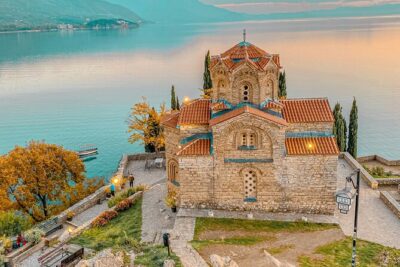
St. John at Kaneo is one of Ohrid’s most photographed sights, perched above the water at the bay. The location brings together the lake, the old town, and the church in one memorable view. The tour ends in the lower part of Ohrid, where different sections of the town and two religious traditions meet.
Ohrid is the most scenic finale on the route, but the trip ends there according to the published schedule. If you need to return to Tirana, confirm the onward plan before booking. No return transfer is specified.
What the $776.65 price covers
At $776.65 per person, this is an expensive three-day outing, but the number needs context. You are paying for cross-border transport, an air-conditioned vehicle, an English-speaking guide, two nights in good three-star hotels, two breakfasts, entry admissions, taxes, and hotel pickup.
That package can offer fair value if you want the logistics handled for four countries. Planning this route alone would mean arranging border crossings, hotels in two different cities, several entrance fees, and a transport plan that connects places not always served by simple tourist routes.
The price does not include lunch, dinner, or tips. Set aside money for meals each day. The absence of included lunches is not unusual, but it matters because the schedule leaves little room for finding food slowly, especially on the first day.
The group cap of eight is a major part of the value. A larger vehicle might lower the per-person price, but it would make pickup, border procedures, and short walking tours slower. Here, the small format should make it easier to hear the guide and stay on schedule.
Two guides praised for their work are Engjell and Redi Boraj. Engjell is described as giving detailed explanations about the history, economy, and culture of the region, while Redi Boraj is described as friendly, helpful, and well prepared across the different cities. A particular practical detail is that Engjell was a non-smoker, which matters on a long drive in a shared vehicle. Guide assignments can vary, so treat those names as examples rather than a guarantee.
Who will enjoy this trip most
You should consider this tour if you want maximum geographic range in minimum time. It suits a first visit to the Balkans, a short break from Tirana, or a trip for someone who values a guide and ready-made transport more than free time in each city.
It is also a good fit if you enjoy history presented through places. Kotor brings Venetian influence, Prizren brings Albanian political history, Skopje brings religious and civic contrasts, and Ohrid brings medieval churches and lake scenery.
The pace will suit you less if you want long café stops, independent museum visits, beach time, or evenings planned around local restaurants. Three days can show you the region, but it cannot give every city the attention it deserves.
You also need to be comfortable with early starts and repeated border crossings. The first departure is at 7:00 am, and the route covers a great deal of ground. Most people can take part, but the amount of walking, uneven old-town paving, and time spent in the vehicle should be considered.
When you book, provide your Tirana hotel address for pickup. Confirmation is sent within 48 hours, subject to availability. The group has a maximum of eight people, and free cancellation is available up to 24 hours before the start time. If the minimum group size is not reached and the operator cancels, you are offered another date or experience, or a full refund.
Should you book Montenegro, Kosovo, and North Macedonia in three days?
Book it if your priority is seeing a wide slice of the Balkans without arranging the transport yourself. Kotor, Budva, Prizren, Skopje, and Ohrid are a powerful set of stops, and the small group, hotel nights, breakfast, guide, and entrance fees remove much of the planning work.
Skip it if you want a leisurely trip. Kotor, Prizren, and Ohrid each deserve more time than this route can give, and the schedule does not list a return to Tirana after the final stop in Ohrid.
For a fast, guided introduction, the route is unusually ambitious and appealing. Just book with realistic expectations: you are collecting strong first impressions, not completing a slow study of four countries.
FAQ
Where does the tour begin?
The tour begins in Tirana with pickup offered from your hotel. You should provide your hotel address when booking.
What time does pickup begin?
The stated start time is 7:00 am.
How long is the experience?
The tour lasts approximately three days.
Which countries does the route visit?
The route visits Albania, Montenegro, Kosovo, and North Macedonia.
Where are the overnight stays?
The first overnight is in Shkoder, Albania. The second overnight is in Skopje, North Macedonia.
Are hotels included?
Yes. Two overnights in good three-star hotels are included.
Are breakfasts included?
Yes. Two breakfasts are included.
Are lunch and dinner included?
No. Lunch and dinner are not included in the price.
How many people can join the group?
The group has a maximum of eight participants.
Is the tour offered in English?
Yes. The tour is offered in English and includes guide service.
Are admission fees included?
Yes. Entry admissions, all fees, and taxes are included.
Can I cancel for a full refund?
Yes, if you cancel at least 24 hours before the experience start time. Cancellations made less than 24 hours in advance are not refunded.
Just added around Tirana
- UNESCO heritage in Albania – 4 days★ 5.0 · 3 reviews
- Apollonia and Berat UNESCO tour from Tirana★ 5.0 · 3 reviews
- Transfers Tirana Airport – Sarande – Ksamil – Airport Tirana★ 4.5 · 3 reviews
- Private Transfers from Tirana International Airport to Sarandë★ 4.5 · 3 reviews
- Berat 4×4 Off-Road and Vineyard Wine Tasting★ 5.0 · 3 reviews
- N. Macedonia &Kosovo; Semi – Private Tour; Tour Leader & Car★ 4.8 · 3 reviews
- Cultural Tour in Tirana including House of Leaves★ 5.0 · 3 reviews
- Tirana to Ksamil and Saranda Bus★ 4.5 · 3 reviews
Cross-Border Balkans Trips, compared.
Semi-Private Tour of North Macedonia: Ohrid & Struga from Tirana
Read our review →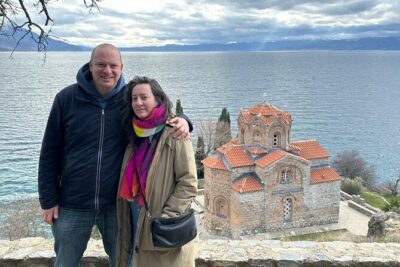
North Macedonia: Ohrid & Saint Naum Day Tour from Tirana
Read our review →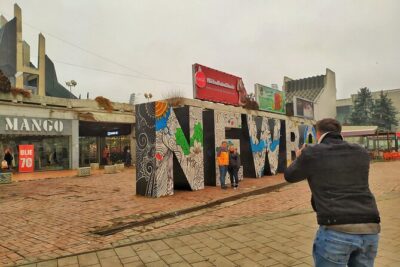
Day Tour of Kosovo from Tirana, Pristina and Prizren
Read our review →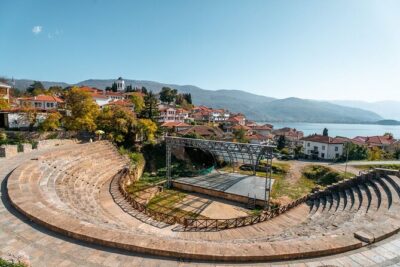
Ohrid – North Macedonia Full Day Tour from Tirana & Durres/Golem
Read our review →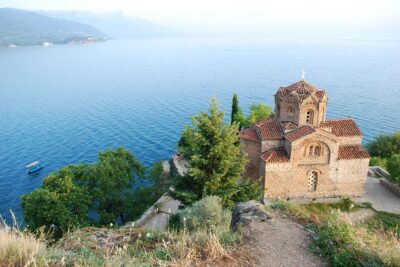
Private Ohrid Day Tour and Authentic Village from Tirana & Durres
Read our review →
From Tirana/Durres/Golem: Prizren and Prishtina Full-Day Tour
Read our review →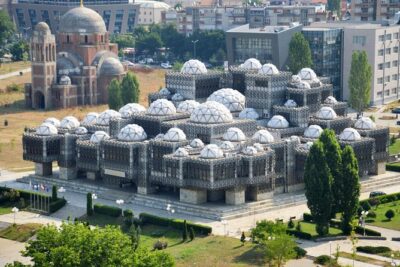
Best of Kosovo Day Tour – Pristina & Prizren from Tirana & Durres
Read our review →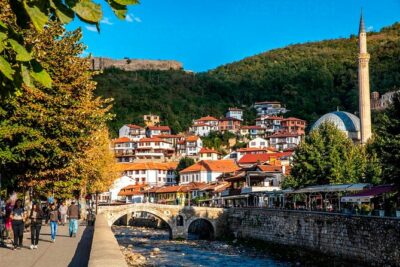
Browse the lists this tour appears in