
Reviewed · BERAT UNESCO TOURS
Best of Berat and Durres Full Day Tour
Durrës and Berat make an appealing pair because they show two very different sides of Albania in one long day. At the coast, you walk among Roman and Byzantine remains before reaching the Adriatic shore. Inland, Berat brings you Ottoman homes, a hilltop castle, old mosques, and the striking paintings of Onufri. The contrast is the real prize.
I like the way this tour combines major sights with time to simply walk, especially along the Durrës beach promenade and through Berat’s Mangalem quarter. I also like that the group is capped at 12 people, with pickup anywhere inside Tirana and a private-tour option available. The main drawback is the pace: eight to nine hours is a lot of ground, and winter’s short daylight can make the final stops feel rushed.
Key points to know before booking
- Two very different cities in one day: Durrës offers Roman archaeology and the Adriatic, while Berat brings castle lanes, Ottoman architecture, and religious art.
- A long but efficient day: Travel time is included in the eight-to-nine-hour schedule, so expect a full outing rather than a relaxed city tour.
- Strong guide potential: Guides named Ilir and Iliri have received high praise for clear historical explanations, easy conversation, and good company.
- Small-group setting: The maximum group size is 12, and a private option is available if you want more control over the pace.
- Water and comfort deserve attention: Bottled water is included, but one past experience reported that water was not provided even after it was requested. Confirm this at pickup.
- Winter needs extra thought: Shorter days can make it harder to appreciate every stop, particularly on a packed itinerary.
Why pairing Durrës and Berat works
If you have only one free day from Tirana, this route gives you a useful introduction to Albania’s past and present. Durrës is a port city shaped by Greek settlers, Rome, Byzantium, Venice, and modern seaside life. Berat feels quieter and more traditional, with white Ottoman houses climbing the hills around the Osumi River.
The distance between the two cities means you will spend a fair amount of time in the vehicle. That is the tradeoff for seeing both in one outing. An air-conditioned vehicle, a driver familiar with the area, and a licensed English-speaking guide matter here because the day includes many stops and several different periods of history.
The scheduled start is 9:00 am. Pickup can be arranged at any location inside Tirana after a short conversation with the operator. Pickup outside Tirana costs extra, paid directly to the guide by cash, PayPal, or bank transfer. Meals, drinks beyond the included bottled water, tips, personal expenses, and optional activities are not part of the price.
At $142.02 per person, the tour is not a budget sightseeing bus. Its value depends on what you want from the day. You are paying for transport, a driver, a licensed guide, entry to the Durrës Amphitheatre, Berat Castle, the Onufri Museum, the King Mosque, and the Halveti Tekke, plus the convenience of reaching two cities without arranging separate transport.
For a private group, or for anyone who would otherwise need to hire a car and organize several admissions, the cost can make sense. If you prefer slow meals, long museum visits, or time to wander without watching the clock, a one-city tour will suit you better.
More Berat Trips in Tirana:
- Berat city UNESCO tour, the Castle & Belshi lake- From Tirana
★ 5.0 · 804 reviews - Berat-Durres and Belsh Lake, day tour from Tirana
★ 4.5 · 274 reviews - Berat Tour Osumi Canyons Exploration Lunch Transfer
★ 4.5 · 212 reviews
Durrës begins with Roman power and a busy modern city
The first part of the day introduces Durrës as ancient Dyrrachium, founded by Greek colonists around the 7th century BC. Its position on the Adriatic later made it important to Rome and Byzantium. The Via Egnatia began here, running across the Balkans toward Constantinople, so this was not a minor coastal settlement.
The Durrës portion includes the old town, Byzantine walls and forum, Roman baths, the modern center, the Venetian Tower, and the archaeological museum. The schedule gives about 30 minutes to the wider city introduction, followed by more focused stops. That timing lets you get an overview, but it does not allow for a slow museum visit or extended independent exploration.
This is a good place to listen closely to the guide. Much of Durrës is a working modern city, and ancient remains appear among later buildings and ordinary streets. The pleasure comes from seeing how old and new sit together, not from finding one perfectly preserved archaeological zone.
The Durrës Amphitheatre reveals the city’s Roman scale
The Roman Amphitheatre is the major archaeological stop in Durrës. Construction began under Emperor Trajan in the 2nd century AD, and the arena once held as many as 20,000 people. That capacity gives you a sense of Durrës as a major Roman center rather than simply a pleasant seaside town.
Earthquakes damaged the structure in the 6th and 10th centuries. It was rediscovered in 1966 and now sits near the city center. You get about 30 minutes here, with admission included.
The remains are important, but do not expect a complete arena with every wall intact. The site has been affected by time, earthquakes, and later urban growth. A guide adds real value by explaining what you are seeing and how the amphitheatre fitted into the ancient city.
Venetian defenses and the Byzantine Forum
The Venetian Tower belongs to the old defensive system of Durrës. The wider fortress began under Byzantine Emperor Anastasius I, who was born in the city. The tower was later built over an earlier Byzantine structure, fortified with cannons, and used to watch the coast.
Renovated in 2023, the tower now houses Albania’s first Heritage Interpretation Center. Digital and multimedia displays explain the city’s past through modern presentation tools. This creates a useful change of pace after the exposed archaeological remains, though the visit will appeal most to you if you enjoy interpretive exhibits as well as old stone.
The Byzantine Forum dates from the late 6th century, during the reign of Anastasius. Its circular paved area and rotunda point to a civic space used for public events, trade, and markets. The forum has similarities to Constantine’s Curved Forum in Constantinople, which was destroyed during the Fourth Crusade in 1204.
You will see the forum within the modern city rather than in an isolated park. That setting can make the ancient remains feel less dramatic, but it also shows how Durrës has continued to grow around them. The city’s defensive walls and harbor structures were once among the strongest in the Balkans.
More Full-Day Tours in Tirana
- From Tirana: Berat UNESCO & Belshi Lake Full-Day Tour
★ 5.0 · 118 reviews - Berat Full Day Trip from Tirana
★ 5.0 · 103 reviews - Ohrid – North Macedonia Full Day Tour from Tirana & Durres/Golem
★ 4.0 · 84 reviews - From Tirana/Durres/Golem: Prizren and Prishtina Full-Day Tour
★ 5.0 · 67 reviews
A short Adriatic pause at Durrës Beach
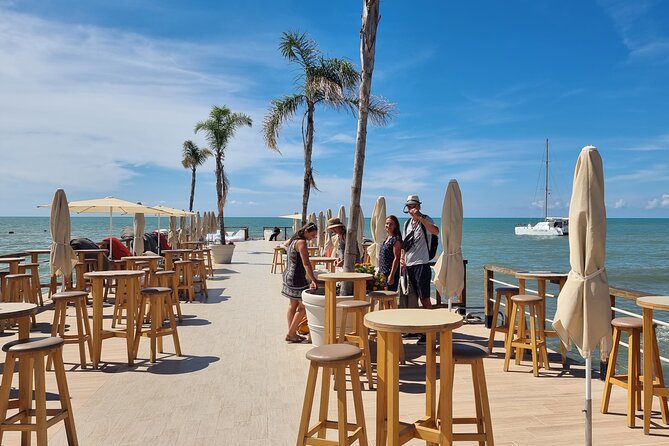
The beach stop gives you about 30 minutes to walk the promenade, look toward the Adriatic, and choose a café or shop if you wish. It is a modest break, not a beach day. You will not have time for a long swim or an unhurried meal without affecting the rest of the schedule.
I like this pause because it prevents the Durrës visit from becoming only a sequence of ruins. You see the city as it is now, with cafés, shops, restaurants, and a seaside promenade used by local life. It also gives you a chance to stretch before the inland drive to Berat.
Berat Castle is a neighborhood, not just a viewpoint
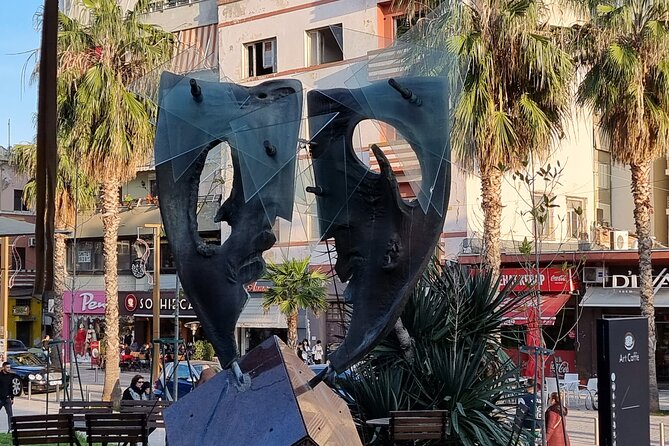
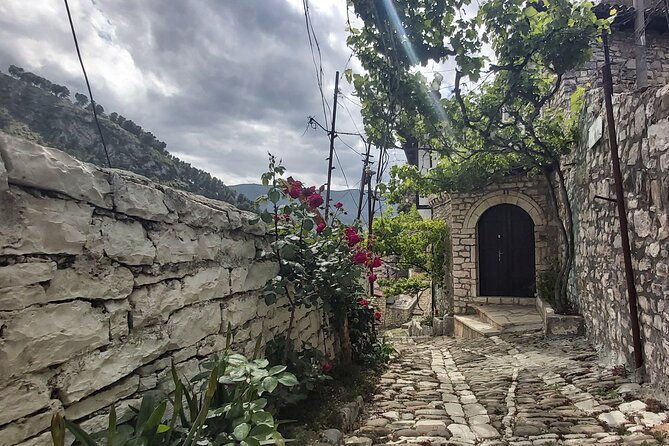
Berat Castle, or Kala, crowns the hill above the city. Its crumbling walls surround a living, whitewashed neighborhood of cobbled lanes, courtyards, and old churches. Allow about 40 minutes for the castle area, with admission included.
The best way to approach Kala is with curiosity. A doorway may lead to a courtyard, and a lane that looks like it ends at a ruin may continue toward a church or home. The area is not simply a museum display. It is an old quarter where daily life remains part of the scene.
The hill and cobbled surfaces require comfortable footwear. The schedule is short, so you will get an introduction rather than a full exploration of every lane. Still, this is one of the most memorable parts of the day because Berat’s past is built into a place where people still live.
Onufri Museum brings color and craft inside St. Mary’s Church
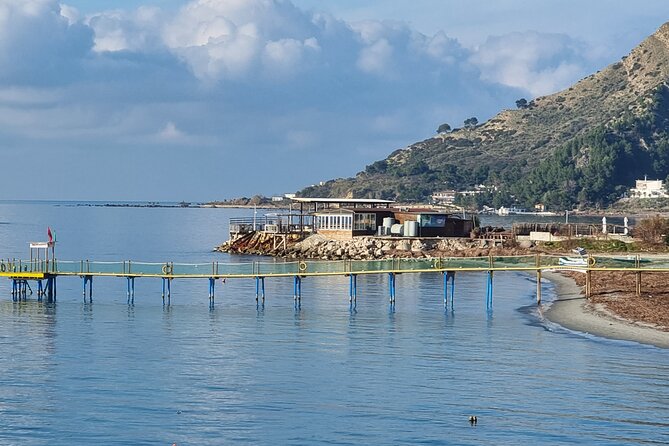
The National Iconographic Museum Onufri occupies the Church of the Dormition of St. Mary, a building dating from 1797 and built over an earlier 10th-century chapel. The museum holds about 200 icons, artworks, and liturgical objects from the 14th through the 20th centuries.
You will see works linked to Albanian icon painters including Onufri, his son Nikolla, and Onufër the Cypriot. The gilded 19th-century iconostasis is part of the experience, so the building itself matters as much as the collection.
The visit lasts about 40 minutes. That is enough to appreciate the main works if your guide gives useful context, but not enough for a careful study of every object. Photography rules and access inside religious buildings can vary, so follow the guide’s instructions.
Berat’s churches and mosques show its layered past
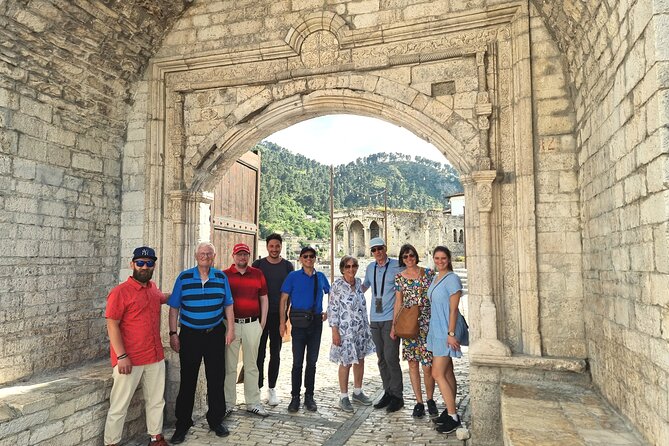
The itinerary also includes a well-preserved Byzantine church built at the end of the 13th century. An inscription at one of its gates names Andronicus Paleologus, governor of Berat. The church is valued for its construction and preservation, and it helps place the city’s Christian architecture beside its later Ottoman buildings.
The King Mosque, also called the Sultan’s Mosque or Sultan Bayezid Mosque, dates from the 15th century. It is linked to Bayezid II and remains an active religious site. A 19th-century rebuilding saved the structure from collapse, while the painted wooden ceiling in the women’s gallery is a particularly interesting detail.
You get only about 10 minutes at the King Mosque, so this is a quick look rather than an extended religious or architectural visit. Dress and behave respectfully, especially because the building remains in use.
The Halveti Tekke offers another glimpse into Berat’s Ottoman religious life. It was built in the 15th century and rebuilt by Ahmet Kurt Pasha in 1782. Inside, the prayer hall has a portico with columns from the ancient city of Apolonia, along with a balcony designed to improve sound during religious rituals.
Again, the scheduled visit is around 10 minutes. That is brief, but the stop adds variety and helps you understand that Berat’s identity was shaped by several faiths and political periods.
Mangalem and Gorica Bridge finish the day outdoors
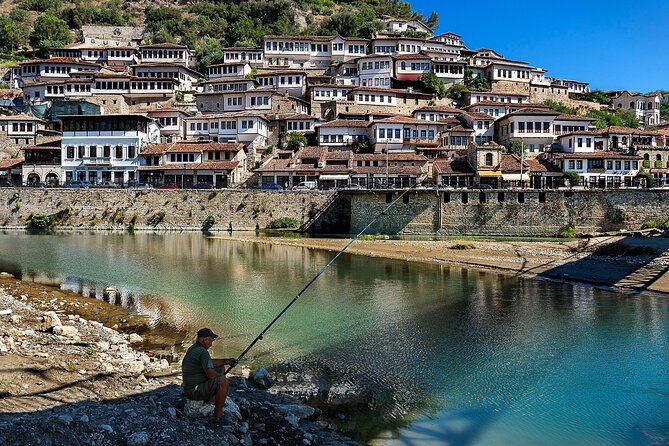
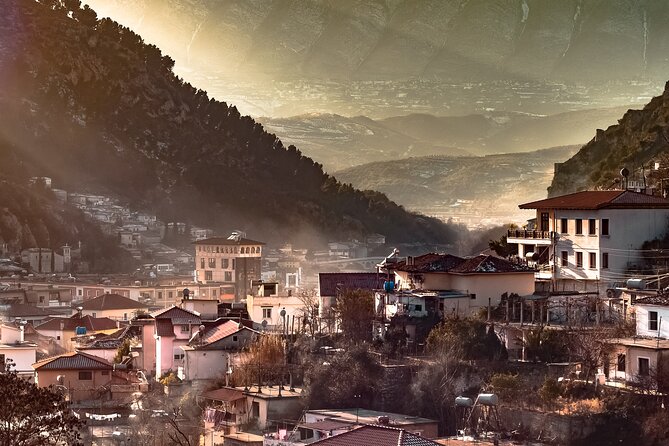
Mangalem is the classic Berat view: white stone houses, red tile roofs, wooden doors, and rows of windows rising along the hillside. The district lies north of the Osumi River and below Kala. Its Ottoman character explains Berat’s famous nickname, the City of 1000 Windows.
You have about 30 minutes to walk here. Bring your camera, but also look at the details close to the street: flowers at windows, uneven stonework, and the way the homes follow the slope. The quarter is compact enough for a short walk, though the stone streets may be tiring after the castle.
The last major stop is Gorica Bridge, which links Berat with the neighborhood of the same name. The bridge reaches about 130 meters across the Osumi River, rises roughly 10 meters, and has seven arches, wooden railings, and small openings that give the structure an unusual character.
Its gradual arch makes it pleasant to view from the riverbanks and to cross on foot. The 30-minute stop gives you time to appreciate the bridge and the city around it. Since this comes late in a long day, you may have less energy than you did in the morning, but the outdoor setting is a welcome finish after the museums and religious buildings.
What the guide and group size change
The strongest part of this tour can be the guide’s ability to connect scattered ruins and buildings into a clear story. Ilir, also referred to as Iliri, has been praised for strong historical knowledge, lively conversation, and a relaxed manner. If he is assigned to your outing, you can expect the history to be presented as conversation rather than a string of dates.
The maximum group is 12 people, which is small enough for questions and easier movement through narrow streets. A private option gives you more say over pauses and timing, though the tour still covers a great deal in one day.
There is one practical point to handle before departure. Bottled water is listed as included, but one past experience reported that no water was supplied even after it was requested. Bring your own bottle and confirm the arrangement at pickup. Also ask for a bathroom break if you need one, rather than assuming the schedule includes frequent stops.
Who should book this full-day route?
I would recommend it if you have limited time in Tirana and want a broad introduction to Albania. It suits people who enjoy archaeology, religious art, old neighborhoods, and scenic walks more than people seeking a slow food-focused day.
The tour is also useful if you do not want to drive between Tirana, Durrës, and Berat yourself. A driver, air-conditioned vehicle, guide, admissions, and city pickup remove much of the planning work.
Think twice if you dislike long drives or need plenty of unscheduled time. The eight-to-nine-hour duration includes travel, and several Berat stops last only 10 minutes. In winter, the shorter daylight hours make the schedule less forgiving, so a spring, summer, or early autumn booking may let you see the places with greater ease.
Cancellation is free up to 24 hours before the 9:00 am start. Poor weather or failure to meet the minimum number of participants can lead to a different date, another experience, or a full refund.
Should you book the Durrës and Berat tour?
Book it if your priority is seeing a lot in one day and understanding how Roman, Byzantine, Venetian, Christian, and Ottoman Albania fit together. The combination of the Durrës Amphitheatre, Adriatic promenade, Berat Castle, Onufri Museum, Mangalem, and Gorica Bridge gives you a strong first look at two very different places.
Skip it in favor of a slower plan if you want long meals, extensive museum time, or relaxed wandering. For most first-time visitors based in Tirana, though, the route offers good practical value, especially with a small group or private booking. Just confirm the water, wear comfortable shoes, and avoid the shortest days of winter if you can.
FAQ
Where does the tour start?
Pickup is available from any location inside the city of Tirana. You arrange the exact pickup point with the operator after booking.
What time does the tour begin?
The scheduled start time is 9:00 am.
How long does the experience last?
The tour lasts approximately eight to nine hours, including travel time.
Is the tour offered in English?
Yes. The experience is offered in English and includes a licensed tour guide.
How many people can join the group?
The group can have a maximum of 12 participants.
Is a private tour option available?
Yes. A private tour option is available.
Is transportation included?
Yes. Transportation is provided in an air-conditioned vehicle, with professional drivers.
Is bottled water included?
Bottled water is listed as included. Since one past experience reported not receiving water, it is sensible to confirm this when you arrange pickup.
Are meals included?
No. Meals and drinks are not included in the tour price.
What happens if the weather is poor?
If poor weather causes cancellation, you will be offered another date or a full refund.
Can I cancel for a full refund?
Yes. You can cancel up to 24 hours before the experience start time for a full refund. Cancellations or changes made less than 24 hours in advance are not accepted for a refund.
Just added around Tirana
- UNESCO heritage in Albania – 4 days★ 5.0 · 3 reviews
- Apollonia and Berat UNESCO tour from Tirana★ 5.0 · 3 reviews
- Private Transfers from Tirana International Airport to Sarandë★ 4.5 · 3 reviews
- Transfers Tirana Airport – Sarande – Ksamil – Airport Tirana★ 4.5 · 3 reviews
- Berat 4×4 Off-Road and Vineyard Wine Tasting★ 5.0 · 3 reviews
- N. Macedonia &Kosovo; Semi – Private Tour; Tour Leader & Car★ 4.8 · 3 reviews
- Cultural Tour in Tirana including House of Leaves★ 5.0 · 3 reviews
- Tirana to Ksamil and Saranda Bus★ 4.5 · 3 reviews
Berat UNESCO Tours, compared.
Berat city UNESCO tour, the Castle & Belshi lake- From Tirana
Read our review →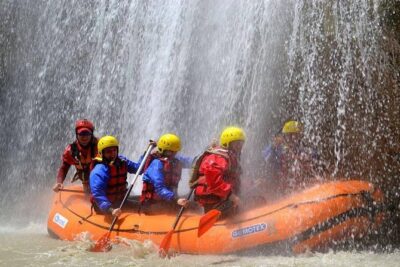
Berat Rafting, Kayaking & River Tubing – Osumi Canyons
Read our review →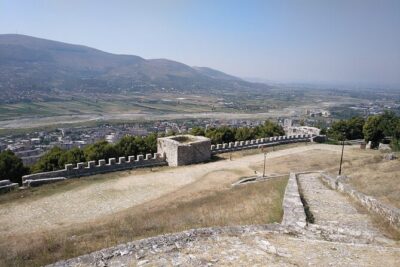
Berat-Durres and Belsh Lake, day tour from Tirana
Read our review →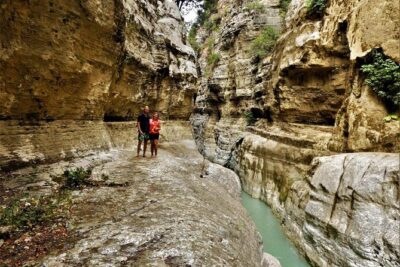
Osumi Canyons and Bogova Waterfall from Berat – Tour by 1001 Albanian Adventures
Read our review →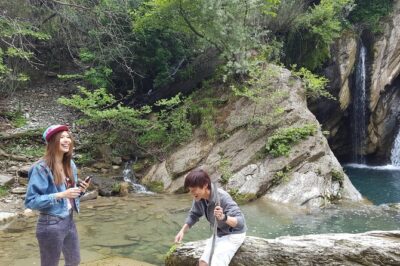
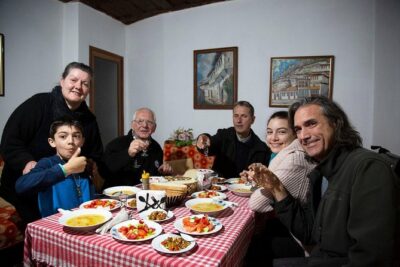
Berat Cooking Class- Traditional Albanian Cooking Class /By Vato
Read our review →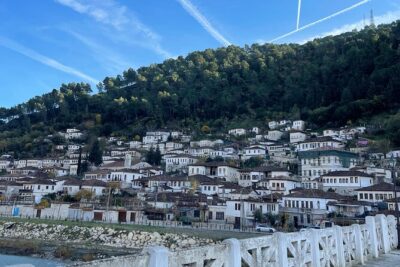
From Tirana: Berat UNESCO & Belshi Lake Full-Day Tour
Read our review →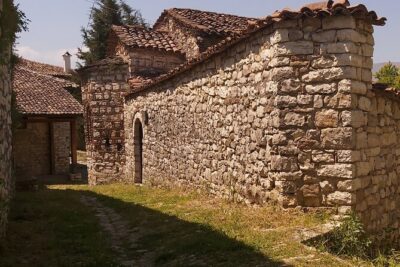
Browse the lists this tour appears in