
Reviewed · TIRANA TOURS
Walking Tour of Tirana
Tirana’s story comes at you in layers: an old mosque and clock tower, a vast central square, communist-era monuments, and the former dictator’s villa in Blloku. This 2-hour-15-minute walk gives you a useful first map of the capital while local guides such as Clint, Eri, Arber, and Kedri connect the sights to family memories and Albania’s difficult 20th century.
I like the route for two clear reasons. First, it covers Tirana’s main central sights without wasting time on transport. Second, the small maximum group of 15 leaves room for questions, photos, and a more personal feel. The main drawback is practical: the route is outdoors, and Tirana can be fiercely hot, so an early start and sensible clothing matter.
Key points to know before you book
- A fast introduction to Tirana: You see the central square, mosque, clock tower, Bunk’Art 2 area, Pyramid, Blloku, and Orthodox Cathedral in one continuous walk.
- Personal local storytelling: Guides including Clint, Eri, Arber, Kedri, Ariola, Aurora, Rie, and Buli have been praised for humor, passion, and clear explanations.
- Communist history takes center stage: The National Gallery, Pyramid, Postbllok monument, and Blloku help explain life under Enver Hoxha.
- Good value at $18.14: Your payment covers the reservation and guide compensation, unlike a standard tip-only free tour.
- Easy city-center finish: The tour ends at the Resurrection of Christ Orthodox Cathedral, close to central Tirana.
- Plan for heat and directions: The route operates in all weather conditions, and the meeting point can be hard to spot if you arrive late.
Why this walk is a smart first look at Tirana
Tirana is easy to underestimate. Its center is compact, but the capital’s story is not simple. Ottoman rule, foreign invasions, fascism, a long communist dictatorship, and rapid change after 1992 all appear within a short walk.
That is the real value here. You are not simply ticking off monuments. You are getting a framework for understanding what you see afterward. A building that looks plain may carry political weight. A public square may have been reshaped to serve a different government. A luxury district may sit in a street once associated with Albania’s ruling elite.
The guides are the heart of the experience. Clint is repeatedly praised for passion, humor, and personal stories about the old days. Eri is known for lively storytelling and a good sense of humor. Arber has been singled out for first-hand accounts and for finding shade during hot-weather stops. Kedri is described as friendly, thoughtful, and approachable, while Ariola, Aurora, Rie, and Buli have also led well-received walks.
Guide assignments can change, so you should not book expecting one particular person. Still, the pattern is useful: this tour depends on spoken history and human explanation, not on elaborate equipment or long museum visits.
More Walking Tours in Tirana
- Local food experience & walking tour of Tirana
★ 5.0 · 192 reviews - Berat Walking Tour
★ 5.0 · 86 reviews - Tirana Walking Tour: History, Culture &Gems by a Passionate Guide
★ 5.0 · 52 reviews
Starting beside the National Theatre of Opera, Ballet and Folk Ensemble
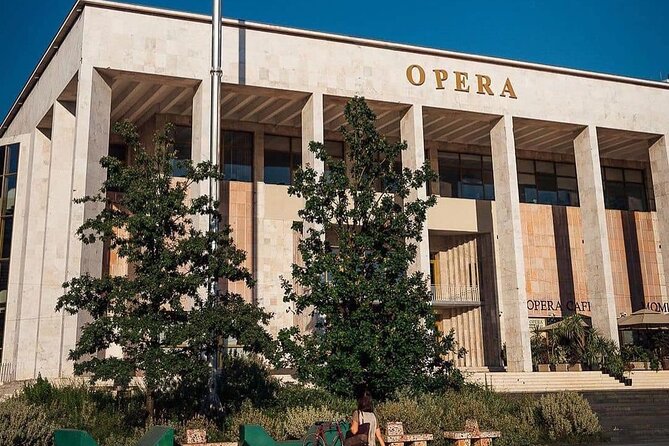
The meeting point is the National Theatre of Opera, Ballet and Folk Ensemble, in the Palace of Culture at Skanderbeg Square. This is central, but do not treat central as automatically obvious. A few people have had trouble finding the exact starting place, and a late taxi drop-off has caused at least one person to miss the group.
I would arrive early and use the full address: Pallati i Kulturës, Sheshi Skënderbej, Tirana. The walk starts on schedule because the guide must keep the route moving for the whole group. If you are arriving by taxi, ask to be taken to the Palace of Culture or Skanderbeg Square, not simply to a vague point in the city center.
The first ten minutes are listed as the meeting and introduction period. That gives the guide a chance to gather the group and set the tone. Since the tour is offered in English and caps attendance at 15 people, you should have a reasonable chance to hear the explanations and ask questions.
Skanderbeg Square, the city’s main stage
Skanderbeg Square is the natural place to begin. It is Tirana’s main public space and gives you an immediate sense of the city’s scale and layout.
Expect about ten minutes here, enough for an overview rather than a detailed architectural study. This is where a guide can explain how the central area fits together and point out the nearby mosque, clock tower, museums, and government-era landmarks.
I like starting here because it helps you get your bearings quickly. After the tour, you can return to the square on your own and choose which nearby sites deserve more time. Several guides also provide recommendations or a useful leaflet at the end, which can help you plan the rest of your stay.
The tradeoff is that ten minutes goes quickly. You will see the square in context, but this is not a leisurely photography session. Keep your camera ready and save a longer visit for later.
Et’hem Bej Mosque and the Clock Tower
The next stops bring you to two of Tirana’s best-known older landmarks. Et’hem Bej Mosque is described as an old mosque in the city center, while the Clock Tower offers a glimpse of historic Tirana beside the square.
The mosque receives about five minutes, followed by another five minutes at the tower. The short timing tells you what to expect: the guide will explain why these buildings matter, then move on. You should not assume that the tour includes an extended interior visit or a climb up the tower. The supplied details list these as stops with free admission, not as lengthy admissions or guided indoor visits.
This quick pairing works well. You see two reminders that Tirana existed long before the communist period, then move into the more politically charged part of the route. The mosque and tower also help prevent the tour from becoming only a lesson in dictatorship and modern politics.
Same drive out, a completely different day:
- Hike Gamti Mountain with Bovilla lake view & canyon- From Tirana
★ 5.0 · 1,280 reviews - Berat city UNESCO tour, the Castle & Belshi lake- From Tirana
★ 5.0 · 804 reviews - Kruja castle, the old Bazaar & Sarisalltik- Departure from Tirana
★ 5.0 · 592 reviews - Albanian Night Show: Traditional Music, Dance & Dinner in Tirana
★ 5.0 · 431 reviews
Bunk’Art 2 and the National Gallery of Art
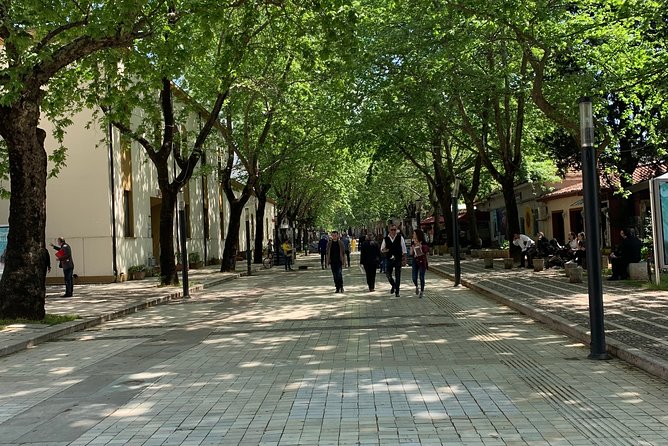
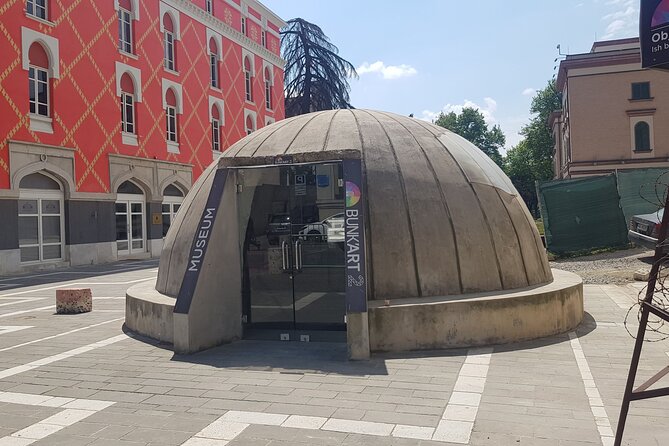
Bunk’Art 2 is located near the city center and receives roughly five minutes on the route. Its presence signals the importance of Albania’s communist security system and underground bunkers. The walk does not promise a full museum visit, so think of this stop as an introduction and a cue to return independently if the subject catches your interest.
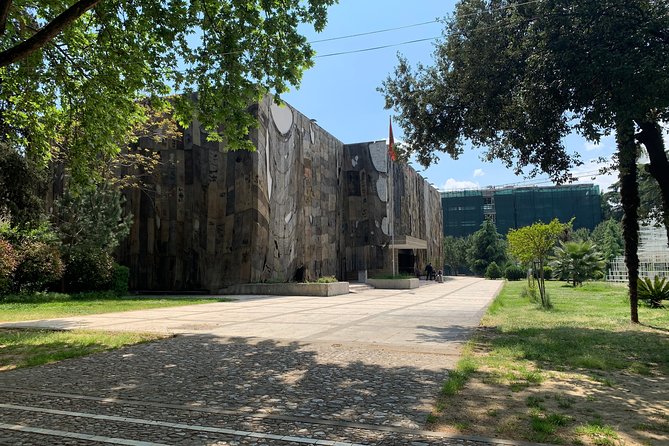
The National Gallery of Art gets about ten minutes. Here, the guide discusses art during the communist era and helps you read culture as part of political life. That context is useful because official art can reveal what a government wanted people to admire, remember, or ignore.
This is one of the route’s strongest features. You are not only looking at old buildings. You are being shown how public spaces, museums, monuments, and art can reflect power. Guides who combine broad facts with personal or family memories make this section more human and easier to remember.
Still, ten minutes is a primer. If you want to see exhibits inside the gallery or spend time at Bunk’Art 2, plan a separate visit. The walking tour’s job is to give you the story line, not cover every room.
The Pyramid and Albania’s communist past
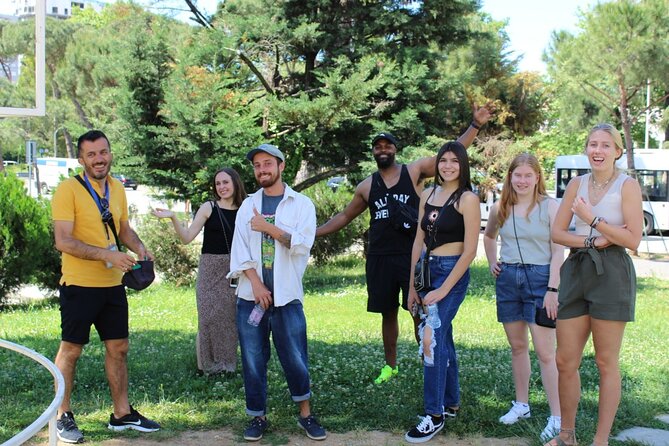
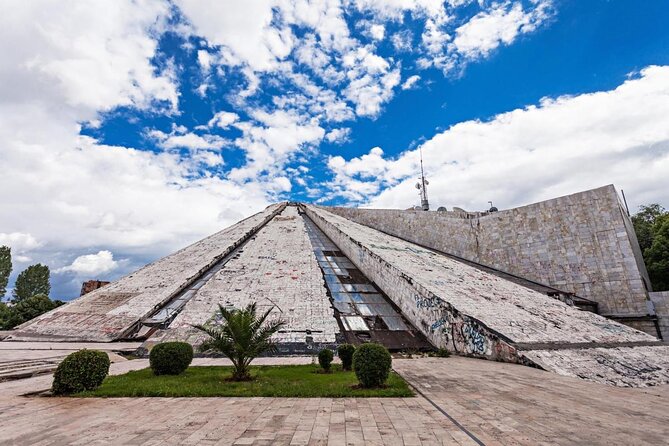
The Enver Hoxha Pyramid is one of Tirana’s major landmarks and gets around ten minutes. Its meaning is tied to Albania’s former dictator, so this stop is a clear bridge from general communist history to the personality and legacy of Hoxha himself.
The guide’s explanation matters here. A large, unusual structure can look like a curious piece of architecture if you do not know why it was built or how its role has changed. The tour places it within Albania’s political past and shows why it remains an important symbol in the capital.
This is also where the personal style of the guide can make a difference. Accounts of family life under communism, including stories shared by Clint and Kedri, add a human scale to a period that can otherwise feel like a list of dates and leaders. You may leave with a better sense of how the past affected ordinary Albanian families, not just government buildings.
The stop is brief, so expect a clear explanation rather than a long debate about the Pyramid’s changing uses. If this period interests you, note down the details and return later.
Blloku, the dictator’s villa, and Postbllok
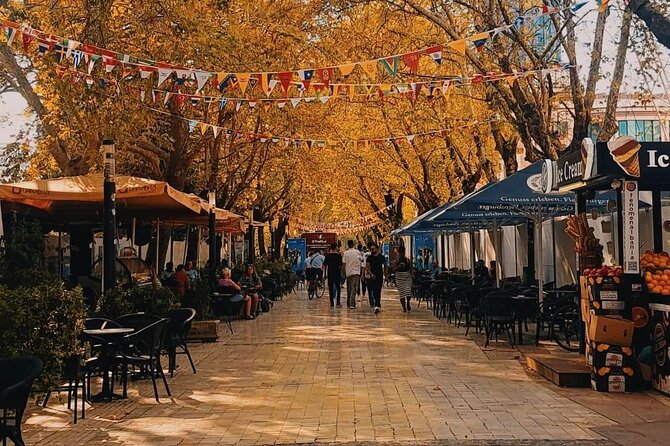
Blloku gives the walk a striking change of mood. Today, it is known as a central district with restaurants, cafés, and newer city life. On the route, you also see the villa of the Albanian dictator, which adds a sharp reminder of who once lived behind this controlled urban quarter.
The visit is short, about five minutes, but the contrast is valuable. You move from a former center of political privilege to a district associated with modern Tirana. That shift helps explain how quickly the city has changed since the end of communist rule.
Nearby, the Postbllok, or Checkpoint Monument, adds another memorial layer. It is close to Blloku and links the neighborhood to the restrictions and surveillance of the old system. The guide can use these two stops to explain not only where the ruling class lived, but also how power shaped access, movement, and daily life.
You should expect more than a photo stop, but less than a museum tour. The tour gives you the context needed to make sense of the monument. You can then return to Blloku for food or a longer walk after the group finishes.
Ending at the Resurrection of Christ Orthodox Cathedral
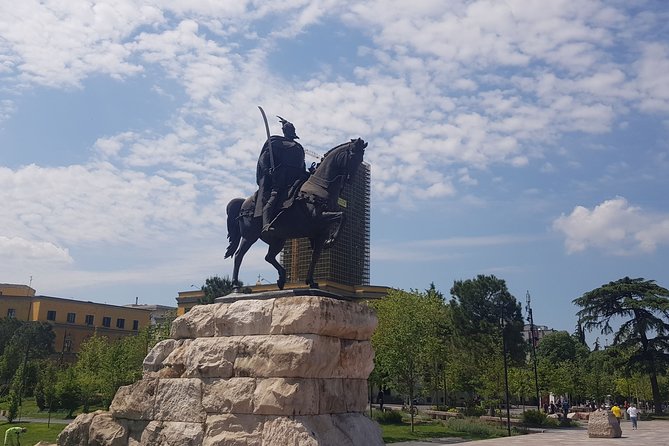
The final stop is the Resurrection of Christ Orthodox Cathedral on Rruga Ibrahim Rugova. The tour spends about five minutes here and ends at the cathedral, very near the city center.
Ending here is convenient. You are not left in an outlying neighborhood, and you can continue exploring central Tirana on foot. The cathedral also broadens the tour’s scope by adding a major religious building to a route otherwise shaped by squares, museums, communist sites, and political landmarks.
As with the mosque and clock tower, the schedule does not promise a long interior visit. Treat this as the final orientation point and a chance to ask the guide for suggestions about what to see next.
The complete route takes about two hours and 15 minutes, though several descriptions put the actual experience close to two hours. That is a comfortable length for a first walk. You get enough detail to understand the city, but you are unlikely to feel trapped in a half-day lecture.
What $18.14 really gets you
At $18.14 per person, this is strong value if you want orientation and historical context. The price covers an English-speaking licensed guide, the interactive walk, and the guide’s compensation. It is not simply a reservation fee followed by an expected tip, although extra gratuity is not included and remains your choice.
There is no private transport, but that is not a serious weakness here. The sights are in or near central Tirana, and walking is the point. You are paying for the guide’s time and explanations, not for a vehicle.
The small group limit also helps the price feel fair. A maximum of 15 people is large enough to keep the cost down and small enough for questions. Some groups may be smaller, but you should not count on a private tour every time.
The value is highest if you take the walk early in your stay. Use it to mark places for later visits, collect restaurant or sightseeing suggestions, and understand the city before exploring alone. If you already know Tirana well, the route may feel too introductory.
Heat, pace, and what to bring
The walking itself is described as easy, with plenty of stops. That makes the tour suitable for most people who can take a steady city walk. Children must be accompanied by an adult, and service animals are allowed.
Weather is the bigger concern. The tour operates in all weather conditions, and hot summer days can be severe. One family completed the walk during temperatures above 37 C, while another account specifically recommends going early. I agree with that advice.
Wear light clothing suitable for the forecast, bring water, and use sun protection. The guides may look for shade during stops, but shade is not guaranteed at every point. Comfortable shoes matter more than formal dress.
Because the tour runs outdoors, rain can also affect your comfort. If poor weather forces cancellation, you are offered another date or a full refund. The same applies if the minimum number of participants is not reached.
Who should book this Tirana walk?
I would choose this tour for a first day or first morning in Tirana, especially if you want history explained in plain English. It suits solo visitors, couples, families with older children, and anyone who prefers a compact introduction before deciding where to spend more time.
It is also a good match for people curious about communist Albania. The Pyramid, Bunk’Art 2, the National Gallery, Blloku, and Postbllok create a useful sequence, while local family stories can make the period feel less remote.
You should choose something else if you want long museum visits, private transport, or a slow architectural tour. The itinerary moves briskly, and several stops last only five or ten minutes. Think of it as a guided city overview with historical depth, not a full examination of every attraction.
Book at least a few days ahead if your schedule is tight. The experience is booked on average about ten days in advance, and confirmation arrives when you book. For a full refund, cancel at least 24 hours before the local start time.
Should you book the Walking Tour of Tirana?
Yes, if you want a practical first look at Tirana for a modest price. The route covers the essential central sights, the guides bring humor and personal memory to a complicated past, and the finish near the Orthodox Cathedral makes the rest of the day easy to plan.
Book it early, arrive well before the meeting time, and avoid the hottest part of the day if possible. You will still need separate visits for the museums and any site you want to study closely, but this walk gives you the city’s basic map and the historical questions worth asking.
FAQ
How long does the Walking Tour of Tirana last?
The tour lasts approximately 2 hours and 15 minutes. Individual descriptions place the walk close to two hours, so allow a little extra time for questions, photos, and the final stop.
Where does the tour begin?
It begins at the National Theatre of Opera, Ballet and Folk Ensemble, located at Pallati i Kulturës, Skanderbeg Square, Tirana.
Where does the tour finish?
The tour finishes at the Resurrection of Christ Orthodox Cathedral on Rruga Ibrahim Rugova 1, near central Tirana.
Is the tour offered in English?
Yes. The experience is offered in English and includes an English-speaking licensed guide.
How much does the tour cost?
The listed price is $18.14 per person. The payment covers the reservation fee and the guide’s compensation. Gratuities are not included.
How large is the group?
The tour has a maximum of 15 participants. The actual group may be smaller, but a private tour is not guaranteed.
Can I cancel for a full refund?
Yes. You can cancel at least 24 hours before the experience start time for a full refund. Changes or cancellations made less than 24 hours before the start are not accepted or refunded.
Just added around Tirana
- UNESCO heritage in Albania – 4 days★ 5.0 · 3 reviews
- Apollonia and Berat UNESCO tour from Tirana★ 5.0 · 3 reviews
- Transfers Tirana Airport – Sarande – Ksamil – Airport Tirana★ 4.5 · 3 reviews
- Private Transfers from Tirana International Airport to Sarandë★ 4.5 · 3 reviews
- Berat 4×4 Off-Road and Vineyard Wine Tasting★ 5.0 · 3 reviews
- N. Macedonia &Kosovo; Semi – Private Tour; Tour Leader & Car★ 4.8 · 3 reviews
- Cultural Tour in Tirana including House of Leaves★ 5.0 · 3 reviews
- Tirana to Ksamil and Saranda Bus★ 4.5 · 3 reviews
Tirana Tours, compared.
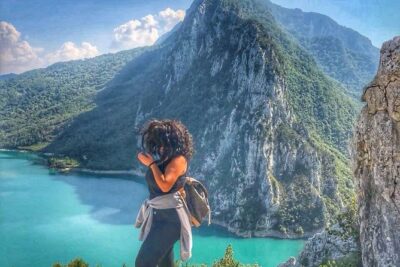
Hike Gamti Mountain with Bovilla lake view & canyon- From Tirana
Read our review →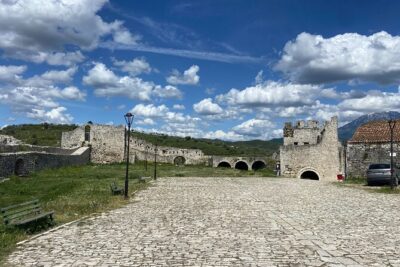
Berat city UNESCO tour, the Castle & Belshi lake- From Tirana
Read our review →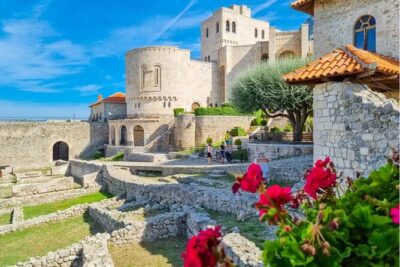
Kruja castle, the old Bazaar & Sarisalltik- Departure from Tirana
Read our review →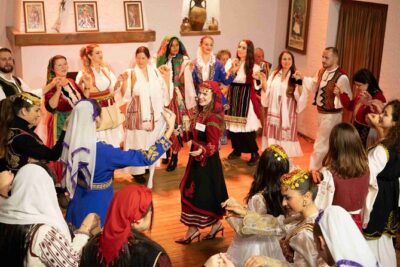
Albanian Night Show: Traditional Music, Dance & Dinner in Tirana
Read our review →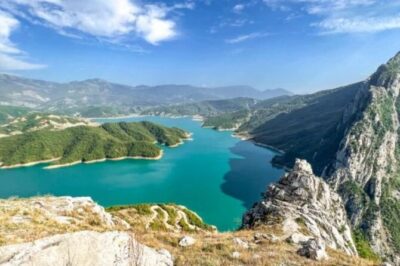
From Tirana- Hiking Tour to Bovilla Lake & Gamti Mountain
Read our review →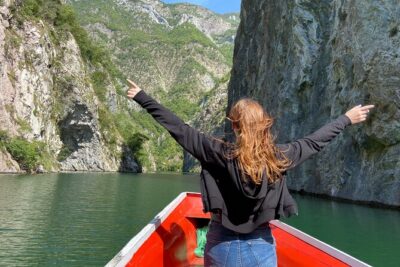
Shala river & Komani lake -Day trip departure from Tirana/Shkodra
Read our review →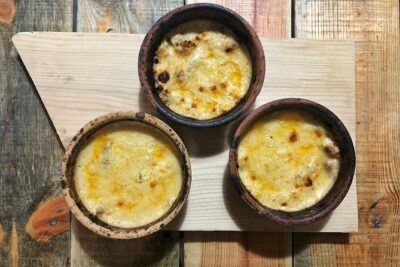
Cooking Classes and Traditional food tasting in Tirana
Read our review →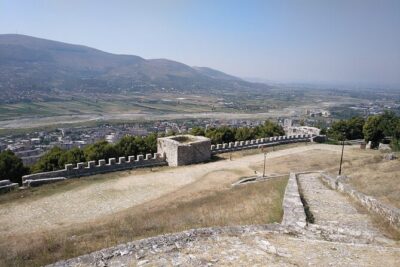
Berat-Durres and Belsh Lake, day tour from Tirana
Read our review →Browse the lists this tour appears in