
Reviewed · CROSS-BORDER BALKANS TRIPS
Small Group Tour of Montenegro, Albania, Kosovo & N. Macedonia
The remarkable part of this tour is the territory it covers: four Balkan countries in about five days. You move from Montenegro’s Adriatic coast to Kosovo’s Ottoman towns, North Macedonia’s lakeside Ohrid, and Albania’s hilltop Berat without arranging border crossings or piecing together several bus routes.
I like the small maximum of 10 people, which should make roadside stops and city walks easier to manage. I also like the mix of famous sights and local life, especially Mrizi i Zanave, a working agro-tourism farm that turns regional produce into a serious food experience. The main drawback is simple: the schedule is demanding, and one day has been described as lasting around 17 hours.
Key points to know before booking
- Four countries in five days: Montenegro, Albania, Kosovo, and North Macedonia all appear in one compact route.
- A maximum of 10 people: This is much more manageable than a large coach tour.
- Major UNESCO stops: Kotor, Ohrid, and Berat anchor the cultural side of the trip.
- Mrizi i Zanave adds local flavor: You tour a farm, hear its story, and have time for lunch or shopping.
- Long driving days are part of the bargain: The route covers a great deal of ground, so this suits energetic sightseers.
- The price includes useful essentials: Private transport, 3-star lodging, four breakfasts, tour leadership, road costs, taxes, and listed entry tickets are covered.
Four countries, one fast-moving Balkan route
At $1,812.35 per person, this is not a cheap day tour. It is a packaged five-day trip with private transportation, accommodation, breakfast, a professional tour leader, tourist taxes, international car insurance, road taxes, petrol, and entry tickets for the sites scheduled for visits.
That bundle matters in the Balkans. You are crossing several borders and moving through four countries, so having transport and a tour leader arranged removes a fair amount of practical work. You do not need to coordinate separate transfers from Tirana to Montenegro, Kosovo, North Macedonia, and back through Albania.
Still, compare the price with the pace. You are paying for coverage, not long stays in each place. Kotor receives about an hour, Prizren receives several hours, Skopje two hours, Ohrid two hours, and Berat two hours. If you prefer to spend three slow days in one town, this is the wrong shape of trip. If you want a broad first look at the western Balkans, the value becomes clearer.
The tour is offered in English and has a maximum of 10 participants. Pickup from your Tirana hotel is available if requested at least 12 hours before departure. The listed start time is 8:00 a.m., with the tour beginning at the Choose Balkans office at the Twin Towers on Bulevardi Dëshmorët e Kombit.
More cross-border Balkan runs:
- Semi-Private Tour of North Macedonia: Ohrid & Struga from Tirana
★ 5.0 · 170 reviews - North Macedonia: Ohrid & Saint Naum Day Tour from Tirana
★ 5.0 · 151 reviews - Day Tour of Kosovo from Tirana, Pristina and Prizren
★ 5.0 · 93 reviews
Day 1: Sveti Stefan, Budva, and Kotor
Your first day begins with pickup in Tirana and a long drive toward Montenegro. The schedule warns you to be ready for a big day, and that warning deserves attention. This is the day when the tour’s ambition becomes clear.
The first stop is near Sveti Stefan, the tiny former fishing settlement on an island just off the coast. The island is now an exclusive residential resort and cannot be visited, so your stop is for the view from the coast. Thirty minutes is enough for photographs and a quick look, but not for exploring the island itself.
That limitation is worth knowing before you arrive. Sveti Stefan is a scenic viewpoint, not a full sightseeing visit. Its value comes from the unusual shape of the old stone settlement and its position by the sea.
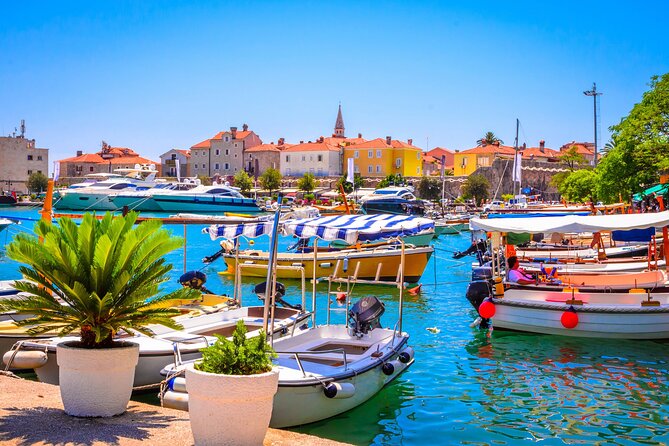
Next comes Budva, one of Montenegro’s best-known coastal towns. You spend about an hour in the old part of the city, where medieval buildings and small churches replace the newer hotels, offices, shopping centers, restaurants, and bars of New Budva.
The old town includes St. Ivan Church and the small Church of St. Mary. You will not have time for every corner, but the compact walk gives you a useful introduction to Budva’s two personalities: a modern seaside resort and a historic walled center.
Kotor is the day’s major cultural stop. This UNESCO World Heritage city is famous for its narrow cobblestone streets, old churches, and stone buildings packed tightly inside the walls. The twisting street plan once helped confuse attackers. Now it gives the old town an intimate, slightly maze-like feel.
You have about an hour in Kotor, so use it wisely. Look for the small plaques on old buildings, which identify their construction dates and former uses. This is a place where a guide can add real value because the details are easy to miss when you are simply walking from one square to another.
The day also includes a visit to St. Luke’s Church, scheduled for 30 minutes with admission included. The church has special meaning locally because it represents unity. Taken together, Budva and Kotor give you a strong taste of Montenegro’s coastal heritage, but the tradeoff is time. You will see the highlights rather than settle into either town.
Day 2: Shkodra and the view from Rozafa Castle
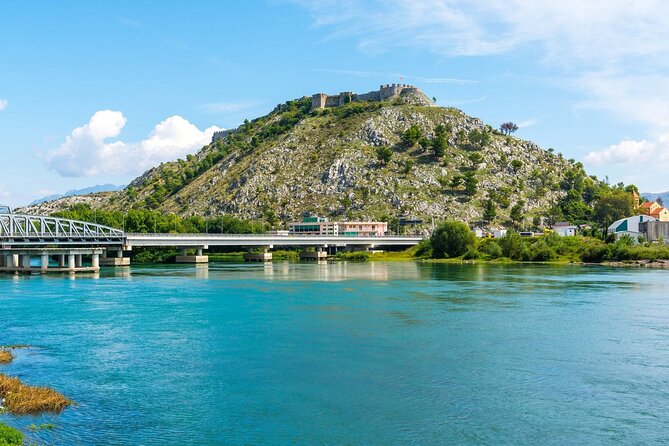
Day two shifts from Montenegro’s coast to northern Albania. Shkodra is one of Albania’s oldest cities and gives its name to the largest lake in the Balkans. The city has links to the ancient Illyrian world, and its castle walls reach back to the first millennium B.C.
The main visit is Rozafa Castle, which takes about an hour and includes admission. The castle offers wide views toward Lake Shkodra and the three rivers that meet before flowing toward the Adriatic Sea. The setting explains why this hill mattered for so long: it commands the surrounding area and connects the city to the water routes below.
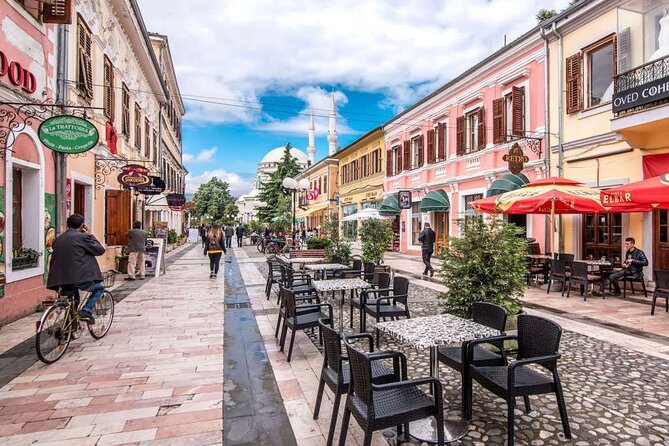
You will also have short city time in Shkodra. Its architecture carries a strong Venetian influence, a reminder that northern Albania has long been tied to the Adriatic rather than isolated from it. If your visit falls in February, the city may also be holding its carnival festival, known for handmade Venetian masks produced in Shkodra.
This is a lighter sightseeing day than day one, but the schedule still moves quickly. The castle involves a visit on a hill, so comfortable shoes are sensible. The reward is not only the ruins but the view, which is the clearest reason to make the climb.
Day 3: A farm lunch and an afternoon in Prizren
For me, Mrizi i Zanave is one of the most appealing parts of the route. This agro-tourism farm focuses on slow food and regional products. You tour the property, learn how the family business developed, and see how old communist-era buildings were adapted for storage and food production.
The farm collects, prepares, and preserves local organic products. It has also created jobs for more than 400 people in the surrounding area. That gives the stop a practical side: you are not just looking at a pretty rural property. You are seeing one example of how local food and family enterprise can support a wider community.
You have free time to order a traditional lunch or buy fresh products. Lunch is not included, so budget separately for it. The meal can be one of the better uses of your money on this tour because it connects the day’s sightseeing to the food culture of northern Albania.
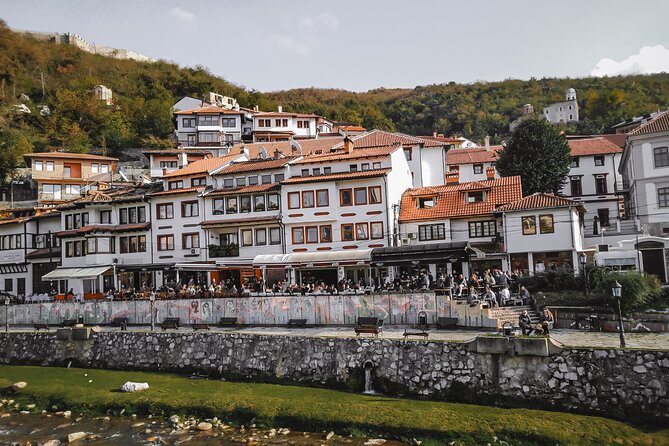
After the farm, you cross into Kosovo and continue to Prizren, often described as Kosovo’s cultural capital. The town brings together Illyrian, Byzantine, and Ottoman influences, with a river running through the old center and bridges linking its streets.
Three hours in Prizren gives you more breathing room than the short stops in Budva and Kotor. You can wander past old houses, cross the bridges, and look for the town’s filigree work in precious metals. The city’s international character is especially visible during Dokufest, a major short-film festival held in August, although the tour does not promise festival attendance.
The Sinan Pasha Mosque is included, with about 30 minutes set aside for the visit. Its arabesque colors and patterns make it a worthwhile stop even if you have seen other Ottoman mosques. Dress and behavior should be respectful at any religious site.
The final major sight is Prizren Fortress, reached on the hill above town. The panorama is the payoff, and the schedule allows about an hour, followed by free afternoon time in Prizren.
This evening can become a highlight if you choose dinner locally. One particularly useful detail from the tour experience is the mention of Ana, a guide who shared family stories and traditions over a traditional dinner in Prizren. A meal accompanied by personal stories can give the town more meaning than another rushed monument visit. Dinners, drinks, and snacks are not included, so this is an extra cost.
A few more Tirana half-days to weigh up
- Hike Gamti Mountain with Bovilla lake view & canyon- From Tirana
★ 5.0 · 1,280 reviews - Berat city UNESCO tour, the Castle & Belshi lake- From Tirana
★ 5.0 · 804 reviews - Walking Tour of Tirana
★ 5.0 · 646 reviews - Kruja castle, the old Bazaar & Sarisalltik- Departure from Tirana
★ 5.0 · 592 reviews
Day 4: Pristina to Skopje
The fourth day begins in Pristina, Kosovo’s capital. The city visit includes the Newborn monument, created as a symbol of independence and of Kosovo as a young country. You then walk along the main boulevard, including Mother Teresa Square, where you can stop for coffee at one of the bars.
The route also passes Skanderbeg Square and its statue of Albania’s national hero. This short city visit is more about modern identity and public spaces than old architecture. You should not expect a full museum program or an extended exploration of Pristina. The hour gives you a quick introduction before the road continues.
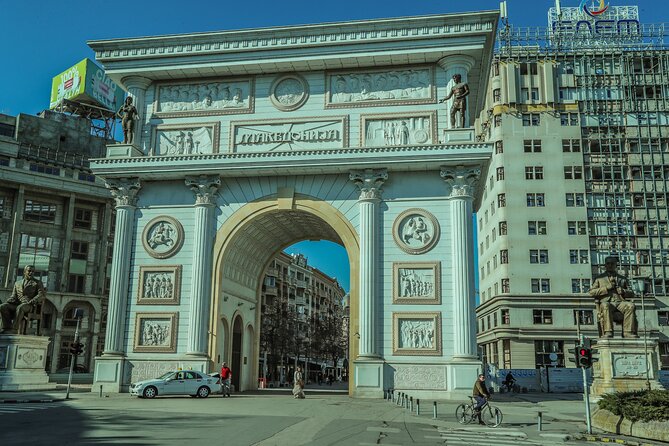
In North Macedonia, Skopje offers a striking mixture of European, Ottoman, and Asian influences. The Stone Bridge links the newer part of the city with the Old Bazaar, which is described as the largest bazaar in the Balkans.
You have about two hours to walk through the central sights. The Alexander the Great statue is hard to miss, and the Art Bridge adds another theatrical view, with lanterns and statues of Macedonian artists and musicians. The cross on the mountain above Skopje can be seen from far across the city and has become one of its symbols.
Skopje is a city where a guide helps you sort out the layers. The grand monuments, old commercial streets, Ottoman buildings, and modern public spaces do not always explain themselves. Two hours is enough for an overview, not enough for a full city visit. If Skopje interests you most, consider adding separate time before or after the tour, if your travel plans allow.
Day 5: Ohrid and Berat, two UNESCO centers
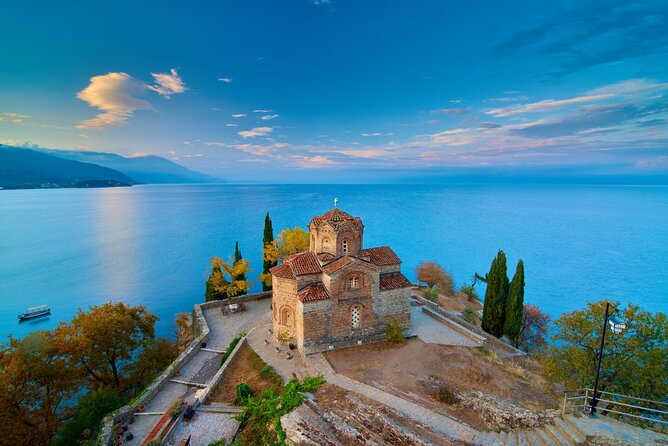
The final sightseeing day pairs Ohrid in North Macedonia with Berat in Albania. Ohrid and Lake Ohrid have been UNESCO World Heritage listed since 1980. The lake is one of the oldest in Europe, and ancient peoples including the Illyrian Enkeleys lived in the area.
The Romans called it Lyhnidas, or the Light Lake. Ohrid also became an important center of Orthodox Christianity, so the town’s importance is both natural and religious. You receive about two hours for the city tour, enough to see the main character of the place and understand why the lake has drawn people for so long.
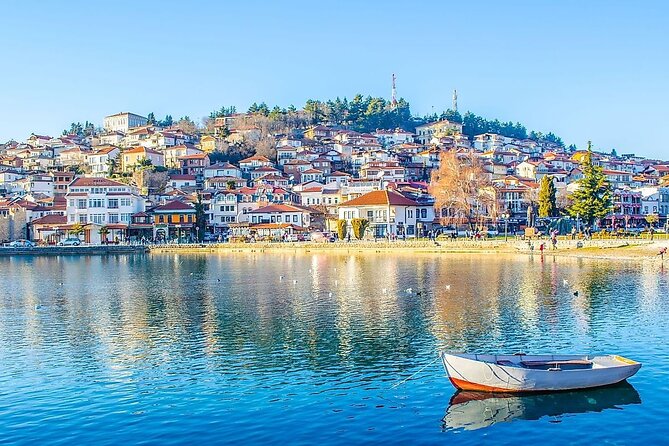
The long drive afterward leads back into Albania and to Berat, known as the town of 1,001 windows. The nickname refers to the old houses climbing the hillsides, with rows of windows seeming to stack one above another.
Berat’s upper castle district is still lived in, which makes it feel more like a neighborhood than a set of empty ruins. Inside and around the castle area are old churches and mosques, while the lower town includes grand houses, a stone bridge, museums, and reminders of Albania’s communist period.
The city began as an Illyrian settlement in the sixth or fifth century B.C. and later became the castle city of Antipatrea in the third century B.C. You have about two hours here. Wear shoes suited to narrow stone streets and uneven surfaces, and save a little energy for the hills.
Ending with Berat makes sense. It gathers many of the themes found across the tour: ancient settlement, Ottoman-era buildings, religious traditions, dramatic town planning, and modern Albanian life. The visit is still brief, but it is a strong final stop.
Hotels, meals, and what the price covers
Accommodation is in 3-star hotels with breakfast included for all overnight stays. The package includes four breakfasts, private transportation, tourist taxes, international car insurance, road taxes, petrol, and entry fees for the sites marked for visits.
Lunches, dinners, drinks, snacks, souvenirs, and personal purchases are extra. Plan for those costs, especially on the long first day and during the free time in Prizren. The traditional dinner associated with Ana’s guiding is not part of the basic price.
The advertised price uses double, twin, triple, or quadruple room occupancy. Single occupancy costs an additional 45 euros per night. If you want your own room, calculate that supplement across the number of nights before booking.
The tour’s non-refundable cancellation rule is strict. Once you book, you cannot cancel or amend the reservation for a refund. You also need your own health and travel insurance.
Who should book this five-day trip?
I would choose this tour if you want range over relaxation. It suits an energetic first-time visitor to the Balkans who wants the main sights organized, prefers a small group, and does not want to handle several international road transfers alone.
It also works well if you are curious about how the region’s cultures overlap. In five days, you see Catholic and Orthodox churches, mosques, Ottoman town centers, Illyrian sites, Adriatic cities, food production, modern capitals, and a lake shared with a long human past.
I would hesitate if you dislike early starts, long drives, or short visits. The first day can be especially punishing, and the route does not leave much room for spontaneous changes. You should also be comfortable with walking on cobblestones and stone streets, since Kotor, Prizren, Ohrid, and Berat all reward walking.
Should you book it?
Book this tour if your priority is to cover a large and fascinating section of the Balkans with transport, hotels, breakfasts, and entry tickets arranged in advance. The best moments are likely to come from the contrasts: Sveti Stefan’s coastal viewpoint, Rozafa’s high panorama, Mrizi i Zanave’s local food story, Prizren’s old streets, Ohrid’s lake setting, and Berat’s lived-in castle.
Skip it if you want a slow holiday or detailed time in each capital. At $1,812.35, the price makes the most sense when you value convenience and geographic coverage. Go in prepared for long days, keep your meals budgeted separately, and you will have a much clearer idea of what this ambitious route can deliver.
FAQ
How long is the tour?
The tour lasts approximately five days.
Where does the tour start?
It starts at the Choose Balkans Albania Tour Operator office on the third floor of Tower 2 at the Twin Towers, Bulevardi Dëshmorët e Kombit, Tirana 1001.
What time does the tour start?
The listed start time is 8:00 a.m.
Is hotel pickup available in Tirana?
Yes. Hotel pickup is available on request, provided you ask at least 12 hours before departure.
What countries does the tour visit?
The route visits Montenegro, Albania, Kosovo, and North Macedonia.
How many people can join the tour?
The maximum group size is 10 participants.
What accommodation is included?
Accommodation is provided in 3-star hotels, with prices calculated for double, twin, triple, or quadruple room occupancy.
Are meals included?
Four breakfasts are included. Lunches, dinners, drinks, and snacks are not included.
Just added around Tirana
- UNESCO heritage in Albania – 4 days★ 5.0 · 3 reviews
- Apollonia and Berat UNESCO tour from Tirana★ 5.0 · 3 reviews
- Private Transfers from Tirana International Airport to Sarandë★ 4.5 · 3 reviews
- Transfers Tirana Airport – Sarande – Ksamil – Airport Tirana★ 4.5 · 3 reviews
- Berat 4×4 Off-Road and Vineyard Wine Tasting★ 5.0 · 3 reviews
- Cultural Tour in Tirana including House of Leaves★ 5.0 · 3 reviews
- N. Macedonia &Kosovo; Semi – Private Tour; Tour Leader & Car★ 4.8 · 3 reviews
- SOTIRA WATERFALL HIKING/TREKKING from Berat by 1001 Albanian Adventures★ 5.0 · 3 reviews
Cross-Border Balkans Trips, compared.
Semi-Private Tour of North Macedonia: Ohrid & Struga from Tirana
Read our review →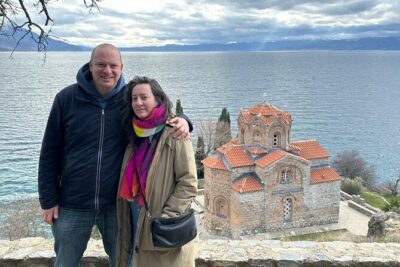
North Macedonia: Ohrid & Saint Naum Day Tour from Tirana
Read our review →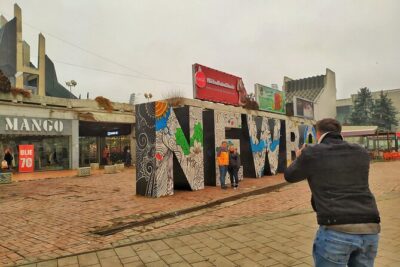
Day Tour of Kosovo from Tirana, Pristina and Prizren
Read our review →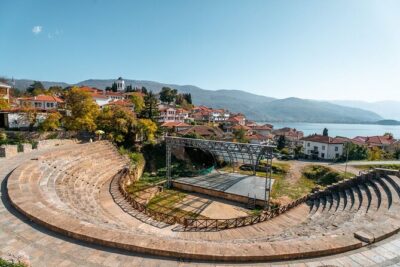
Ohrid – North Macedonia Full Day Tour from Tirana & Durres/Golem
Read our review →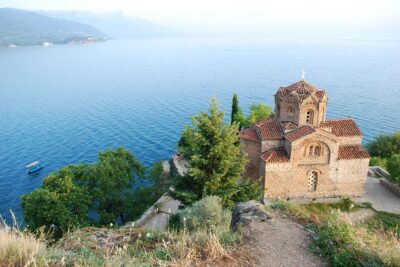
Private Ohrid Day Tour and Authentic Village from Tirana & Durres
Read our review →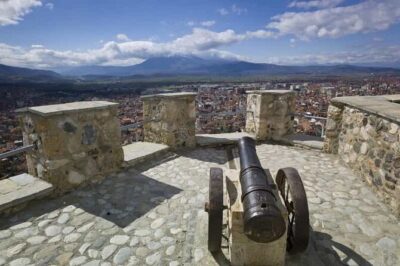
From Tirana/Durres/Golem: Prizren and Prishtina Full-Day Tour
Read our review →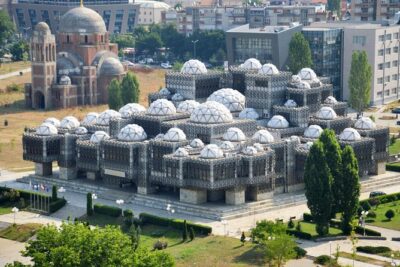
Best of Kosovo Day Tour – Pristina & Prizren from Tirana & Durres
Read our review →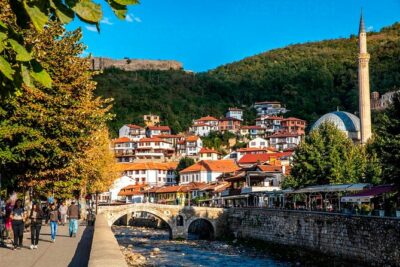
Browse the lists this tour appears in