
Reviewed · KRUJA CASTLE & BAZAAR TRIPS
Kruja Castle ,Sari Salltik & Durrës fromTirana
Kruja gives you Albania’s mountain history, while Durrës brings you to Roman ruins and the Adriatic coast in the same day. I especially like the Skanderbeg Museum and the chance to compare an old mountain bazaar with Durrës’ ancient amphitheater and seafront.
I also like the easy hotel pickup and the personal touch offered by guides such as Adi, Ali, and Besnik. The main tradeoff is time: this is a long day with plenty of driving, and some schedules may feel rushed, especially if you want a leisurely lunch or extra time in either city.
Key points to know before booking
- Kruja is the main historical stop: The castle, Skanderbeg Museum, old houses, and bazaar provide the strongest sense of Albania’s past.
- Sari Salltik adds a mountain viewpoint: The Bektashi shrine sits above Kruja and looks toward the Adriatic coast.
- Durrës covers several eras: You see a Roman amphitheater, a Byzantine forum, a Venetian tower, Italian-style streets, and the modern promenade.
- You get a lot in one day: The route links mountains, archaeological sites, city streets, and the sea, but it cannot offer a deep visit to every stop.
- The guide matters: Adi is especially noted for clear explanations, local stories, safe driving, and restaurant advice, though the assigned guide may also be Adnan, Ali, Skerdi, or Besnik.
- The price is reasonable for convenience: At $84.10 per person, hotel pickup, transport, guiding, and a full day of sightseeing make this useful if you have limited time in Tirana.
Why this makes a good day beyond Tirana
This tour works because Albania’s geography changes quickly. From Tirana, you drive toward Kruja, a historic town on the lower slopes of Mount Krujë, then continue to Durrës on the Adriatic. In one day, you move from mountain views and Ottoman-era trade routes to Roman ruins and beachfront cafés.
That range gives you a better feel for Albania than another day spent only in the capital. You see how the country’s story shifts from medieval resistance to ancient port life, Byzantine rule, Venetian defenses, Italian architectural influence, and modern seaside leisure.
The experience lasts about eight to nine hours. Pickup is offered from your hotel at the appointed time, and transport is in an air-conditioned vehicle. The maximum group size is 15, although some departures may be much smaller. One person had the tour alone, while another group of four found the vehicle a little tight because the car held five people including the driver. If you value space, ask about the vehicle before booking.
The tour costs $84.10 per person. That is not the cheapest way to see Kruja and Durrës, but it covers a great deal of ground without requiring you to arrange taxis, buses, or separate guides. Its value is highest if you have only a few days in Albania, do not want to drive, and prefer having local context at historical sites.
More Kruja castle and bazaar trips:
- Kruja castle, the old Bazaar & Sarisalltik- Departure from Tirana
★ 5.0 · 592 reviews - Hiking to Gamti, Bovilla Lake and Kruja Day Trip from Tirana
★ 5.0 · 107 reviews - Private Bovilla Lake and Kruja City Day Tour from Tirana
★ 5.0 · 34 reviews
Kruja Castle and the story of Skanderbeg
Kruja is the emotional center of the day. The road from Tirana takes about an hour and a half, depending on conditions, and the change in setting is part of the appeal. The town sits high enough to provide broad views toward the surrounding mountains and, from certain points, the Adriatic coast.
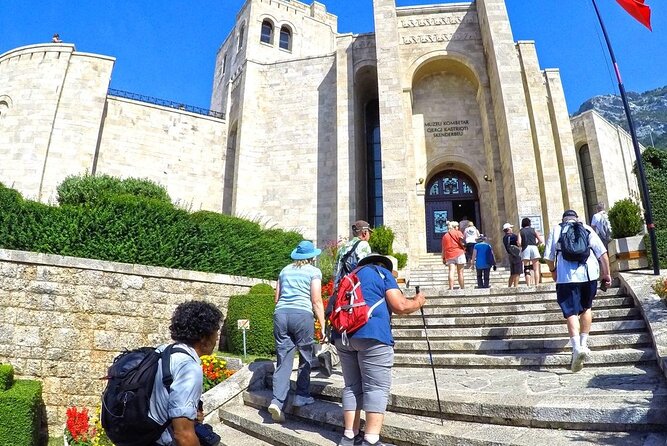
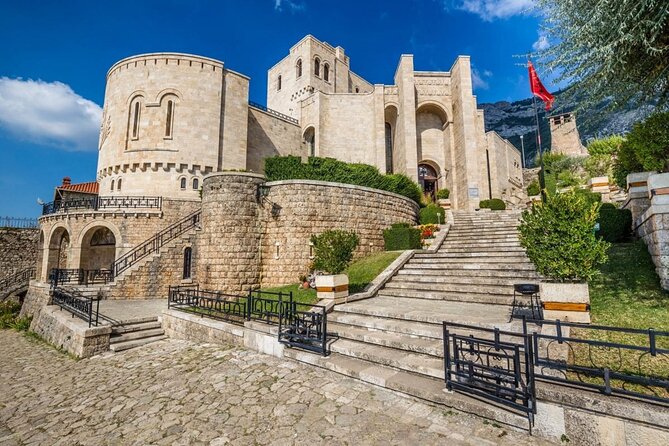
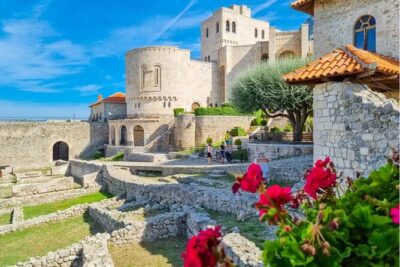
The first major visit is Kruja Castle and the Skanderbeg Museum. The castle is not a single polished fortress preserved behind one gate. It is a historic area with an old road, traditional houses, museum buildings, and viewpoints. Give yourself time to look beyond the most obvious photo stop.
The museum focuses on Gjergj Kastrioti, known as Skanderbeg, Albania’s national hero. In the 15th century, he led resistance against the Ottoman Empire, then the most powerful force in the region. A guide adds real value here because the museum’s English explanations may be limited in places. Adi, in particular, has guided people through the exhibits and filled in the missing context with stories about Albania’s past.
The museum is the stop where I would pay closest attention. Kruja’s views are memorable, but the museum explains why the town matters. You come away with a clearer sense of Albanian identity and the long struggle to preserve local independence.
There is a practical point about admission. The tour information says the admission ticket is included, but one booking account reported paying about €5 separately. Confirm this before departure so you know what to expect. The supplied details also describe most of the castle visit as included, so the policy may depend on the specific departure or how the reservation was handled.
The castle area involves walking on old streets and uneven surfaces. You should wear firm shoes and expect some uphill sections. This is not presented as a strenuous hike, but it is not a flat museum visit either.
Kruja’s old bazaar and the art of browsing
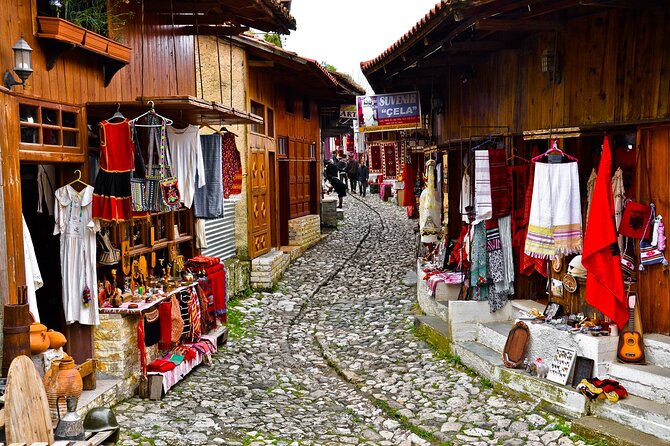
After the castle, you visit Kruja’s old bazaar. The marketplace dates back more than 400 years and follows an Ottoman-style street plan. Its wooden-fronted shops and narrow route give the town a more human scale than the formal museum grounds.
This is a good place to slow down, look at local crafts, and take photographs. The bazaar is still a shopping area, so the atmosphere is more practical than museum-like. You may find souvenirs and handmade goods, but the tour does not promise a particular product or shopping stop.
The time allocation for Kruja is about two hours. That sounds generous until you include the castle, museum, walking, photos, and bazaar. If you want to examine every exhibit and browse every shop, you will need to keep moving.
I would treat the bazaar as a chance to get a feel for Kruja rather than a dedicated shopping trip. The most enjoyable rhythm is to follow the guide through the castle and museum, then use any remaining time for the bazaar and a short pause.
Sari Salltik and the mountain above Kruja
Sari Salltik is a 13th-century Bektashi shrine on Mount Krujë. It is dedicated to Sari Saltik, a dervish and folk saint honored in parts of the Balkans. The site has spiritual importance, especially for people who believe it can help turn bad luck into good.
The visit lasts about 45 minutes. That is enough to see the shrine and take in the view, but not enough for a long religious or mountain excursion. You should approach it as a short cultural stop with a strong setting.
The viewpoint is one of the tour’s best small surprises. From above Kruja, you can look across the countryside toward the Adriatic coast. The relationship between the shrine, the mountain, and the sea helps explain why Kruja has long carried both strategic and spiritual importance.
Because the shrine is a holy place, use a respectful manner and follow your guide’s instructions. The tour description does not specify dress rules or religious procedures, so do not expect a formal ceremony or extended explanation of Bektashi practice.
The order of this stop may vary in practical terms. The supplied schedule places Sari Salltik as the final listed stop, after Durrës, even though the shrine is above Kruja. Confirm the day’s exact sequence with your guide at pickup.
A few more Tirana half-days to weigh up
- Hike Gamti Mountain with Bovilla lake view & canyon- From Tirana
★ 5.0 · 1,280 reviews - Berat city UNESCO tour, the Castle & Belshi lake- From Tirana
★ 5.0 · 804 reviews - Walking Tour of Tirana
★ 5.0 · 646 reviews - Albanian Night Show: Traditional Music, Dance & Dinner in Tirana
★ 5.0 · 431 reviews
Durrës Amphitheater and Albania’s ancient port
Durrës changes the mood completely. Founded in 627 B.C., it has been one of Albania’s key coastal cities for centuries. Its modern streets sit on top of layers from Greek, Roman, Byzantine, Venetian, Ottoman, Italian, communist, and contemporary life.
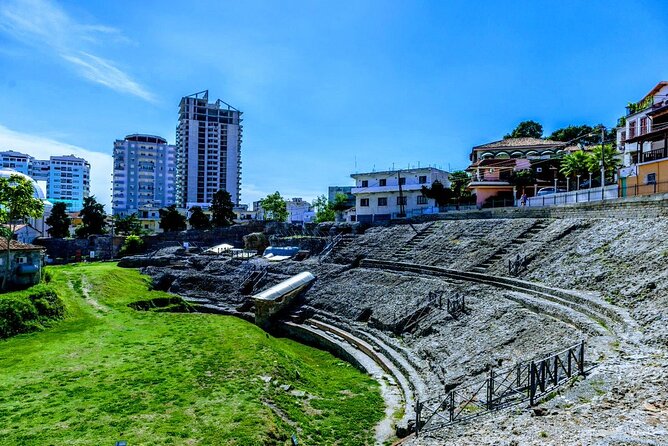
The Roman amphitheater is the main draw. Built in the early second century, it once held about 20,000 spectators for gladiator contests and performances. Its scale is impressive, especially when you remember that it sits within the present-day city rather than in an isolated archaeological park.
The amphitheater is also a useful reminder that Durrës was not a minor outpost. Its port helped connect the Adriatic with the wider Roman world. You can understand the city better when you see the ancient arena alongside ordinary streets and apartment buildings.
The tour allows about two hours for Durrës, including several sights. That is enough for a guided introduction, but not for a slow archaeological study. If the amphitheater is your main reason for booking, tell the guide early that you want time inside and around the site.
The old Byzantine market, also called the Byzantine Forum or Macellum, adds another layer. Dating to the sixth century and built during the reign of Emperor Anastasius I, it once served as a public and religious center. The circular colonnades and remaining stonework are not as immediately dramatic as the amphitheater, but they reward a closer look.
You are not simply seeing isolated ruins. The forum helps you picture Durrës as a working city under Byzantine rule, with public spaces, commerce, and religious life. A guide is useful here because the remains can be easy to pass without understanding their purpose.
Venetian Tower, city walls, and Italian-style streets
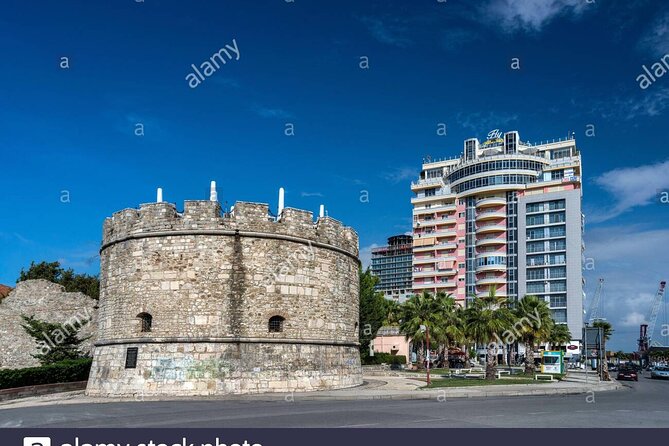
Durrës Castle is linked to the fifth-century citadel built by Byzantine Emperor Anastasius I. Parts of the old walls remain, showing how the city was defended from attack. The Venetian Tower was added in the 15th century, when Venice controlled important points along the Adriatic.
The tower combines Venetian and Ottoman-era associations and provides a good photo point. The visit lasts about 30 minutes, so it is brief. You should not expect a large castle complex or a long climb through restored rooms. The appeal is the surviving defense system and the way it fits into the modern city.
Durrës also has an Italian-style street built during the reign of King Zog in the early 20th century. The buildings reflect Italy’s influence on Albania at that time. This short walk helps you see that Durrës is not only an ancient Roman and Byzantine site. Its identity was shaped again in the 20th century.
The route through Durrës is strongest when you look for these overlaps. A Roman arena, a Byzantine forum, a Venetian tower, and Italian-style façades all sit within a relatively compact urban area. The visit is less about one perfect monument and more about reading the city as a series of historical layers.
The Adriatic promenade and optional seafood lunch
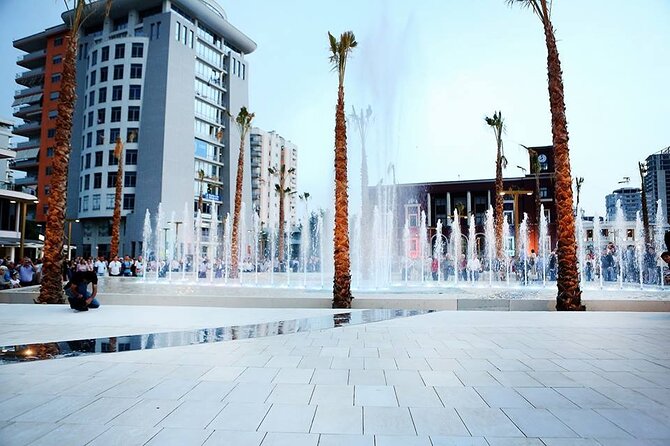
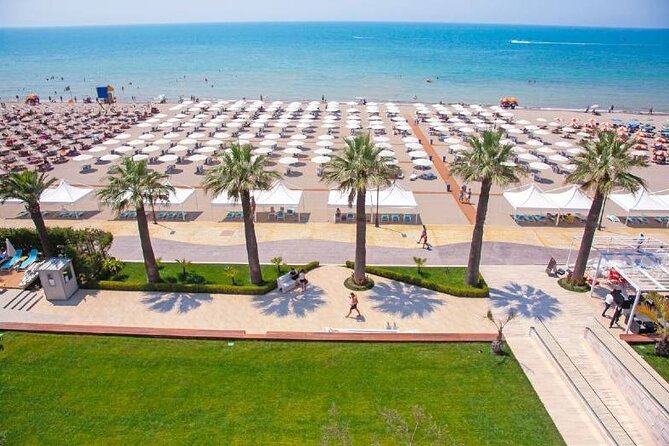
After the ruins, the tour moves to Shetitorja Vollga, Durrës’ seafront promenade. Palm trees, cafés, restaurants, and views across the Adriatic make this the natural place to rest after several hours of history.
You have about an hour here. You can walk, sit at a café, or, if conditions and your schedule allow, swim in the Adriatic. Swimming is an opportunity rather than a guaranteed part of the day, so bring what you need only if you already know you want to use the time that way.
An optional seafood lunch can be arranged at a seafront restaurant. Fish, shrimp, and mussels are mentioned as typical choices, with the sea as the backdrop. Several accounts describe lunch as a highlight, while another person had no time for food or drink because the schedule was tight.
That difference matters. Do not assume lunch is automatically built into the day. Ask your guide at the start if you want a proper meal, and be clear about how much time you need. One guide response indicates that lunch could have been arranged if requested, but a fast-moving group may not have enough free time without planning.
I like the lunch option because it gives Durrës a purpose beyond checking off ruins. A relaxed meal by the water lets you experience the city as a living coastal place. Still, if you would rather spend more time at the amphitheater or bazaar, you may prefer a quick snack instead.
What the guides add to the day
The guide is a major part of this experience. Adi receives repeated praise for being punctual, friendly, patient, and clear in English. He also shares personal stories about growing up in Albania during the communist period, when the country was isolated from much of the outside world.
That kind of conversation can add meaning that a printed description cannot. You can ask about local food, modern Albania, restaurants in Tirana, and the places you pass on the road. Adi has also been helpful with restaurant suggestions and, on one occasion, brought coffee and water during the day.
Other guides named in the supplied information include Adnan, Ali, Skerdi, and Besnik. Ali is described as a safe driver and an effective guide in both Durrës and Kruja. Besnik is associated with a relaxed seaside lunch, while Skerdi is noted for keeping the visit to Kruja at a comfortable pace.
Your guide will determine how much time goes into formal history, local stories, photos, or food. One guide contacted a participant before the trip with pickup details, which is useful because the morning depends on everyone being ready at the appointed time.
The driving is another strength. You can focus on the scenery and conversation instead of navigating unfamiliar roads. Still, one person felt that too much of the day was spent in the vehicle and would have preferred a deeper visit to one destination. That is a fair criticism. This tour is designed for range, not a slow study of one town.
Timing, group size, and comfort
Eight to nine hours is a full day. The drive to Kruja takes about 90 minutes, and the route then continues to Durrës before returning to Tirana. Add the walking, museum visits, photo stops, and possible lunch, and you have a packed schedule.
The tour can work well for solo participants, couples, and small groups who want an efficient overview. The maximum group size is 15, but actual departures may be smaller. A small group usually makes it easier to ask questions and adjust the pace.
Vehicle comfort depends on the departure. The air conditioning is a welcome feature during Albania’s warmer months, but a full car can feel cramped. One family of four found the vehicle tight despite having only five seats including the driver. Ask about seating if you have long legs, bulky luggage, or a larger family group.
Hotel pickup removes one of the day’s common headaches. You simply wait at your hotel at the appointed time. Confirmation is provided when you book, and most people can take part, though the castle and old streets require ordinary walking on historic surfaces.
Free cancellation is available up to 24 hours before the start time for a full refund. Changes or cancellations made within 24 hours are not accepted for a refund, and the cutoff uses local time.
Who should book this Albania day trip
I would choose this tour if you have limited time in Tirana and want to see both the interior and the coast without arranging separate transport. It is also a good fit if you enjoy history but want variety: a museum in the morning, ruins in the afternoon, and a seaside walk before returning.
It suits people who like having a guide explain context as they go. The Skanderbeg Museum and Byzantine Forum are easier to appreciate when someone connects the objects and ruins to Albania’s wider story.
You may want another plan if you dislike long drives or prefer unhurried visits. Durrës receives several stops, but the time at each one is limited. If your main goal is a relaxed beach day, this schedule includes too much history. If your main goal is a detailed archaeological visit, you may prefer to spend the whole day in Durrës.
Should you book it?
Book this tour if you want an efficient first look at Albania beyond Tirana, especially the mountain setting of Kruja and the coastal character of Durrës. Kruja Castle and the Skanderbeg Museum are the strongest reasons to go, while the old bazaar and Sari Salltik add local character.
At $84.10, the package offers fair value for hotel pickup, air-conditioned transport, guiding, and a full day on the road. Before paying, confirm the exact vehicle size, the day’s order, museum admission, and whether you want a proper seafood lunch.
If you prefer depth over variety, choose only Kruja or only Durrës instead. If you want mountains, castles, ancient ruins, and the Adriatic in one manageable day, this is a practical choice.
FAQ
How long does the tour from Tirana last?
The experience lasts approximately eight to nine hours, including the visits to Kruja, Sari Salltik, and Durrës and the return journey to Tirana.
Is hotel pickup included?
Yes. You should wait for the guide at your hotel at the appointed pickup time.
What is the maximum group size?
The maximum group size is 15 participants. The actual group may be smaller, and some departures may have only one or a few people.
Is lunch included?
Lunch is optional and is not presented as part of the tour price. You may request a seafood lunch at a seafront restaurant in Durrës, but you should ask the guide early because some schedules allow little free time.
Is admission to Kruja Castle and the Skanderbeg Museum included?
The tour information states that an admission ticket is included. However, one booking account reported paying about €5 separately, so confirm the current admission arrangement before the visit.
Can I cancel for a full refund?
Yes. You can cancel at least 24 hours before the experience starts for a full refund. Cancellations or changes made less than 24 hours before the start time are not accepted for a refund.
Just added around Tirana
- UNESCO heritage in Albania – 4 days★ 5.0 · 3 reviews
- Apollonia and Berat UNESCO tour from Tirana★ 5.0 · 3 reviews
- Private Transfers from Tirana International Airport to Sarandë★ 4.5 · 3 reviews
- Transfers Tirana Airport – Sarande – Ksamil – Airport Tirana★ 4.5 · 3 reviews
- Berat 4×4 Off-Road and Vineyard Wine Tasting★ 5.0 · 3 reviews
- Cultural Tour in Tirana including House of Leaves★ 5.0 · 3 reviews
- N. Macedonia &Kosovo; Semi – Private Tour; Tour Leader & Car★ 4.8 · 3 reviews
- SOTIRA WATERFALL HIKING/TREKKING from Berat by 1001 Albanian Adventures★ 5.0 · 3 reviews
Kruja Castle & Bazaar Trips, compared.
Kruja castle, the old Bazaar & Sarisalltik- Departure from Tirana
Read our review →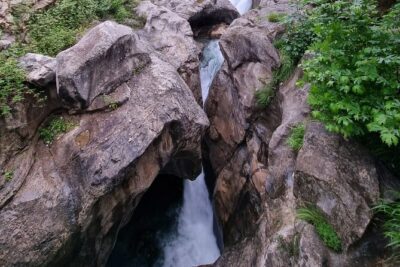
Hiking to Gamti, Bovilla Lake and Kruja Day Trip from Tirana
Read our review →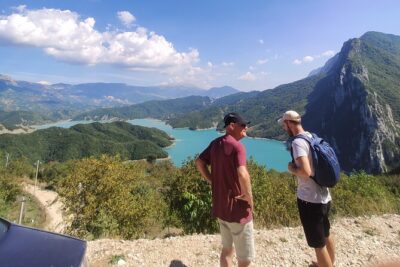
Private Bovilla Lake and Kruja City Day Tour from Tirana
Read our review →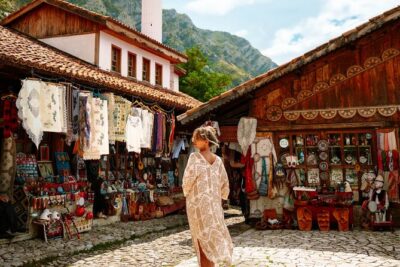
Kruja & Durres; Semi – Private Day Tour from Tirana
Read our review →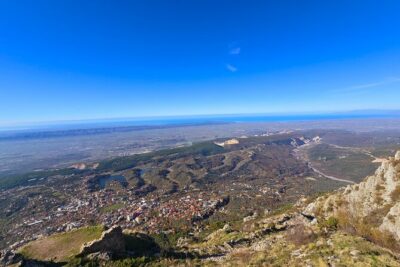
Kruja, Old Bazaar, Museum,Sari Saltik tour from Tirana
Read our review →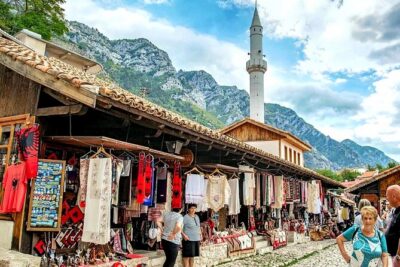
Guided Tour to Kruja, Holy Mountain & Old Bazaar from Durres
Read our review →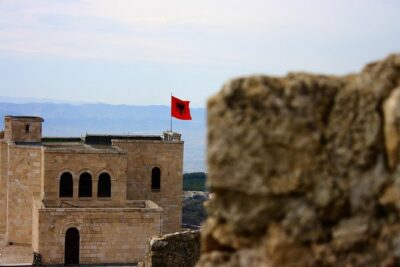
Day Tour of Kruja and Shkoder – Discover North Albania Heritage
Read our review →Browse the lists this tour appears in