
Reviewed · TIRANA TOURS
Private Walking Tour Visit to Durrës with Licensed Guide
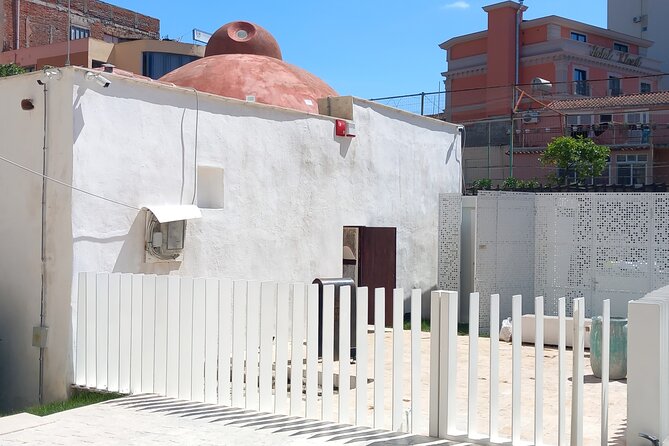
Durrës packs more history into its streets than its beach-resort image suggests. On this private walk, you move from a Roman amphitheater and Byzantine forum to Ottoman baths, Italian-era buildings, churches, mosques, and communist-era landmarks, with a guide explaining how each layer changed the city. Artan and Joana are named guides associated with the experience, and the tour is offered in English.
I like the private format, since you can ask questions and keep the pace suited to your group. I also like the way the route connects ancient ruins with ordinary city life, including a stroll along Bulevardi Epidamn and possible stops for coffee, burek, ice cream, or orange juice. The main consideration is pace: fourteen stops in roughly two to three hours means most sites receive a short explanation rather than a long visit.
Key points to know before booking
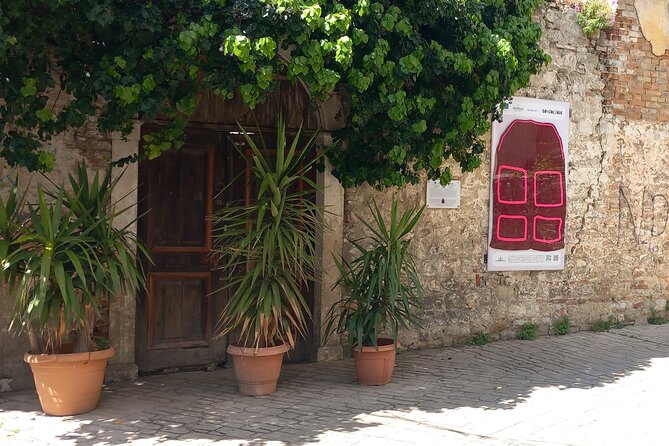
- Fourteen central Durrës stops cover Roman, Byzantine, Venetian, Ottoman, Italian, religious, and communist-era history.
- The route is private, so only your group takes part.
- The Venetian Tower interior is included, but the multimedia projection and raised balcony require an extra fee.
- Local refreshment stops may be included along Bulevardi Epidamn, with coffee, water, burek, ice cream, or orange juice.
- The walk ends at Freedom Square, close to the city center and useful for continuing on your own.
- The price is $24.10 per person, with free cancellation up to 24 hours before the start time.
Why this Durrës walk is more than an ancient ruins tour
Durrës is one of Albania’s best places for seeing history in layers. The Roman city did not disappear when new rulers arrived. Byzantine defenses were adapted, Venetian towers gained new uses, Ottoman buildings filled old streets, and twentieth-century planners reshaped the center again.
That is the central strength of this walk. You are not simply taken from one isolated monument to another. The guide uses old maps, photographs, buildings, and street locations to explain how neighborhoods grew and changed. That approach helps you understand why a mosque sits against a Byzantine wall, why a city hall has an Italian look, and why archaeological remains appear beneath or beside modern streets.
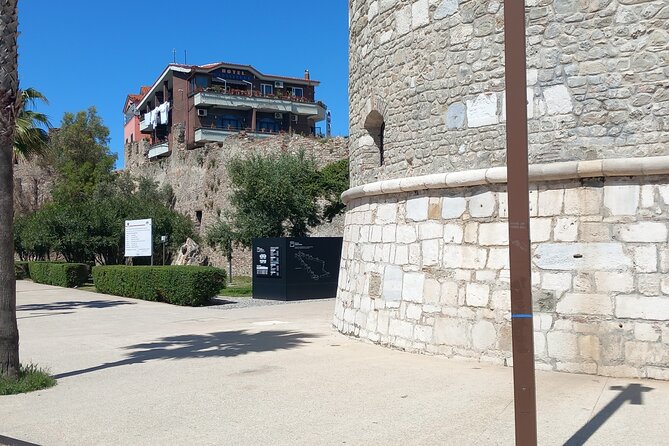
The tour begins at the Venetian Tower of Durrës and finishes at Sheshi Liria, also called Freedom Square. The stops are all in the central city area, and the route is designed for walking rather than transport between sights.
The listed timing adds up to about two hours and twenty-five minutes, although the overall duration is given as two to three hours. That leaves room for questions, short pauses, and the suggested refreshment stops. You should still expect a fairly active walk, with frequent stops and plenty of information packed into a short period.
More Walking Tours in Tirana
- Walking Tour of Tirana
★ 5.0 · 646 reviews - Local food experience & walking tour of Tirana
★ 5.0 · 192 reviews - Berat Walking Tour
★ 5.0 · 86 reviews
Venetian Tower and the city’s many layers
The first part of the route introduces Durrës through its urban development. You will hear about the second-century amphitheater, Byzantine, Norman, Venetian, and Ottoman fortifications, and the planning of the industrial era. The guide also links these older layers to the city’s current changes.
This opening is useful because it gives you a framework for the rest of the walk. Instead of treating each building as a separate fact, you can watch the city shift from ancient port to fortified settlement, Ottoman town, Italian-influenced center, communist city, and modern Albanian destination.
The Venetian Tower receives a second, more focused stop. Here, the guide explains its construction methods and compares it with towers found around the Adriatic and in other regions. You will also hear how its role changed under Ottoman rule, how it was demilitarized in the early years of World War II, and how it was used during the communist period and the last thirty years.
Interior access is included, but there is an important extra cost. The multimedia projection and upper balcony require a separate admission fee. If those features matter to you, ask about the current charge before entering. Even without them, the tower discussion gives the building a useful military and civic context.
Saints, an Ottoman bath, and a coffee break
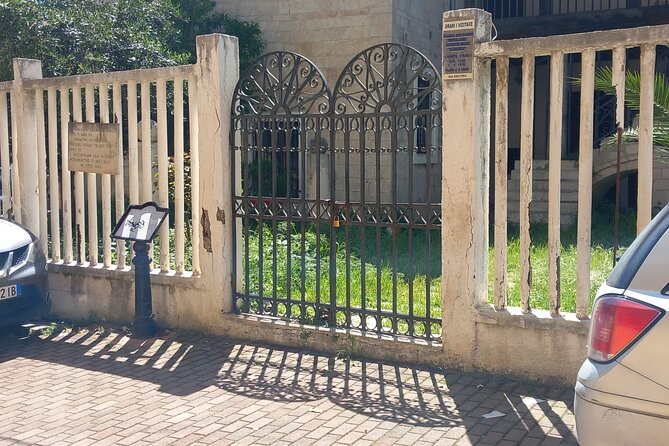
The Church of Apostle Paul and Saint Asti brings the tour into the city’s early Christian story. The guide explains the connection of the two saints with Durrës and points out traces of the former Church of Saint Spiridon, which was demolished during the communist period.
This is a short stop, about ten minutes, so it is best understood as a guided orientation rather than a long church visit. You will get the significance of the place and its lost structure, but the schedule does not suggest a long period for quiet observation.
Next comes the seventeenth-century Ottoman Hamam, or bath. The building may once have been privately owned or connected to government buildings along the seaside promenade. It may also have been linked to the White Mosque, which was located only a few meters west of the bath on the route of today’s Bulevardi Epidamn.
The remaining traces help explain the old road toward Durrës Castle. You will also hear how steam and heat were produced and moved through the bath. That practical detail makes this stop especially worthwhile. It turns a fragment of masonry into a place with a clear function, showing how people once washed, socialized, and used heat in an Ottoman city.
Bulevardi Epidamn then shifts the focus from ancient and Ottoman remains to urban planning. The street’s early residential buildings were guided by the first urban regulatory plan of 1928. The guide explains the architecture and the investments that shaped this section of town.
This is also the most relaxed part of the walk. The group may pause at two or three local spots for coffee, water, burek, ice cream, or orange juice. The information does not state that refreshments are included in the tour price, so you should treat these as optional purchases unless your guide tells you otherwise.
Traditional homes and religious buildings
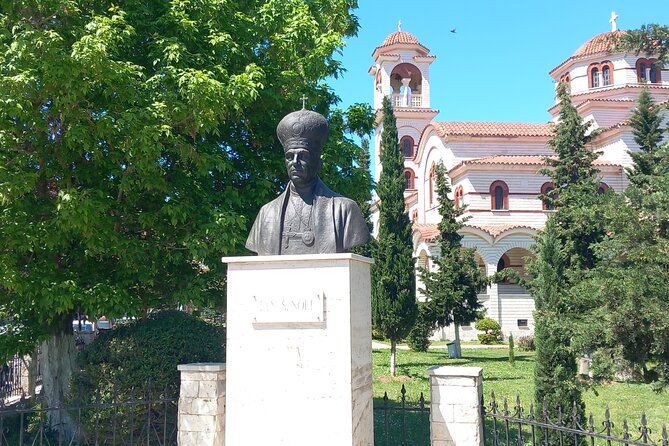
The Aleksandër Moisiu Museum introduces two stories at once: domestic architecture and one of Durrës’s best-known artistic figures. The house reflects traditional Albanian and Durrës architecture, and it once served as the English consulate when Durrës was the capital after national independence.
The building was damaged in the 2019 earthquake and is awaiting further investment. The Byzantine tower beside it was also damaged. That means you should expect a site whose importance is clearer than its present condition. The guide helps you read the building’s past even when the structure itself needs care.
The house is connected with Aleksandër Moisiu, an internationally recognized theater artist from Durrës. For anyone interested in culture, this is a welcome change from the usual parade of military and religious monuments.
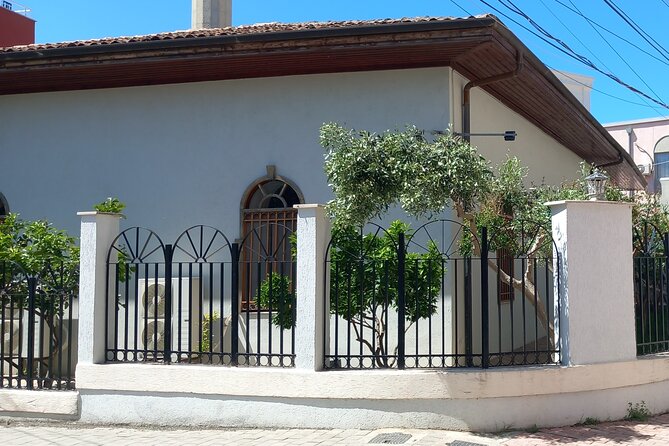
Fatih Mosque follows with a look at early Ottoman architecture in Albania. Built in 1501, it is one of the country’s three oldest mosques. Its position at the base of the Byzantine wall is not accidental. The wall’s supporting sections were used in the mosque’s construction, and the minaret was shielded from direct seaside views and possible sea attacks.
I like this stop because it shows how later builders reused earlier structures. Durrës is not presented as a set of clean historical compartments. Roman, Byzantine, Venetian, Ottoman, Italian, and Albanian elements overlap, and the mosque makes that physical connection easy to see.
Same drive out, a completely different day:
- Hike Gamti Mountain with Bovilla lake view & canyon- From Tirana
★ 5.0 · 1,280 reviews - Berat city UNESCO tour, the Castle & Belshi lake- From Tirana
★ 5.0 · 804 reviews - Kruja castle, the old Bazaar & Sarisalltik- Departure from Tirana
★ 5.0 · 592 reviews - Albanian Night Show: Traditional Music, Dance & Dinner in Tirana
★ 5.0 · 431 reviews
The amphitheater and churches under changing governments
The Durrës Amphitheatre is one of the major stops, though the listed time is still about ten minutes. The guide explains how the ancient urban structure coexists with the modern city built around and above it.
Archaeologist Vangjel Toci began excavating the amphitheater in 1966. The excavation revealed important evidence of the city’s Roman past, but the site also raises a larger question: how should a living city protect remains buried beneath its streets and buildings?
You will hear about the government project intended to restore the entire amphitheater and preserve its different historical layers. This is a good place to ask questions about what has been uncovered, what remains protected, and how restoration can affect the neighborhoods around an archaeological site.
The Church of Saint Lucy, also identified as Kisha Katolike Shën Dominiku in the route details, takes the walk back into religious and political history. The guide discusses the church’s construction and figures who played a role in governing the city.
The stop also addresses the communist period, when religious activity was legally banned. Seeing the current church in that context gives you a clearer sense of how sharply Albania’s public life changed during the twentieth century. As with the other short stops, the value is in the explanation rather than an extended interior visit.
Freedom Square and Durrës civic history
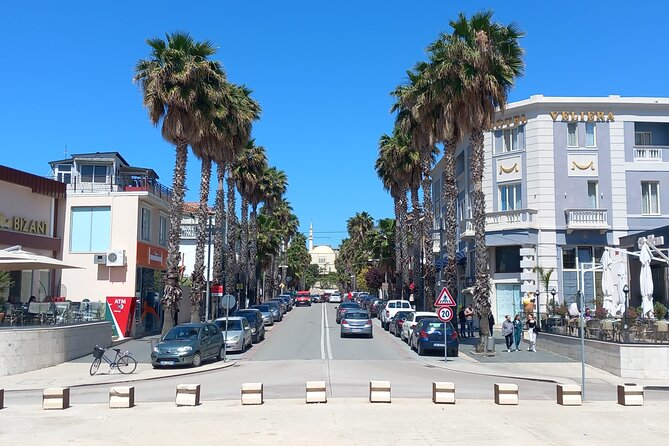
Freedom Square is one of Durrës’s earliest public squares. The 1928 urban plan first imagined it as a floral garden, and the space later developed into an important civic center. It is now associated with the Municipality and the Grand Mosque.
The guide traces the square from the Ottoman era through the years before World War II and into the present. This is where the earlier discussion of urban form comes together. You can see how the city expanded from the old Varosh neighborhoods and how public space changed as Durrës became a modern administrative center.
Durrës City Hall, built in 1931, reflects the Italian design preferences of its period. Its large central balcony was intended for public speeches in the square, giving the building a direct relationship with civic life.
The city hall also carries a small but telling piece of local history. After the 1926 earthquake destroyed the clock tower, a new public clock was placed on top of the city hall. Details like this make the walk feel grounded in the city’s real changes rather than in a list of dates.
The Grand Mosque receives its own stop. Local merchants financed its construction in 1939, during Italy’s strong economic influence in Albania before World War II. The building was closed and altered during the communist regime, then restored after the 1990s.
Its continuing religious role points to the endurance of Islam in Durrës despite major political pressure. This is a useful stop for understanding both religious life and the way local money shaped public buildings.
A 1960s cultural building and the Byzantine Forum
The Aleksandër Moisiu Theatre, part of the Palace of Culture, marks the beginning of the downtown thematic section. Built in 1960, it was the first building of its type in the Republic of Albania.
The guide uses it to explain Albanian architecture of the 1960s and its effect on Durrës and other Albanian cities. This is a different kind of history from the amphitheater or mosque. You are looking at a public building shaped by the state and its cultural goals during the communist period.
The final stop is the Rotonda and Byzantine Forum, discovered by Vangjel Toci. This open archaeological area helps trace Durrës from Late Antiquity into the Middle Ages.
You will see urban remains and artifacts connected with Byzantine-era life. The site is important not just because of its age, but because it shows how the city changed after the Roman period. The forum gives the tour a strong closing point by returning you to archaeology, now with a better sense of the later religious, military, and civic layers built around it.
The advertised endpoint is Freedom Square, while the route details also place the Byzantine Forum at the end of the listed stops. Because the information gives both locations, confirm the exact final meeting point with the guide when you arrive. In either case, the walk remains within central Durrës.
What the $24.10 price delivers
At $24.10 per person, this is a low-cost way to get a private introduction to Durrës. The value is strongest if you want a guide to connect scattered remains and explain the city’s long sequence of political changes.
You are paying for a private English-language service, not a package of major admission tickets. Most listed stops have no admission charge, and the Venetian Tower interior is included. The tower’s projection and balcony are extra, and refreshments along Bulevardi Epidamn are not clearly included, so budget a little more if you want those additions.
The price is particularly attractive for a small group. A private tour can be more useful than a large group walk when you want to ask about archaeology, religion, architecture, or the 2019 earthquake without waiting for a dozen other people.
The tradeoff is depth. Fourteen stops in two to three hours creates a broad overview. If you want long visits inside every church, museum, or archaeological site, this route may feel quick. If you want orientation before exploring on your own, it offers a lot for the money.
Timing, walking comfort, and guide style
The route is offered in English and uses a mobile ticket. Confirmation arrives at booking, and the activity is private, with only your group taking part. It is near public transportation, service animals are allowed, and most people can participate.
The guide names associated with the experience include Artan and Joana. Artan is praised for his enthusiasm for Durrës and his ability to make the city’s past engaging, while Joana is described as clear and competent. Since the exact guide may depend on the date, check who will lead your tour if a particular guide matters to you.
Allow two to three hours, and wear shoes suited to a city walk. The short stop times mean you will be moving often, pausing for explanations rather than settling into one site for a long time.
The experience has a perfect 5 rating from 26 reviews, with 100 percent of participants recommending it. That points to a clear pattern: the strongest feature is the guide’s explanation of Durrës, especially for people who enjoy history and want more than a quick look at monuments.
Free cancellation is available if you cancel at least 24 hours before the start time. Changes or cancellations made inside that window are not accepted for a refund, and the cut-off uses local time.
Who should book this Durrës walking tour?
I would choose this walk if you are visiting Durrës for the first time and want a framework for the city. It suits history-minded visitors, couples, families, and small groups who prefer a private guide to a fixed large-group schedule.
It is also a good choice from Tirana if you are spending limited time in Durrës. The route gives you a broad look at the center without requiring separate research for the amphitheater, mosques, churches, civic buildings, and Byzantine remains.
You may want a different plan if your priority is a long, quiet museum visit or a detailed archaeological tour. The route touches many places, but the ten-minute stops are designed for explanation and orientation.
Should you book it?
Book this tour if you want a compact, private history walk that explains how Durrës grew through Roman, Byzantine, Venetian, Ottoman, Italian, and communist periods. The low price, English-language guiding, flexible private format, and central endpoint make it an easy addition to a day in town.
Before booking, remember the two practical limits: the tour moves quickly, and the Venetian Tower projection and balcony cost extra. If those points suit your plans, Artan, Joana, or the assigned licensed guide can give you the context needed to make Durrës’s scattered monuments readable and memorable.
FAQ
Where does the tour start?
The tour starts at the Venetian Tower of Durrës, at 8C5W+VQC, Durrës, Albania.
Where does the tour end?
The stated endpoint is Sheshi Liria, also called Freedom Square, in Durrës. The route details also include the Rotonda and Byzantine Forum as the final listed stop, so confirm the exact endpoint with your guide.
How long does the walking tour last?
The experience lasts approximately two to three hours. The individual stops are generally listed at around ten minutes, with fifteen minutes for the first city overview.
Is admission to the Venetian Tower included?
Entrance to view the interior is included. Access to the multimedia projection and elevated balcony requires an additional fee.
Is this a private activity?
Yes. Only your group participates in the tour.
Can I cancel for a full refund?
Yes, if you cancel at least 24 hours before the experience start time. Cancellations or changes made less than 24 hours in advance are not eligible for a refund.
Just added around Tirana
- UNESCO heritage in Albania – 4 days★ 5.0 · 3 reviews
- Apollonia and Berat UNESCO tour from Tirana★ 5.0 · 3 reviews
- Private Transfers from Tirana International Airport to Sarandë★ 4.5 · 3 reviews
- Transfers Tirana Airport – Sarande – Ksamil – Airport Tirana★ 4.5 · 3 reviews
- Berat 4×4 Off-Road and Vineyard Wine Tasting★ 5.0 · 3 reviews
- Cultural Tour in Tirana including House of Leaves★ 5.0 · 3 reviews
- N. Macedonia &Kosovo; Semi – Private Tour; Tour Leader & Car★ 4.8 · 3 reviews
- SOTIRA WATERFALL HIKING/TREKKING from Berat by 1001 Albanian Adventures★ 5.0 · 3 reviews
Tirana Tours, compared.
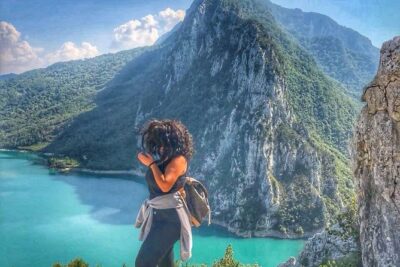
Hike Gamti Mountain with Bovilla lake view & canyon- From Tirana
Read our review →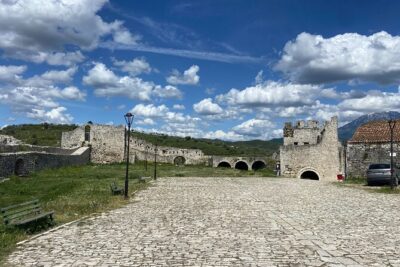
Berat city UNESCO tour, the Castle & Belshi lake- From Tirana
Read our review →
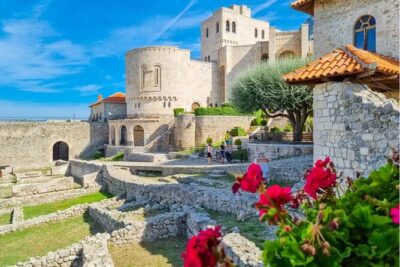
Kruja castle, the old Bazaar & Sarisalltik- Departure from Tirana
Read our review →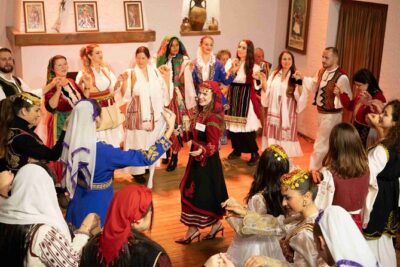
Albanian Night Show: Traditional Music, Dance & Dinner in Tirana
Read our review →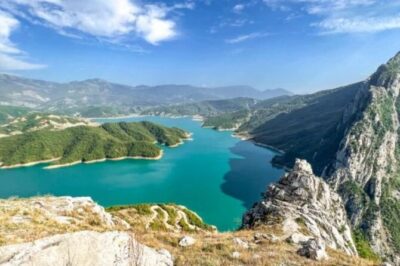
From Tirana- Hiking Tour to Bovilla Lake & Gamti Mountain
Read our review →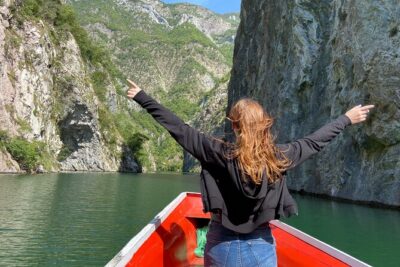
Shala river & Komani lake -Day trip departure from Tirana/Shkodra
Read our review →
Cooking Classes and Traditional food tasting in Tirana
Read our review →Browse the lists this tour appears in