Reviewed · TIRANA TOURS
Highlights of Albania
Albania packs an astonishing amount into a small country: Ottoman-era towns, Roman ruins, Communist relics, steep mountains, and a long Ionian coast. This private 8-day Highlights of Albania tour gives you a broad first look without making you solve the country’s transport puzzle yourself.
I like two things right away. You get a private vehicle and guide, so the route can feel personal rather than factory-made. I also like the range of places covered: Butrint, Berat, and Gjirokaster bring three UNESCO World Heritage Sites, while Kruja, Shkodra, and the Riviera add a strong local flavor.
The main drawback is the pace. You change hotels often and spend several days combining long drives with multiple historic stops. If you prefer slow mornings and several nights in one place, this route may feel rushed.
The tour at a glance
- Three UNESCO World Heritage Sites: See Berat, Butrint, and Gjirokaster on one route.
- Private guiding: Your group travels with its own driver-guide, allowing room for questions and occasional extra stops.
- Seven hotel nights: Accommodation and breakfast are included, but lunch, dinner, and all fees and taxes are not.
- A true north-to-south sweep: The route links Tirana, Kruja, Shkodra, Berat, Vlora, Saranda, and Gjirokaster.
- Historic sites and scenery: Expect castles, ancient theaters, monasteries, beaches, mountain roads, and Ottoman neighborhoods.
- Airport pickup and return: The trip begins and ends at Rinas Airport near Tirana.
What the $2,195.63 price gets you
At $2,195.63 per person, this is not a budget bus tour. It is priced as a private, multi-day package with seven nights of accommodation, breakfast, air-conditioned transport, airport transfers, and a driver-guide.
The value depends heavily on how many people share the booking. A couple pays a substantial amount, but you are also buying convenience across a route that would take careful planning by public transport. A small group can spread the vehicle and guiding cost while keeping the private-tour format.
Meals are not included. That is both a cost and an advantage. Albania has excellent inexpensive food, and you can choose what suits you rather than follow a fixed restaurant plan. Still, budget for lunches, dinners, drinks, and attraction charges. The tour says some admission tickets are included, while the general inclusions also say all fees and taxes are not included, so ask for a clear list of paid entries before departure.
The strongest value here is not luxury. It is access and time. You can cover most of Albania’s major cultural stops in one week, with someone else handling the driving between them.
A few more Tirana half-days to weigh up
- Hike Gamti Mountain with Bovilla lake view & canyon- From Tirana
★ 5.0 · 1,280 reviews - Berat city UNESCO tour, the Castle & Belshi lake- From Tirana
★ 5.0 · 804 reviews - Walking Tour of Tirana
★ 5.0 · 646 reviews
Day 1: Tirana, from Skanderbeg Square to Bunk Art
After airport pickup at 8:30 a.m., you go to your Tirana hotel and take a short break before beginning the city visit. The planned four-hour walk and drive introduces the capital through its changing political and cultural past.
Skanderbeg Square is the natural starting point. You see the monument to Albania’s national hero, the Opera House, Clock Tower, and Et’hem Bej Mosque. The square is broad and ceremonial, and it helps you understand how central Skanderbeg is to Albanian identity.
The route continues to the Pyramid, the main boulevard, government buildings, and Mother Teresa Square. Bunk Art adds the darker side of the story. Albania spent decades under an unusually closed Communist regime, and the country’s concrete bunkers remain a physical reminder of that period.
You should not expect a slow museum day. Four hours covers a lot, and Tirana deserves extra time if you enjoy cafés, city walks, or modern architecture. The free afternoon later in the trip gives you another chance to explore, but the first day is mainly an orientation.
Day 2: Kruja, Lezha, and Shkodra’s northern character
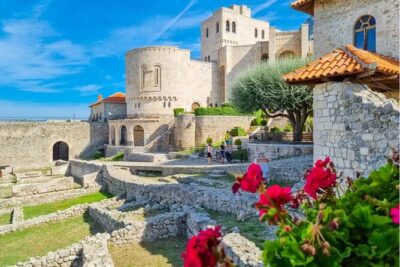
Kruja sits at about 608 meters and offers wide views from its castle area. The town is closely linked with Skanderbeg, who led resistance against the Ottoman Empire from here during the fifteenth century.
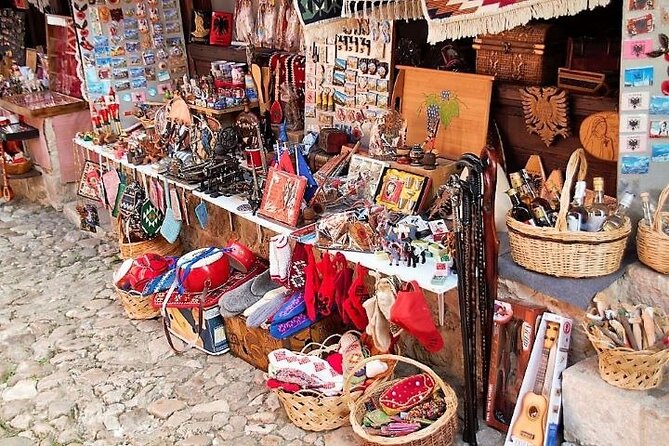
Inside the castle walls, the Skanderbeg Museum tells that national story. The Ethnographic Museum and Dollma Tekke add different perspectives, while the old bazaar sells embroidered goods, carpets, silver, copper, alabaster, filigree, traditional clothing, and antiques.
The bazaar is one of the more pleasant shopping stops on the route, but allow yourself time to browse rather than simply walk through. Prices and quality vary, so look carefully at workmanship before buying.
The stop in Lezha lasts about an hour and focuses on the League of Lezha, formed in 1444 when Albanian princes united against the Ottomans. The memorial tomb of Skanderbeg is built over the ruins of Saint Nicholas Cathedral and displays 25 shields linked with his military victories.
By afternoon, you reach Shkodra, one of northern Albania’s key cities. Rozafa Castle gives you sweeping views over the city and surrounding countryside. Its setting is more important than any single room or exhibit, so bring comfortable shoes and take time at the viewpoints.
The renovated pedestrian area has Italian and Austrian architectural influences, reflecting the city’s long connections with both. A visit to a Viennese mask factory adds an unexpected craft element. The masks are handmade and decorated with feathers, gold leaf, crystals, and bright colors.
This is a full day with three stops. Kruja and Rozafa Castle both involve uneven surfaces and uphill walking, so the day is active even if the formal sightseeing hours look modest.
Day 3: Durrës ruins and Berat’s thousand windows
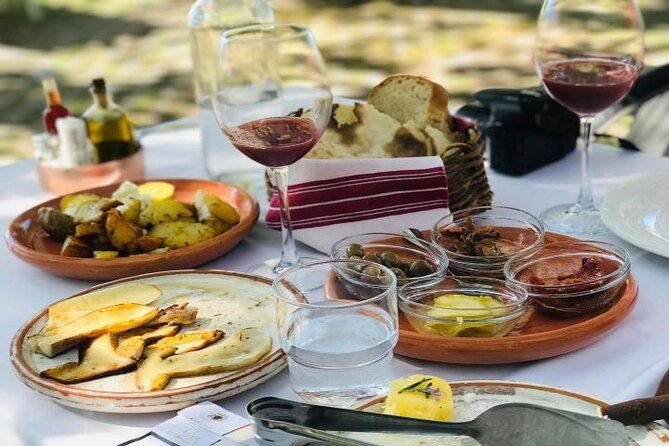
Durrës gives you Albania’s most direct encounter with Roman and Byzantine remains. The city has nearly 3,000 years of history and remains the country’s biggest seaport.
The Roman amphitheater is the main attraction. It held about 15,000 people and is among the largest ancient amphitheaters in the Balkans. Nearby, you can see a small church with mosaics, second-century bathhouses, and a Byzantine forum with marble columns.
The remaining city wall and old road add context, though Durrës is also a working modern city. The archaeological museum is another possible stop, but the three-hour visit means your guide will need to manage the time.
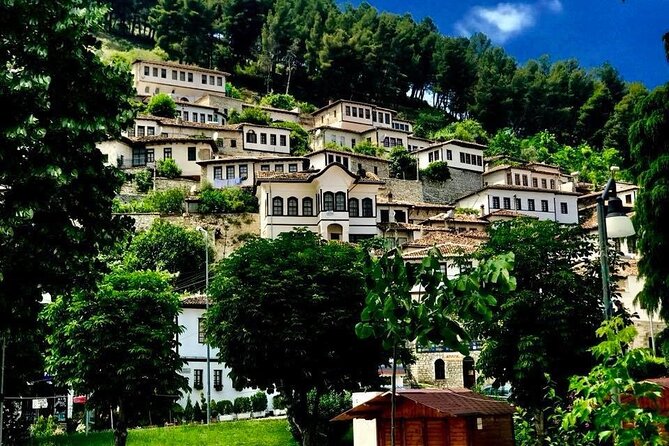
In the afternoon, Berat changes the mood completely. Known as the city of a thousand windows, it has a hillside setting and white Ottoman houses facing across the river. Berat became a UNESCO World Heritage Site in 2005.
The castle is not simply a ruin. People still live within its walls, alongside churches, a mosque, museums, and narrow lanes. The Cathedral of Saint Mary contains the Onufri Iconographic Museum, with more than 100 icons connected with Onufri, his son Nikolla, and other painters.
Down in the city, the program includes the Gorica Bridge, King Mosque, Halveti Tekke, and the Mangalem quarter. Berat is one of the places where I would gladly trade a checklist for a slow walk. Its appeal comes from the relationship between the river, the bridge, the hillside houses, and the old religious buildings.
You stay overnight in Berat, which is useful. The town is more enjoyable when you are not viewing it only through a car window.
Same drive out, a completely different day:
- Kruja castle, the old Bazaar & Sarisalltik- Departure from Tirana
★ 5.0 · 592 reviews - Albanian Night Show: Traditional Music, Dance & Dinner in Tirana
★ 5.0 · 431 reviews - From Tirana- Hiking Tour to Bovilla Lake & Gamti Mountain
★ 5.0 · 358 reviews - Shala river & Komani lake -Day trip departure from Tirana/Shkodra
★ 5.0 · 309 reviews
Day 4: Ardenica, Apollonia, and Vlora’s independence story
The drive toward Vlora begins with Ardenica Monastery, set 237 meters above sea level. The monastery occupies a site associated with an earlier pagan temple, and local history connects it with the 1451 wedding of Skanderbeg and Donika.
Saint Mary’s Church is the main architectural highlight. Its stone came from the ancient city of Apollonia, and the interior has frescoes. One hour is enough for a focused visit, though people interested in religious art may wish the schedule allowed longer.
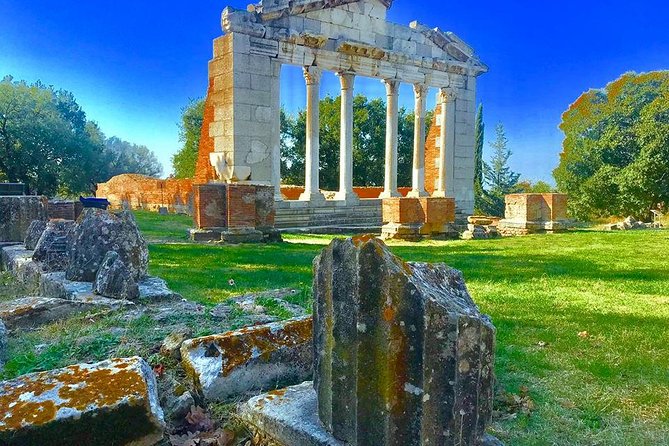
Apollonia Archaeological Park follows. Greek colonists founded the city on land associated with the Taulantii Illyrian tribe, and the site later became an important economic and trade center. Ruins are spread through open countryside, combining archaeology with wide rural views.
This stop works well for anyone who likes ancient sites that are not confined to a single building. It can also be tiring in strong sun because the visit takes about two hours and includes outdoor walking. Bring water, a hat, and sensible shoes.
Vlora is tied to Albania’s declaration of independence from the Ottoman Empire in 1912. The Museum of Independence gives the political story a clear place, while the visit to Zvernec Monastery adds another religious and scenic stop before your overnight stay.
Day 5: Riviera roads, Ali Pasha Castle, and Saranda
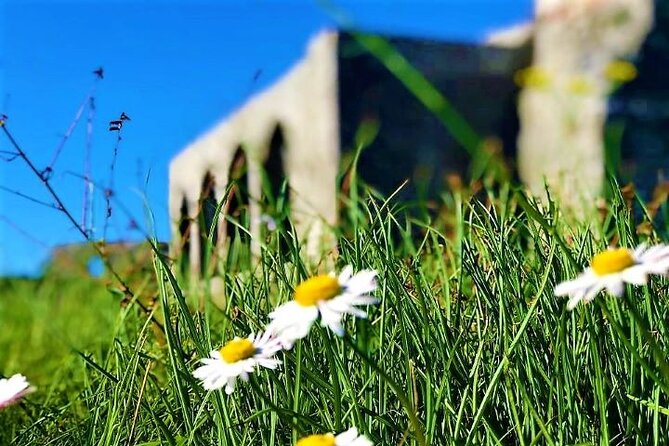
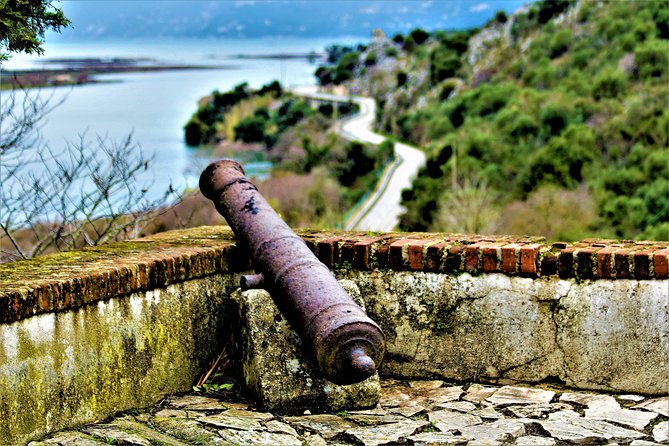
The route now turns toward the Albanian Riviera. Ali Pasha Castle is a compact coastal fortress built in 1814 on a hill-like island connected to shore by a narrow strip. Its triangular shape and three corner bastions make it easy to recognize from a distance.
The castle takes about an hour, and the appeal is partly the setting. Across from it is the Church of Saint Nicholas, built during the same period. This is a short but memorable stop rather than a large complex.
At Borsh, you get two hours along a stretch of coast known for traditional villages, coves, and golden beaches. The scenery is a major reason to take this route, though the itinerary does not promise a dedicated swim session. Treat it as a coastal sightseeing stop unless your guide confirms extra beach time.
Saranda is the main base for the southern Riviera. You visit Pasqyra Beach, a small bay described as less crowded even in peak season, and Lekursi Castle above town. The castle dates from the mid-1500s and gives a broad view over Saranda.
Saranda itself is more developed and summer-focused than some of the smaller coastal stops. You will find beaches, nightlife, archaeological sites, and natural attractions, but the town can feel busy during the high season. The private format helps here because your guide can explain how much time makes sense at each stop.
The itinerary also points to Albania’s wartime role as a safe haven for Jewish people during World War II. That detail adds depth to the usual beach-and-castle visit, especially if you ask your guide to explain the local story.
Day 6: Butrint, the Blue Eye, and stone-built Gjirokaster
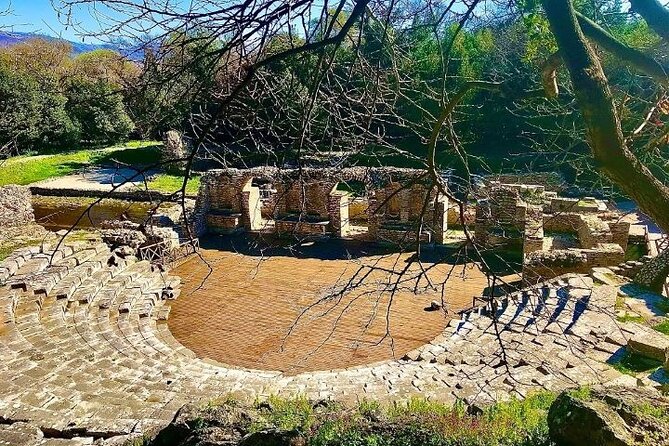
Butrint is the cultural high point for many people on this tour. It became Albania’s first UNESCO World Heritage Site in 1992 and contains layers from prehistoric settlement through Greek, Roman, Byzantine, and later periods.
The three-hour visit gives you time to see the ancient theater, city ruins, inscriptions, and religious remains. Among the important finds are statues and portraits connected with Apollo, Zeus, Agrippina, and Livia. The site also has a strong natural setting, with ruins spread through wooded ground near water.
Wear shoes with good grip. Butrint is an archaeological park, not a polished indoor museum, and you will walk over uneven paths. Three hours is a sensible amount of time for a first visit, though history fans could easily want longer.
The Blue Eye is a one-hour nature stop on the way to Gjirokaster. This spring has striking light turquoise water rising below a small metal viewing balcony. Swimming is prohibited by signs, although people still jump into the cold water. Follow the posted rule and enjoy the sight from the walkway.
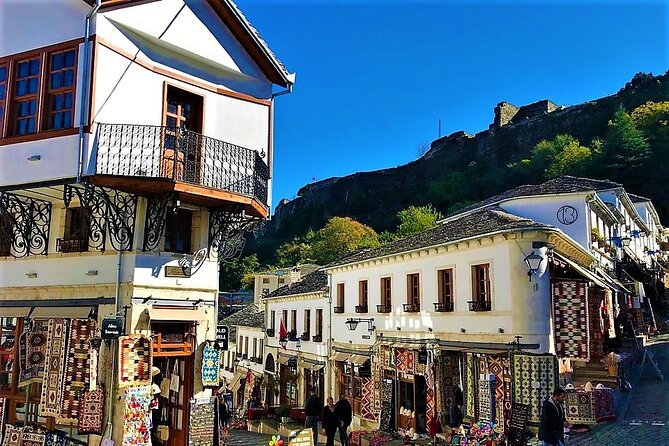
Gjirokaster, the city of stone, is built on steep slopes. Its stone-roofed houses appear stacked above one another, and its limestone and shale streets can be hard on your knees. The city is also one of Albania’s three UNESCO sites on this route.
You have about two hours to see the old streets and take in the mountain views. The castle is one of the oldest in the Balkans, and the city also connects with the writer Ismail Kadare and former Communist leader Enver Hoxha. If you enjoy food, ask about local dishes before leaving town. Gjirokaster is one of the best places on the route to pay attention to regional cooking.
Day 7: A simple Albanian lunch and free time in Tirana
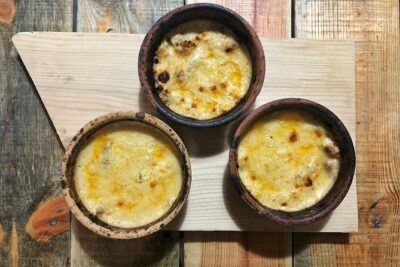
The return to Tirana includes a deliberately ordinary food stop: pie, described as Albania’s answer to fast food. Pieces cost about 50 lek, or roughly 35 cents, and come in different flavors.
This is a small detail, but it is the kind of stop that makes a packaged route feel less formal. You get a quick taste of everyday food rather than another monument. The timing also breaks up the drive back to the capital.
The afternoon is free in Tirana. Use it for anything the first day did not allow, such as revisiting the center, shopping, sitting in a café, or taking a more relaxed walk along the boulevard. Since the tour returns to the same city where it began, you do not need to force every sight into the opening afternoon.
Guiding, vehicles, and the day-to-day experience
The tour uses an air-conditioned vehicle and a private driver-guide. That matters in Albania, where the route includes mountain roads, coastal roads, and several long transfers. You avoid the stress of arranging buses between places that are not always easy to connect.
The private setup is also useful for families and small groups. One family traveling with a seven-year-old found the format workable, and the guide can adjust stops when your group wants a break or an extra photo stop. The experience is not limited to strangers, since only your group participates.
Guide Adam is repeatedly associated with this tour company and is praised for answering questions, explaining geology and history, and making extra efforts for personal requests. Alma is associated with booking communication and is noted for quick, clear replies. Neither person is guaranteed for every departure, so confirm who will lead your trip.
Breakfast is included each morning. Lunch and dinner are on your own, which lets you control both spending and choice. Hotels are arranged for you in Tirana, Shkodra, Berat, Vlora, Saranda, Gjirokaster, and back in Tirana, but the specific hotel names are not provided. Ask before booking if room standards or hotel location matter to you.
Who should book this Albania route?
I would recommend it to first-time visitors who want Albania’s major sights in one organized trip. It suits couples, families, and small groups who value a private guide and do not want to rent a car.
It is also a good fit if your interests are broad. You get ancient archaeology, Ottoman architecture, Communist-era history, religious art, handmade crafts, beaches, and mountain scenery rather than one narrow theme.
I would hesitate if you want a beach holiday, a hiking trip, or a slow cultural stay. The Riviera receives only a short portion of the schedule, and the historic towns are often covered in a few hours. The route gives you a strong introduction, not a leisurely stay in every place.
The booking includes free cancellation if you cancel at least 24 hours before the local start time. Changes made inside that window are not accepted, and a minimum group requirement applies. Pickup begins at Rinas Airport and the final morning includes a 30-minute airport transfer.
Should you book Highlights of Albania?
Book it if you want a private, efficient first tour of Albania and are happy to trade some free time for a wide range of sights. The best reasons are the three UNESCO sites, the air-conditioned transport, and the chance to ask a local guide questions throughout the journey.
Before paying, confirm the exact hotels, which entrance fees are included, and the likely daily driving times. If the answers suit you, $2,195.63 can be fair value for a private eight-day route that handles the complicated parts of getting around.
FAQ
Where does the tour begin and end?
The tour begins at Rinas Airport in Tirana at 8:30 a.m. It ends with a drive to the airport on Day 8.
How long does the experience last?
The tour lasts approximately eight days and includes seven nights of accommodation.
Are hotels and breakfast included?
Yes. Seven nights of accommodation and breakfast are included.
Are lunch and dinner included?
No. Lunches and dinners are not included, so you pay for those meals separately.
Is this a private tour?
Yes. Only your group participates, and transportation is provided in an air-conditioned vehicle with a driver-guide.
Which UNESCO World Heritage Sites are included?
The itinerary includes Berat, Butrint, and Gjirokaster, all identified as UNESCO World Heritage Sites.
Just added around Tirana
- UNESCO heritage in Albania – 4 days★ 5.0 · 3 reviews
- Apollonia and Berat UNESCO tour from Tirana★ 5.0 · 3 reviews
- Private Transfers from Tirana International Airport to Sarandë★ 4.5 · 3 reviews
- Transfers Tirana Airport – Sarande – Ksamil – Airport Tirana★ 4.5 · 3 reviews
- Berat 4×4 Off-Road and Vineyard Wine Tasting★ 5.0 · 3 reviews
- N. Macedonia &Kosovo; Semi – Private Tour; Tour Leader & Car★ 4.8 · 3 reviews
- Cultural Tour in Tirana including House of Leaves★ 5.0 · 3 reviews
- Tirana to Ksamil and Saranda Bus★ 4.5 · 3 reviews
Tirana Tours, compared.
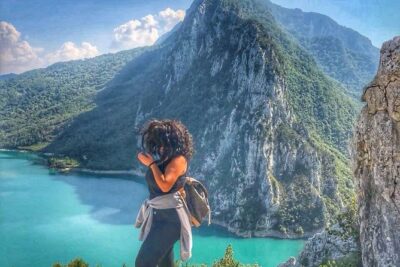
Hike Gamti Mountain with Bovilla lake view & canyon- From Tirana
Read our review →
Berat city UNESCO tour, the Castle & Belshi lake- From Tirana
Read our review →
Kruja castle, the old Bazaar & Sarisalltik- Departure from Tirana
Read our review →
Albanian Night Show: Traditional Music, Dance & Dinner in Tirana
Read our review →
From Tirana- Hiking Tour to Bovilla Lake & Gamti Mountain
Read our review →
Shala river & Komani lake -Day trip departure from Tirana/Shkodra
Read our review →