Reviewed · TIRANA TOURS
Tour a Piedi di Tirana
Tirana’s story comes into focus on foot, moving from the grand open space of Skanderbeg Square to communist bunkers, religious buildings, political sites, and the cafés of Blloku. This is less a sightseeing checklist than a quick lesson in how Albania’s capital moved from Ottoman rule to dictatorship and then into modern city life.
I like the route’s range: you see major landmarks and smaller corners such as Tanners’ Bridge, while the guide explains how religion and politics shaped the city. I also like the human touch reported by guests who toured with Martin, whose English, Italian, humor, singing, and willingness to answer questions made the walk feel lively rather than rehearsed.
The main caution is the route’s tight timing and inconsistent fulfillment record. Most of the 174 ratings are excellent, but two serious one-star reports describe the guide not appearing at the meeting point. Confirm the tour before setting out, and allow more time if you want to enter museums or linger.
Key points to know before booking
- A fast tour of Tirana’s major eras: Ottoman, royal, communist, and modern Albania all appear along the route.
- Martin and Ilir are named guides: Martin receives repeated praise for clear history, strong English, humor, and adapting to mixed English and Italian groups.
- The tour covers a lot in 2.5 hours: Expect short explanations at many stops, not long museum visits.
- Blloku adds present-day Tirana: The route links Enver Hoxha’s former residence with the cafés and streets of the former restricted district.
- The value is strong at $20.93: You get a licensed English- or Italian-speaking guide and a broad city orientation without transport costs.
- Booking reliability deserves attention: The rating is 4.9 from 174 ratings and 98 percent recommended, but two reports describe a no-show.
Why this walk gives you a useful first look at Tirana
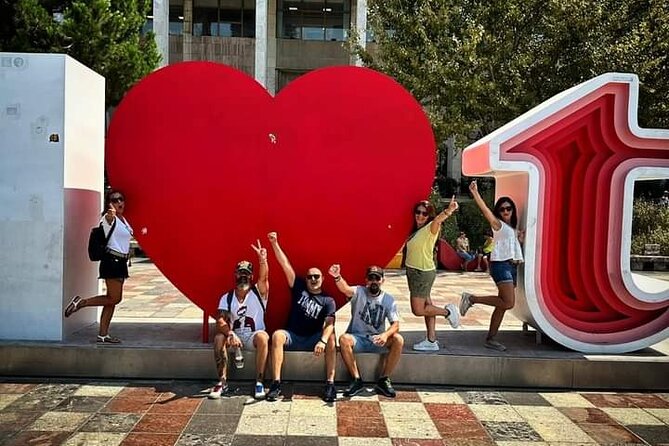
I would use this tour early in a Tirana visit, especially if you have only a day or two. The route ties together places that can feel unrelated when seen alone: a central square, a mosque, a bunker museum, a parliament, churches, a former dictator’s home, and a youth park.
That connection matters in Albania. Tirana is not a city where every important story is preserved in a grand palace or formal museum. Much of the recent past appears in ordinary streets, repurposed buildings, memorials, and half-finished architectural ideas. A guide can explain why a bunker sits near a busy road, why a former political district now feels social and fashionable, and how several faiths fit into Albanian public life.
The tour is advertised at roughly two hours and 30 minutes, with a maximum of 25 people. At $20.93 per person, that works out to good value for a guided orientation, particularly if Martin or Ilir leads it and the group remains manageable.
Do not expect a slow, private walk. There are many stops, and most are assigned about 10 minutes. That is enough for a clear explanation and photographs, but not enough for a full museum visit or extended time inside a religious building.
A few more Tirana half-days to weigh up
- Hike Gamti Mountain with Bovilla lake view & canyon- From Tirana
★ 5.0 · 1,280 reviews - Berat city UNESCO tour, the Castle & Belshi lake- From Tirana
★ 5.0 · 804 reviews - Walking Tour of Tirana
★ 5.0 · 646 reviews
Starting at Skanderbeg Square and Et’hem Bej Mosque
The meeting point is Et’hem Bej Mosque, at Sheshi Skënderbej 1, on Skanderbeg Square. The square is the natural stage for Tirana’s public life and a sensible place to begin because it gives you an immediate sense of the city center.
Your guide explains the square before leading you to the mosque. This opening should help you read the surrounding buildings and understand why the center feels both monumental and open. You begin and end in the same place, which is useful if you are still learning Tirana’s streets.
Et’hem Bej Mosque is one of the city’s key reminders of its Ottoman past. The planned stop is short and focuses on explanation rather than a long visit. Dress and behavior should be respectful around any active place of worship, and you should not count on an extended interior visit unless your guide confirms it.
The first part of the walk is also where the group sets its pace. If you are carrying luggage, have limited mobility, or dislike walking on city streets, keep that in mind. Private transportation is not included, and the experience is entirely based around walking.
Bunk’Art 2 and the memory of dictatorship
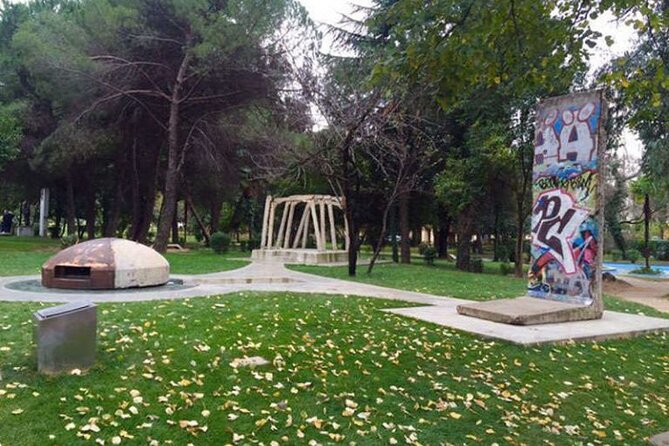
Bunk’Art 2 is one of the most pointed stops because it brings Albania’s communist period into the center of the modern city. The guide explains Bunk’Art 2 and Bunk’Art 1, giving you a basic sense of what each museum represents.
The itinerary does not promise admission or a museum tour. You should treat this as an outdoor explanation and orientation. If Bunk’Art 2 interests you, plan a separate visit so you can take your time rather than trying to fit a full museum experience into this walk.
This is one of the strongest reasons to take the tour with a guide who can answer questions. The dictatorship period is not just a date range in a textbook. It still shapes buildings, public memory, politics, and how Tirana presents itself. The walk gives you enough background to make a later museum visit more meaningful.
Tirana Castle and the political center
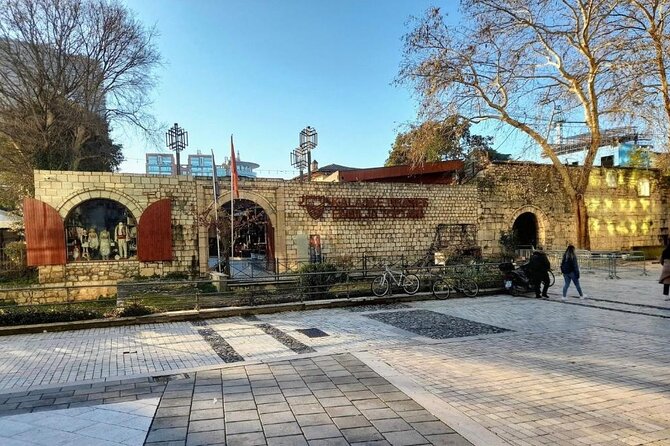
The Fortress of Justinian, also called Tirana Castle in the itinerary, introduces the older remains of the city. What you see here is ruins and fragments rather than a grand fortress complex, so the guide’s explanation is important. Without context, the stop may seem modest.
The route then reaches the Parliament of Albania. This shift from old stonework to present-day government makes the walk useful as a city lesson. The guide discusses Albania’s political situation, adding current context to the historical material.
I like this pairing because it keeps the walk from becoming a string of disconnected monuments. You see how Tirana’s old foundations, modern state, and recent political past occupy the same compact center. The drawback is that the political explanation depends heavily on the guide’s skill and the questions your group asks. With a large group, you may get less time for discussion.
Same drive out, a completely different day:
- Kruja castle, the old Bazaar & Sarisalltik- Departure from Tirana
★ 5.0 · 592 reviews - Albanian Night Show: Traditional Music, Dance & Dinner in Tirana
★ 5.0 · 431 reviews - From Tirana- Hiking Tour to Bovilla Lake & Gamti Mountain
★ 5.0 · 358 reviews - Shala river & Komani lake -Day trip departure from Tirana/Shkodra
★ 5.0 · 309 reviews
Namazgah Mosque, Saint Paul Cathedral, and religious life
Namazgah Mosque is presented as the biggest mosque in the Balkans. The guide explains its place in Tirana and Albania. The stop is especially useful when paired with Saint Paul Cathedral and the Orthodox Autocephalous Church of Albania later in the route.
Together, these sites let you consider Albania’s religious mix without reducing the subject to architecture alone. The guide discusses religion in Albania at Saint Paul Cathedral and explains the Orthodox church at its own stop. The walk therefore gives you three different points of reference: the Et’hem Bej Mosque, Namazgah Mosque, and Christian churches.
Each religious stop is scheduled for about 10 minutes. That makes this a good introduction, not a detailed religious architecture tour. You will hear the main points and see the buildings, but you should not plan on lengthy worship, art, or interior study during the group walk.
Tanners’ Bridge and the city’s older details
Tanners’ Bridge is the sort of stop that gives the route a welcome change of scale. Instead of another large political or religious building, you get an explanation of a smaller historic structure.
This is where the guide can help you notice how Tirana developed beyond its main square. A short stop at an old bridge also breaks up the sequence of major landmarks and keeps the walk connected to everyday urban space.
The itinerary does not provide extensive detail about the bridge itself, so your experience will depend on the guide’s explanation. If your main interest is medieval or Ottoman architecture, ask questions here. If you prefer famous landmarks only, this may feel like a brief detour, though it adds texture to the route.
The Pyramid and Postbllok memorial
The Enver Hoxha Pyramid is one of the route’s most memorable visual stops. It is explained as the dictator’s pyramid, linking the building to Enver Hoxha and the communist period.
The Pyramid has an unusual place in Tirana’s identity because it represents an authoritarian past while also being part of the city’s changing public life. The guide’s short talk should help you understand why the building matters beyond its shape.
At Postbllok, or the Checkpoint Monument, the focus turns directly to repression and memory. The memorial marks the experience of a controlled society and gives the communist story a physical point of reference.
I would pay close attention here. These stops are not simply photo opportunities. They help explain why modern Tirana contains so many reminders of Hoxha’s rule, even as the city changes around them. Because the schedule is brisk, you may want to return later if you want quiet time with the memorials.
Blloku and Enver Hoxha’s former residence
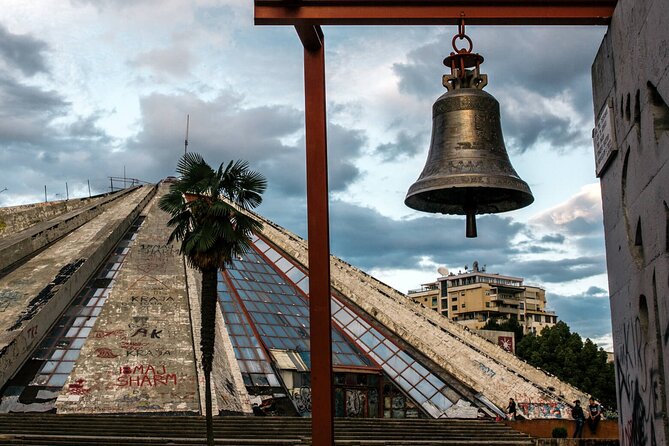
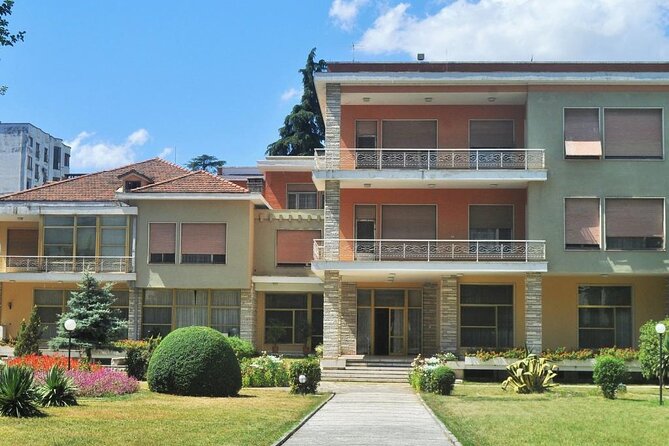
The walk continues into Blloku, an area that once had a very different role in Albanian society. The itinerary includes an explanation of the Blloku area and Enver Hoxha’s former residence.
This is a particularly effective part of the route because it places the dictator’s home beside the district’s modern social life. You are not just hearing about a closed political world in a museum. You are walking through an area connected with that world and seeing how its meaning has shifted.
The tour does not include entry to the former residence. Expect an exterior explanation. Still, the stop is valuable because a guide can point out the difference between ordinary communist-era life and the protected world occupied by the ruling elite.
One past guest described Ilir spending six hours guiding a group through side streets, cafés, restaurants, bars, and markets, with history woven into the walk. That is not the advertised length of this experience, so do not book expecting six hours. It does suggest that the guides may be open to extending the conversation or offering local suggestions when circumstances allow.
Taiwan Pool, the Orthodox Church, and House of Leaves
Taiwan Pool, or Pishina Taiwan, is connected with Tirana’s Youth Park and Taiwan Center. This stop offers a lighter urban contrast after the political material in Blloku and at Postbllok.
The route then returns to religious architecture at the Orthodox Autocephalous Church of Albania. The guide explains the church and adds another part of the country’s religious story. Seeing it after the mosques and Saint Paul Cathedral helps you compare Tirana’s public religious buildings within one continuous walk.
House of Leaves brings the focus back to surveillance and state control. The guide explains the building and its role, while the earlier Bunk’Art and Postbllok stops provide a wider frame for understanding it.
As with Bunk’Art 2, admission is not included in the walk. If you want to explore House of Leaves in detail, plan a separate visit. The guided stop gives you a reason to visit and helps you know what questions to consider once inside.
How the guides shape the experience
The strongest praise centers on Martin. He is repeatedly described as clear in English, comfortable with Albania’s history, entertaining, and willing to answer questions. One mixed English and Italian group required him to explain the material twice, and the account of that outing credits him with handling the arrangement well.
That matters because the tour is offered in English and Italian. A bilingual walk can become slow if the guide simply repeats a memorized script. Martin’s ability to keep the group engaged appears to be one of the experience’s best features. His humor and singing are also mentioned, which may appeal to you if you prefer a social guide rather than a formal lecture.
Ilir is also named in a very positive account, where he led a much longer, more informal exploration of local streets and food spots. Again, that should not be treated as the standard schedule. It does show that the provider has guides who can add personality and local conversation.
The experience is described as fun, informative, and interactive. That is a good fit for you if you like asking questions and learning through conversation. It may be less suitable if you want a silent photographic walk or a strictly timed architectural tour.
Price, group size, and practical value
At $20.93, the price is reasonable for a 2.5-hour guided walk covering this many central sights. You are paying for the guide’s explanations and the route design, not for admissions, meals, or transport.
That distinction is important. Every listed stop is free to visit as part of the walk, but the tour does not include entry to Bunk’Art, House of Leaves, or other paid attractions if you decide to continue on your own. The value is strongest if you use the tour to plan the rest of your stay.
The maximum group size is 25. That is not a tiny group, and the many short stops can make it hard to hear or ask questions if everyone gathers tightly. On the other hand, several accounts describe very small groups, including one with only three people. Group size may vary by date.
The walk is near public transportation, service animals are allowed, and most people can participate. You should still expect a full city walk with no private vehicle. Wear sensible shoes, carry water, and keep your schedule flexible enough to stay with the group.
The experience is booked an average of 17 days ahead, so advance planning is sensible during busy periods. Free cancellation applies up to 24 hours before the start time. Bad weather or failure to reach the required minimum may lead to a different date or a full refund.
One point needs clear attention: two one-star accounts describe arriving at the meeting point and finding no guide, with no immediate response by phone or message. These reports sit beside a 4.9 rating from 174 ratings and a 98 percent recommendation rate, so they do not describe the usual experience. Still, I would confirm the meeting details shortly before departure and keep proof of your booking.
Who should book this Tirana walk?
I would choose it for a first afternoon in Tirana, a short city break, or the opening day of a longer Albania trip. The route gives you a practical map of the center and introduces the country’s Ottoman, religious, political, and communist chapters in one sitting.
It suits you best if you enjoy history explained in plain language, want to see many landmarks quickly, and appreciate a guide with humor and personality. It also works well for English and Italian speakers who want the option of a licensed guide in either language.
You may want a different experience if you dislike brisk walks, want extended museum time, or need guaranteed private attention. The stop-by-stop format is broad rather than slow, and the lack of included transport means the experience depends on walking.
Should you book Tour a Piedi di Tirana?
Yes, with a small practical qualification. The combination of price, central route, bilingual guiding, and strong feedback makes this a useful introduction to Tirana. Martin’s repeated praise for history, English, humor, and audience awareness is a real reason to book, while Ilir’s warm and flexible style adds to the provider’s appeal.
Book it near the start of your stay, then return to Bunk’Art 2, House of Leaves, the Pyramid, or any religious building that catches your interest. Confirm the meeting arrangements before you leave. If you want a lively overview rather than a long museum visit, this walk offers good value and a helpful first reading of Tirana.
FAQ
Where does the Tirana walking tour start?
It starts at Et’hem Bej Mosque, at Sheshi Skënderbej 1, Tirana 1001, Albania.
Where does the tour end?
The tour ends back at the meeting point in Skanderbeg Square.
How long does the experience last?
The scheduled duration is approximately two hours and 30 minutes.
What languages does the guide speak?
The experience includes a licensed guide who speaks English and Italian.
Is transportation included?
No. Private transportation is not included. This is a walking experience.
How many people can join the tour?
The maximum group size is 25 people.
Can I cancel for a full refund?
Yes. You can cancel at least 24 hours before the start time for a full refund. Cancellations or changes made within 24 hours are not refunded or accepted.
Just added around Tirana
- UNESCO heritage in Albania – 4 days★ 5.0 · 3 reviews
- Apollonia and Berat UNESCO tour from Tirana★ 5.0 · 3 reviews
- Private Transfers from Tirana International Airport to Sarandë★ 4.5 · 3 reviews
- Transfers Tirana Airport – Sarande – Ksamil – Airport Tirana★ 4.5 · 3 reviews
- Berat 4×4 Off-Road and Vineyard Wine Tasting★ 5.0 · 3 reviews
- N. Macedonia &Kosovo; Semi – Private Tour; Tour Leader & Car★ 4.8 · 3 reviews
- Cultural Tour in Tirana including House of Leaves★ 5.0 · 3 reviews
- Tirana to Ksamil and Saranda Bus★ 4.5 · 3 reviews
Tirana Tours, compared.
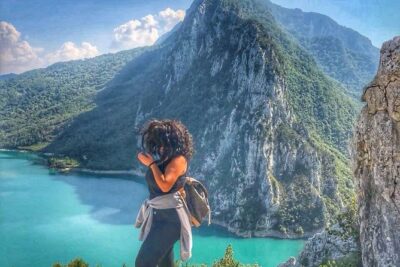
Hike Gamti Mountain with Bovilla lake view & canyon- From Tirana
Read our review →
Berat city UNESCO tour, the Castle & Belshi lake- From Tirana
Read our review →
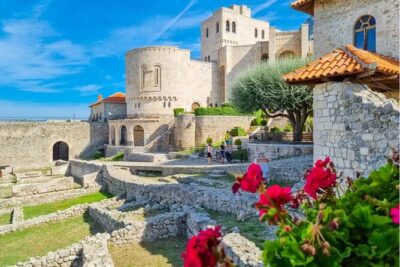
Kruja castle, the old Bazaar & Sarisalltik- Departure from Tirana
Read our review →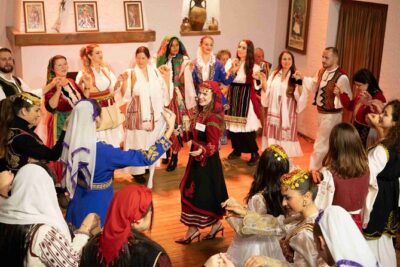
Albanian Night Show: Traditional Music, Dance & Dinner in Tirana
Read our review →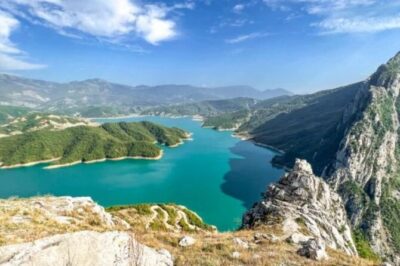
From Tirana- Hiking Tour to Bovilla Lake & Gamti Mountain
Read our review →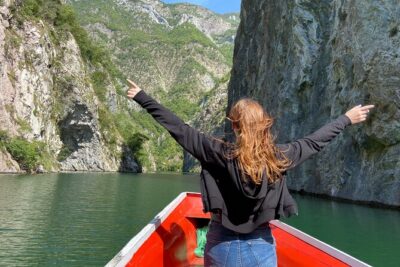
Shala river & Komani lake -Day trip departure from Tirana/Shkodra
Read our review →