
Reviewed · TIRANA TOURS
Tirana Walking Tour, Extra Virgin Olive Oil and Raki Tasting
Tirana’s best introduction may come in a small glass: sample extra-virgin olive oils, then taste rakis made from blackberries, plums, and other fruit after walking through the city’s Ottoman, royal, Fascist, and Communist chapters. I like the local food angle and the way the route links major sights rather than treating them as isolated photo stops. I also like that your guide can add the practical details guidebooks often skip, including suggestions for shops and restaurants.
The main drawback is the tour’s dependence on a smoothly managed meeting time. One booking once went wrong after a date change, leaving the party waiting, although the operator apologized and issued a full refund. The advertised group limit is 30, so if you want a quiet, deeply personal walk, confirm the group size and meeting details before setting out.
Key points at a glance
- The tasting gives the walk a distinctly Albanian finish: Try several extra-virgin olive oils and fruit-based rakis, including blackberry and plum versions.
- The route covers Tirana’s political story: Skanderbeg, Ottoman rule, Italian planning, Communist power, and the post-1991 city all appear along the way.
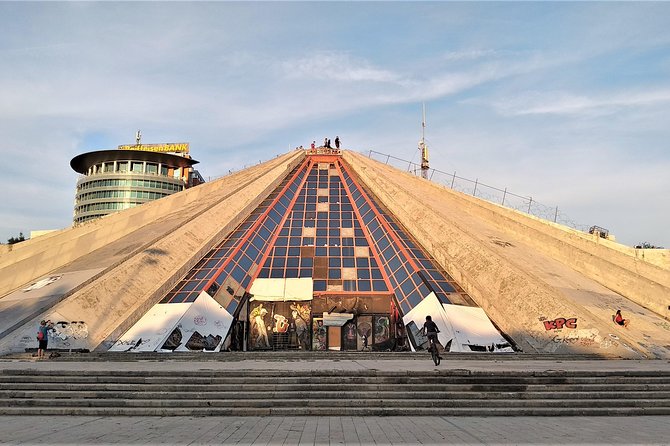
- You see four useful first-day sights: Skanderbeg Square, Tirana Castle, Blloku, and the former Enver Hoxha Pyramid.
- The walk is led in English: A professional certified guide explains the city as you go.
- The price is modest for a private booking: At $22.69 per person, the value depends heavily on how many people are in your group.
- Plan for two to three hours on foot: The meeting and finish point are both at Skanderbeg’s equestrian statue.
Why the olive oil and raki tasting matters
Many city walks end with a monument and a quick goodbye. This one adds a small piece of everyday Albanian food culture. You taste different extra-virgin olive oils and several rakis, with examples distilled from blackberries, plums, and other fruit.
That tasting helps explain why the experience is more than a standard downtown orientation. Olive oil is not just a product on a shop shelf, and raki is not simply a strong drink for a tourist checklist. Tasting several examples side by side gives you a clearer sense of their different flavors and styles. The experience does not include a full meal, so think of it as a cultural tasting rather than lunch.
The tasting is especially useful if you are unsure what to order later in Albania. You can ask your guide for suggestions and use the walk to learn how local food fits into the country’s wider story. One guide, Taulant, has also helped people choose shops and restaurants for the rest of their stay, which is a practical bonus early in a Tirana visit.
More Walking Tours in Tirana
- Walking Tour of Tirana
★ 5.0 · 646 reviews - Local food experience & walking tour of Tirana
★ 5.0 · 192 reviews - Berat Walking Tour
★ 5.0 · 86 reviews
Starting beneath Skanderbeg’s statue
The meeting point is the equestrian statue of Skanderbeg in Skanderbeg Square. This is a sensible place to begin because the square is Tirana’s main civic space and an easy reference point near public transportation.
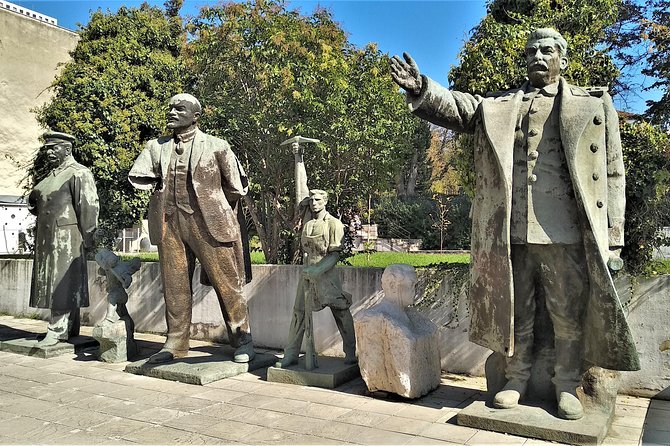
The square has changed repeatedly. It was first conceived before the Second World War by Italian architect Armando Brasini. Later, it held statues connected to Stalin, Skanderbeg, and Communist leader Enver Hoxha. Today, Skanderbeg’s statue is the one that remains in the center.
Your guide explains how the square reached its modern form and how different governments used architecture and monuments to reshape the city. Allow about 20 minutes here. That may sound brief, but the square works best as an opening lesson, not as a place where you linger for hours.
I like this start because Tirana’s story is unusually visible in its public spaces. You do not need a museum ticket to begin noticing the changes. The square gives you a quick introduction to the country’s national hero, its Ottoman past, Italian influence, and Communist period.
The Clock Tower and Tirana’s Ottoman layer
The Tirana Clock Tower is one of the oldest structures in the city’s center. Construction was completed in 1822, during the late Ottoman period.
The tower is a useful counterpoint to the large modern square. After discussing twentieth-century political change, you look at a building that belongs to an earlier Tirana. The stop is short, and no admission ticket is included or needed for the walking visit described here.
Do not expect a long interior visit. The value is in seeing the tower in relation to the square and hearing your guide place it within the older town. This is one reason a local guide adds value: the building itself is modest, but its date helps you understand how new Tirana’s grand boulevards and Communist monuments really are.
Walking Murat Toptani Street
Murat Toptani is a pedestrian route with a remarkable concentration of sights. The walk passes Tirana Castle, the Academy of Sciences, the country’s first national park, the old National Library, and the former building associated with political persecution.
You may also see the National Gallery of Arts, the residence of the Albanian royal family, and Tanners Bridge along the broader route. The street functions like an outdoor display of different periods, though not every feature receives a long stop.
This portion is also where the pace matters. The activity is described as a private walk for your group, but the maximum group size is 30. If you are booked into a larger departure, you will probably get less chance to interrupt with questions. If you have a small party, ask your guide to pause at the sites that interest you most.
The walk is on foot and lasts two to three hours overall. One useful detail from the guide experience is that Taulant made an effort to keep the group in the shade when possible. That matters in Tirana’s warm months, particularly because the route includes open public spaces. Comfortable shoes, water, and sun protection are sensible, even though meals and drinks are not included.
More Food Tours in Tirana:
- Cooking Classes and Traditional food tasting in Tirana
★ 5.0 · 282 reviews - Best of Local Food & City Tour of Tirana – Food & Drinks Included
★ 5.0 · 160 reviews - Traditional Albanian Cooking Class in Tirana with Raki Tasting
★ 5.0 · 125 reviews - Vineyards, Albanian Wine Tasting & Boat Tour from Tirana/Durres
★ 5.0 · 64 reviews
Tirana Castle, old walls with a new purpose
Tirana Castle, known locally as Kalaja e Tiranës, is one of the city’s newer visitor areas in its present form. It sits along Toptani Pedestrian Street and receives about 15 minutes on the walk.
The appeal is not only the age of the site. The castle has been turned into a contemporary destination, so it connects older city references with cafés, shops, and modern public life. This is also where the olive oil and raki tasting takes place according to the experience details.
That pairing works well. You hear about Tirana’s past, then taste products that belong to Albania’s living food culture in a setting tied to the city’s older identity. It also breaks up the walking with a seated or more relaxed moment, although the exact tasting arrangement is not described in detail.
Do not mistake this for an archaeological tour with extensive ruins or a long formal history lecture. The stop is short, and the tasting is the main reason to spend time here. If you are interested in buying oil or raki, ask where the products come from and how they are made. The included tasting covers the experience, but extra food, snacks, and drinks are not included.
The grand boulevard and Italian planning
The tour also discusses Tirana’s major boulevard and its European design. Armando Brasini gave the boulevard a grand Renaissance-inspired plan, while architect Gherardo Bosio later shaped its European appearance with neoclassical buildings and a practical civic style.
The project interested Mussolini, who called Brasini and Bosio to special audiences to hear about its progress. This is a difficult part of Tirana’s story because the buildings can look orderly and impressive while their planning is tied to Fascist Italy and political power.
A good guide does not reduce this to pretty architecture. The point is to help you read the city. Wide boulevards, formal buildings, and monumental spaces can tell you who wanted to control the capital and how they wanted it to appear.
The supplied information does not give this boulevard a separate timed stop, so expect the subject to come up as you move between the main locations. That is fine for most people. You get context without spending the whole afternoon on architectural history.
Blloku, from forbidden quarter to nightlife district
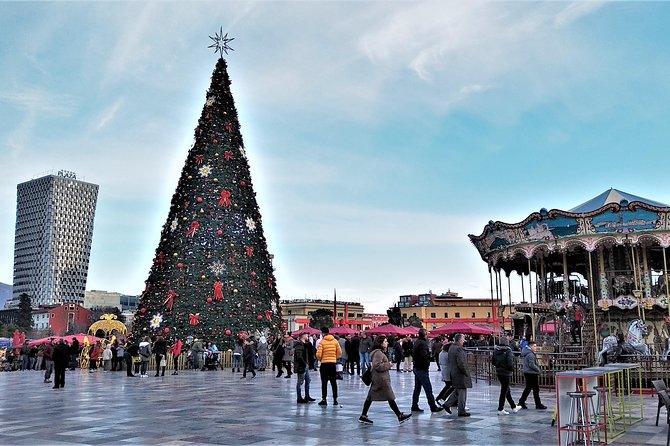
Blloku is one of the clearest examples of Tirana’s post-Communist change. During the Communist period, it was a restricted residential area for members of the political leadership. Ordinary Albanians could not enter.
After the fall of Communism, Blloku became an entertainment district with boutiques, restaurants, cafés, pubs, and bars. It is now associated with young Albanian professionals and city nightlife. The tour allows about 15 minutes here, enough for an introduction but not enough to sample the area fully.
The important detail is the old residence of Enver Hoxha, Albania’s Communist leader. Its presence gives Blloku a sharper edge than a normal restaurant district. You see how a place once reserved for a small ruling class has become one of Tirana’s most open and social areas.
I would not book this walk solely for Blloku. Fifteen minutes gives you a quick look rather than an evening out. Still, it is a helpful stop if you are trying to decide where to eat or have coffee later. The guide’s recommendations can save you some aimless wandering, though the tour does not include a meal or drink there.
The Pyramid and the city’s Communist memory
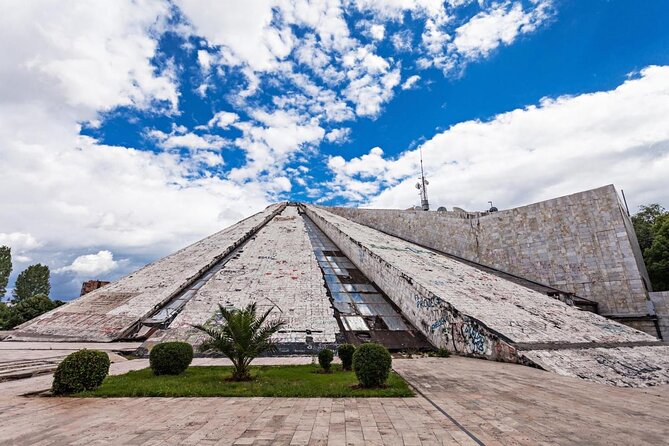
The former Enver Hoxha Pyramid is one of Tirana’s most striking buildings. It opened in 1988 as a museum dedicated to Hoxha and served that purpose until 1991.
Its shape recalls an Egyptian pyramid, but viewed from above it also forms a Communist star with rays spreading outward. The building has since been renewed, and the tour describes its present form as something likely to surprise you.
The Pyramid is a strong final sight because it turns political history into a physical object. It was built to honor a leader, then outlasted the system that created it. The short 15-minute stop gives your guide room to explain what the structure meant and how its purpose changed.
You should keep your expectations clear. The stop is an exterior-oriented city walk visit as described, not a full museum program with a long indoor exhibition. If the Pyramid is your main reason for visiting Tirana, give it extra time on another day. On this tour, it works as the closing chapter in a fast overview of the capital.
What the two to three hours feel like
The route covers a lot for its length. You move from the central square to Ottoman-era architecture, a pedestrian historic corridor, a modern castle district, Italian-planned streets, the former political quarter, and the Pyramid.
That variety is the chief strength. You are not spending two hours on a single period or one set of monuments. Instead, the walk shows how Tirana keeps placing different eras side by side.
The tradeoff is depth. A two to three-hour route cannot give every stop a full lecture. You will get the most from it if you treat the tour as a framework for the rest of your stay. Write down the places that catch your interest, then return to them at your own pace.
The experience is offered in English and led by a professional certified guide. It is described as a private tour for your group, while the maximum capacity is 30 people. Those two details can feel different in practice, so I would confirm the booking format if personal attention matters to you.
Is $22.69 a fair price?
At $22.69 per person, the price is low for a guided city walk that includes both a certified guide and a tasting. The value is strongest if you are new to Tirana and want a fast orientation before exploring on your own.
The included tasting also helps. You are not paying only for someone to point at buildings. You get a chance to compare olive oils and fruit rakis, which would be harder to organize without local guidance.
The price becomes less remarkable for a large party because the experience has a maximum of 30 people. A small private group gets more room for questions and a better chance to shape the pace. A full group still receives the same route, but the walk may feel more like a standard group tour.
Nothing beyond the stated inclusions is covered. Meals, snacks, and drinks are extra, so do not arrive expecting lunch. The tour finishes where it begins, at Skanderbeg’s statue, which makes it easy to continue sightseeing from the center.
Booking, weather, and one practical warning
Confirmation is provided when you book, and the meeting point is specific: the equestrian statue of Skanderbeg, at Sheshi Skënderbej. Since the walk returns there, you do not need to arrange a separate ride back from an unfamiliar neighborhood.
Free cancellation is available up to 24 hours before the start time for a full refund. Changes or cancellations made inside that 24-hour window are not accepted for a refund. The cut-off follows local time.
The activity requires good weather. If poor weather cancels it, you are offered another date or a full refund.
There was one serious scheduling failure connected to a booking date that had been amended the previous year. The operator accepted responsibility, offered a full refund, and offered the same tour free if the person was still in Tirana. That response was appropriate, but the incident is still a reminder to check your date and meeting instructions shortly before the walk.
Who should book this Tirana walk?
I would choose this experience for a first visit, especially if you want history, food, and a quick sense of the city rather than a long museum tour. It suits couples, families, and small groups who like to ask questions and stop for recommendations.
It is also a good fit if you want to understand Albania’s twentieth century without spending the day in a classroom. Skanderbeg Square, the boulevard, Blloku, and the Pyramid show how national identity, Fascist planning, Communist rule, and modern city life overlap.
You may want something else if your priority is extensive time inside monuments, a full meal, or a highly specialized architecture tour. The schedule is brisk, and several stops last only 15 minutes. Likewise, anyone who dislikes group uncertainty should confirm how many people are assigned to the departure.
FAQ
How long does the Tirana walking tour last?
The experience lasts approximately two to three hours.
Where does the tour start?
It starts at the equestrian statue of Skanderbeg in Skanderbeg Square, Tirana.
Where does the tour finish?
The activity ends back at the meeting point at Skanderbeg Square.
What is included in the price?
The price includes a professional certified guide and a tasting of extra-virgin olive oils and different rakis, including fruit-based varieties.
Are meals, snacks, or other drinks included?
No. Meals, snacks, and drinks other than the stated tasting are excluded.
What happens if the weather is poor?
The experience requires good weather. If it is canceled because of poor weather, you will be offered a different date or a full refund.
Should you book it?
Book it if you want a compact, affordable introduction to Tirana with a useful food tasting at the end. The route covers the city’s central landmarks and gives you enough political and architectural context to make later sightseeing more meaningful.
I especially like the mix of Skanderbeg Square, Blloku, and the Pyramid. Add the olive oil and fruit raki tasting, and $22.69 feels like a sensible first-day purchase. Just confirm the date, check the meeting point, and keep your expectations realistic: this is a brisk city orientation, not an exhaustive museum visit.
Just added around Tirana
- UNESCO heritage in Albania – 4 days★ 5.0 · 3 reviews
- Apollonia and Berat UNESCO tour from Tirana★ 5.0 · 3 reviews
- Private Transfers from Tirana International Airport to Sarandë★ 4.5 · 3 reviews
- Transfers Tirana Airport – Sarande – Ksamil – Airport Tirana★ 4.5 · 3 reviews
- Berat 4×4 Off-Road and Vineyard Wine Tasting★ 5.0 · 3 reviews
- N. Macedonia &Kosovo; Semi – Private Tour; Tour Leader & Car★ 4.8 · 3 reviews
- Cultural Tour in Tirana including House of Leaves★ 5.0 · 3 reviews
- Tirana to Ksamil and Saranda Bus★ 4.5 · 3 reviews
Tirana Tours, compared.
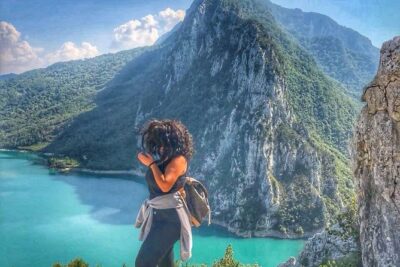
Hike Gamti Mountain with Bovilla lake view & canyon- From Tirana
Read our review →
Berat city UNESCO tour, the Castle & Belshi lake- From Tirana
Read our review →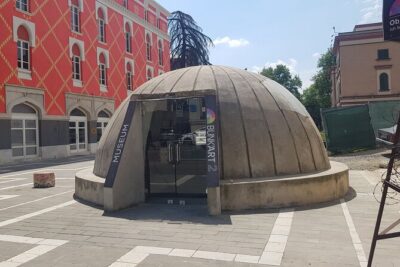
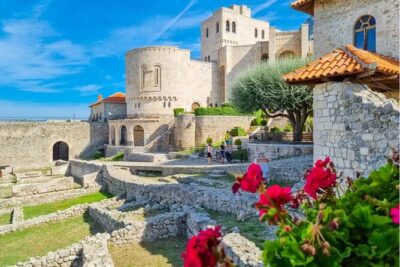
Kruja castle, the old Bazaar & Sarisalltik- Departure from Tirana
Read our review →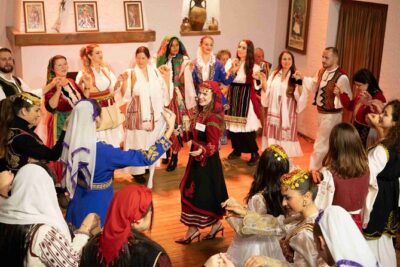
Albanian Night Show: Traditional Music, Dance & Dinner in Tirana
Read our review →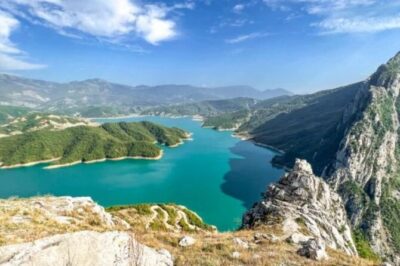
From Tirana- Hiking Tour to Bovilla Lake & Gamti Mountain
Read our review →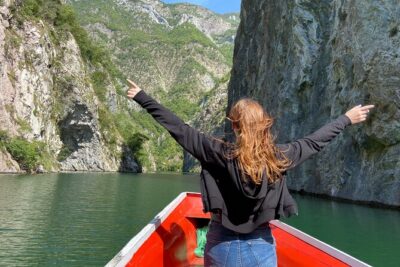
Shala river & Komani lake -Day trip departure from Tirana/Shkodra
Read our review →
Cooking Classes and Traditional food tasting in Tirana
Read our review →Browse the lists this tour appears in