
Reviewed · TIRANA TOURS
Tirana Walking Tour
Tirana’s story comes into focus on foot, from the Ottoman-era Et’hem Bey Mosque to the former communist power center of Blloku. I like that this three-hour route connects old, communist, and modern Tirana without asking you to pay for museum admissions you may not want. I also like the small group limit of 15, which gives you a better chance to ask questions.
The price is another strong point: $11.91 is excellent value for a guided introduction to the capital. The trade-off is that the tour is mainly an outdoor city walk, so hot weather, rain, or tired feet can affect your enjoyment. Museum entries, coffee, food, and other extras are not included.
Key points to know before you book
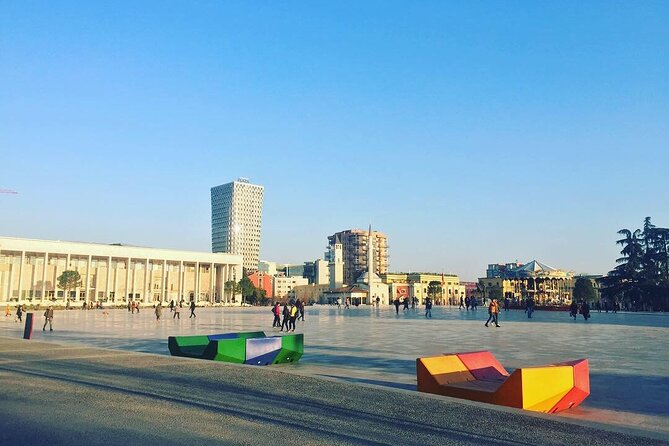
- Skanderbeg Square sets the timeline: See the Et’hem Bey Mosque, Clock Tower, National Museum, Hotel Tirana, and other central landmarks.
- The route explains communist Albania: Bunk Art 2, the Pyramid, government buildings, and Hoxha’s former home give the recent past a clear shape.
- Aldo brings a flexible style: He adjusts the pace, answers questions fully, and offers ideas for restaurants and other places to visit.
- Blloku shows the city’s sharpest change: Once closed to ordinary citizens, the former leaders’ quarter is now one of Tirana’s liveliest areas.
- The group is capped at 15: That is small enough for a more personal walk while keeping the price low.
- Everything begins and ends at Skanderbeg Square: Plan for about three hours on foot, with no transport between stops.
Why this three-hour walk is a smart first look at Tirana
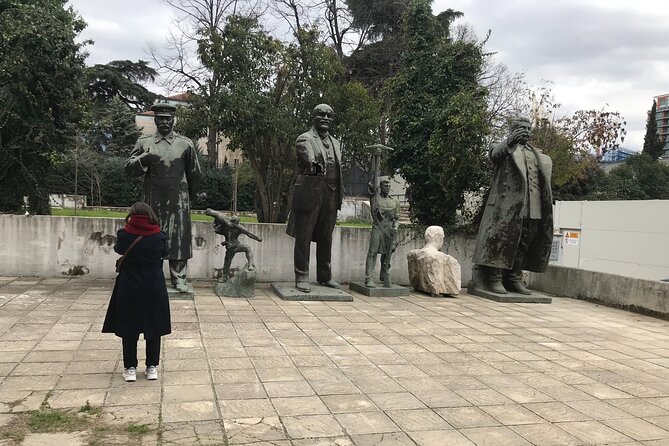
Tirana can seem hard to read at first. Ottoman traces, Italian-influenced public buildings, communist monuments, new construction, and busy modern streets sit close together. This walk gives you a basic map of those layers before you start exploring on your own.
I especially like the way the route uses landmarks to explain political change. You are not simply moving from one photo stop to another. The guide links religious buildings, state offices, former party territory, and public spaces to the way Albania changed over time.
The tour is offered in English and includes a licensed guide. Aldo leads some departures and is described as arriving on time, setting a suitable pace, and judging how much background each group needs. That matters in Tirana, where a short explanation about a building can lead into a much larger story about monarchy, dictatorship, religion, and life after communism.
You should allow about three hours. The listed schedule gives 30 minutes at Skanderbeg Square, one hour around Rruga Murat Toptani, one hour along Bulevardi Dëshmorët e Kombit, and 30 minutes in Blloku. These are approximate walking sections, not promises that you will spend every minute in one place.
More Walking Tours in Tirana
- Walking Tour of Tirana
★ 5.0 · 646 reviews - Local food experience & walking tour of Tirana
★ 5.0 · 192 reviews - Berat Walking Tour
★ 5.0 · 86 reviews
Skanderbeg Square: Tirana’s history in one open space
The tour starts at Sheshi Skënderbej 1, the central address of Skanderbeg Square. This is a useful meeting point because several important buildings sit around the same public space, giving your guide a natural place to explain how Tirana developed.
The Et’hem Bey Mosque is the main early stop. It is described as the oldest building in Tirana and one of the city’s symbols. You will hear about its history and look at its decorative details, which set it apart from the more monumental government architecture nearby.
The Clock Tower is next door. It was once the tallest building in Tirana and remains one of the clearest reminders of the older city. Seeing the mosque and tower together helps you picture a smaller Ottoman-era town before later governments reshaped the center.
From there, the guide points out the National Bank of Albania, National Museum, Hotel Tirana, Palace of Culture, Tirana Municipality, and other buildings around the square. You may not enter them, but knowing what they represent makes later walks through the center easier to follow.
This part lasts about 30 minutes and has no admission charge. That keeps the tour moving, but it also means the focus is on explanation and exterior views rather than long visits inside individual buildings.
Rruga Murat Toptani and the difficult communist past
The next section follows Rruga Murat Toptani and lasts about an hour. This stretch brings together several very different reminders of Albania’s political past and present.
Bunk Art 2 is one of the most significant stops. The museum deals with communist atrocities, so this is not a light sightseeing point. The guide’s explanation can help you understand why a bunker museum matters in Tirana and how public memory is handled in a country that lived under a closed communist system.
The route also passes the Castle of Toptani and the former residence of Prince Zogu. These places add a royal and pre-communist layer to the walk. The contrast is useful: you are moving between monarchy, dictatorship, and the institutions of today within a relatively short distance.
You will pass the House of Parliament and the new mosque, described as the largest in the Balkans and still under construction at the time of the tour information. Construction status can change, so treat that detail as time-sensitive. The important point is the contrast between a historic mosque, a new religious project, and government buildings in the same central area.
The section is free to walk, but Bunk Art 2 is a museum, and admission is not included. The tour information says that everything beyond the licensed guide is excluded, so check the current entry arrangements if you want to go inside. If you prefer to keep the walk within the advertised price, you can treat the museum as an exterior stop and listen to the explanation.
Bulevardi Dëshmorët e Kombit: the capital’s main public spine
The longest visual stretch is the one-hour walk along Bulevardi Dëshmorët e Kombit. This is where the tour shifts from compact central landmarks to a broad route lined with major state, cultural, and educational buildings.
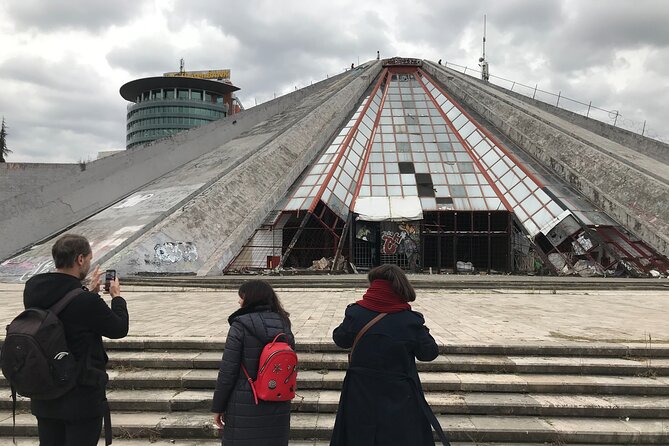
The Pyramid is one of the most memorable stops. It was built as a museum dedicated to Enver Hoxha after his death and later became a powerful symbol of the former dictatorship. Its appearance and changing role give the guide an opening to explain how Tirana has tried to deal with communist-era buildings rather than simply erase them.
You will also pass the Prime Ministry, Presidency, Parliament offices, University, Academy of Arts, and National Stadium. This list can sound like a string of official names, but it gives you a practical sense of where the country’s political and cultural life is concentrated.
I find this part especially useful for orientation. After the tour, you will know which areas belong to government, education, sport, and public culture. You will also have a better sense of Tirana’s scale, since the boulevard connects several parts of the capital in one long walk.
The drawback is simple: this is a lot of ground to cover. If you want extended time at the Pyramid, a museum interior, or a particular government building, the group schedule may feel brisk. The guide can adjust the pace to suit the group, but the route still has four major sections to cover.
One useful detail from the tour’s guiding style is the willingness to pause for a short coffee break. It is not presented as a formal included stop, so do not assume coffee is part of the price. Still, a brief pause can make the long boulevard section easier, especially in warm weather.
Same drive out, a completely different day:
- Hike Gamti Mountain with Bovilla lake view & canyon- From Tirana
★ 5.0 · 1,280 reviews - Berat city UNESCO tour, the Castle & Belshi lake- From Tirana
★ 5.0 · 804 reviews - Kruja castle, the old Bazaar & Sarisalltik- Departure from Tirana
★ 5.0 · 592 reviews - Albanian Night Show: Traditional Music, Dance & Dinner in Tirana
★ 5.0 · 431 reviews
Blloku: from guarded quarter to social center
The final half-hour reaches Blloku, the part of Tirana with perhaps the strongest before-and-after story. During communist rule, this was the residential area of the leaders and was closed to ordinary citizens.
You will pass Enver Hoxha’s former home, where he lived while ruling Communist Albania. The house itself is not just another building on the route. Its location helps explain the sharp division between those inside the political system and the wider population outside it.
Today, Blloku is described as one of the most lively and impressive places in Tirana. That present-day character is important because the tour does not leave the area frozen in its communist past. You see how a once-forbidden quarter has become a social center with a very different public role.
This short stop can be one of the most useful parts of the tour if you want to understand modern Tirana. It shows change through streets and buildings rather than through a textbook. At the same time, 30 minutes is enough for an introduction, not a full evening in the neighborhood. You may want to return later if you want to eat, sit at a cafe, or explore at your own speed.
The guide’s role makes the difference
The strongest feature of this tour is the guide’s interpretation. A list of landmarks would not be enough here. Tirana’s buildings often need context, and the quality of the walk depends on how well the guide connects them.
Aldo is specifically noted for broad historical understanding, enthusiasm, and a friendly manner. He begins on time, checks what the group already knows, and fills in the missing pieces rather than giving every person the same lecture. That approach is valuable if your knowledge of Albania ranges from very little to fairly detailed.
He also answers questions fully and offers suggestions for other places to visit and restaurants. Those tips can be useful at the start of a trip, when you are still deciding how to use your time in Tirana.
The guiding style appears flexible rather than rigid. The pace can be adjusted, and a short coffee pause may fit into the walk. Still, you should not assume every departure will be identical. Guide availability, group interests, weather, and timing can change the rhythm.
The tour has a maximum of 15 people. That is not a private walk, but it is more manageable than a large coach-style group. You should be able to hear the guide more easily and ask questions without stopping the entire street.
Price, pace, and what the $11.91 includes
At $11.91 per person, this is priced as an affordable orientation walk. The fee includes a licensed guide, and the four main sections are all listed with free admission. The value comes from the explanation, route planning, and time saved figuring out Tirana’s main areas by yourself.
The low price does not mean the tour covers every cost. Museum entry, refreshments, food, and anything else not named under inclusions are extra. Bunk Art 2 is the clearest example. If you want a full museum visit, budget separately and expect to spend longer in the area than the tour schedule allows.
The walk is booked on average 56 days in advance, so you may want to reserve early if your dates are fixed. That figure is not a guarantee that every departure sells out, but it does suggest that advance planning is sensible.
The meeting point is Skanderbeg Square, and the tour returns there at the end. Since there is no transport involved, you can easily continue sightseeing from the center afterward, although your legs may appreciate a pause first.
Who will get the most from this Tirana tour
I would choose this walk for a first day in Tirana, especially if you want a clear introduction before visiting museums or spending time in Blloku. It suits you if you enjoy political and social history, want local recommendations, and prefer to ask questions as you go.
It is also a good fit if you have only a short stay. In three hours, you see the main square, older religious landmarks, communist-era sites, government buildings, the main boulevard, and Blloku. That is a lot of useful orientation for a modest price.
You may want a different plan if you dislike long urban walks or want deep interior visits at each attraction. The tour is mainly outside, and several stops are explained from the street. People with limited walking stamina should consider the full three-hour length, though the guide can adjust the pace to group needs.
Most people can participate, and service animals are allowed. The activity is near public transportation, which makes the central meeting point practical. The tour is offered in English, so you should be comfortable receiving the explanations in that language.
The weather policy matters because this is an outdoor walk. Poor weather can lead to a new date or a full refund. You can also cancel for a full refund up to 24 hours before the start time. Cancellations or changes inside that 24-hour window are not accepted for a refund, and the tour requires a minimum number of participants.
Should you book the Tirana Walking Tour?
Book it if you want a low-cost, history-focused first look at Tirana with a licensed English-speaking guide. The route does a good job of linking the city’s Ottoman, royal, communist, and present-day chapters, while Aldo’s flexible approach adds useful practical advice.
Skip it if you want a private tour, extensive museum time, or a relaxed cafe-and-neighborhood stroll. For most first-time visitors, though, the combination of a 15-person maximum, three-hour route, and $11.91 price makes this a sensible way to get your bearings before exploring Albania’s capital on your own.
FAQ
How long is the Tirana Walking Tour?
The tour lasts approximately three hours. The planned sections include 30 minutes at Skanderbeg Square, one hour on Rruga Murat Toptani, one hour along Bulevardi Dëshmorët e Kombit, and 30 minutes in Blloku.
Where does the tour start?
The tour starts at Sheshi Skënderbej 1, Tiranë 1000, Albania, at Skanderbeg Square.
Where does the tour end?
The activity ends back at the meeting point in Skanderbeg Square.
What language is the tour offered in?
The tour is offered in English.
What is included in the price?
The price includes a licensed guide. Other items are not included unless specifically listed.
Are museum admissions included?
No. Museum admissions and anything else not listed as included are extra. The tour itself has no admission charge for the listed walking stops.
How many people can join the tour?
The activity has a maximum group size of 15 travelers.
Is the tour suitable for most people?
Yes. Most travelers can participate, and the tour is near public transportation. Service animals are also allowed.
Can I cancel for a full refund?
Yes. You can cancel at least 24 hours before the experience start time for a full refund. Changes or cancellations made less than 24 hours before the start time are not accepted for a refund.
Just added around Tirana
- UNESCO heritage in Albania – 4 days★ 5.0 · 3 reviews
- Apollonia and Berat UNESCO tour from Tirana★ 5.0 · 3 reviews
- Private Transfers from Tirana International Airport to Sarandë★ 4.5 · 3 reviews
- Transfers Tirana Airport – Sarande – Ksamil – Airport Tirana★ 4.5 · 3 reviews
- Berat 4×4 Off-Road and Vineyard Wine Tasting★ 5.0 · 3 reviews
- Cultural Tour in Tirana including House of Leaves★ 5.0 · 3 reviews
- N. Macedonia &Kosovo; Semi – Private Tour; Tour Leader & Car★ 4.8 · 3 reviews
- SOTIRA WATERFALL HIKING/TREKKING from Berat by 1001 Albanian Adventures★ 5.0 · 3 reviews
Tirana Tours, compared.
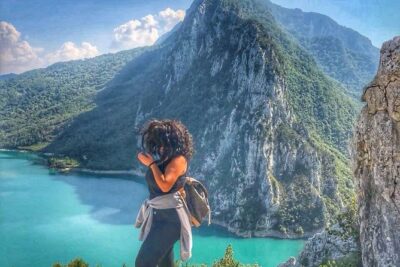
Hike Gamti Mountain with Bovilla lake view & canyon- From Tirana
Read our review →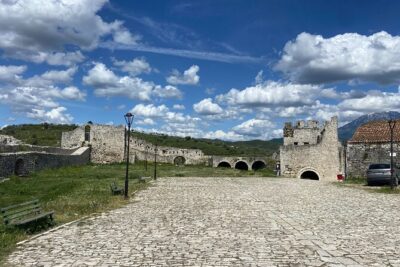
Berat city UNESCO tour, the Castle & Belshi lake- From Tirana
Read our review →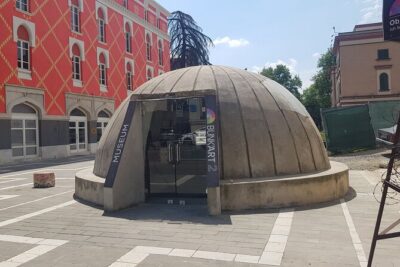
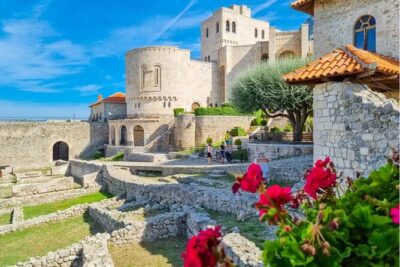
Kruja castle, the old Bazaar & Sarisalltik- Departure from Tirana
Read our review →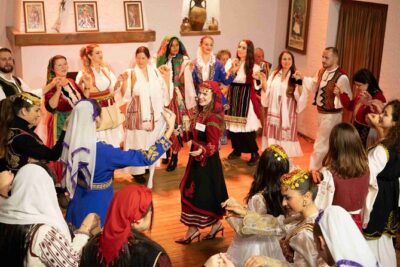
Albanian Night Show: Traditional Music, Dance & Dinner in Tirana
Read our review →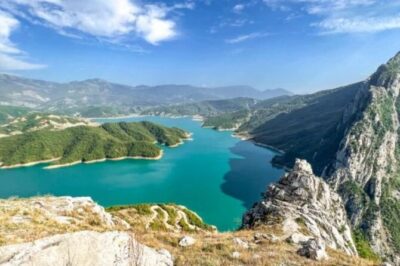
From Tirana- Hiking Tour to Bovilla Lake & Gamti Mountain
Read our review →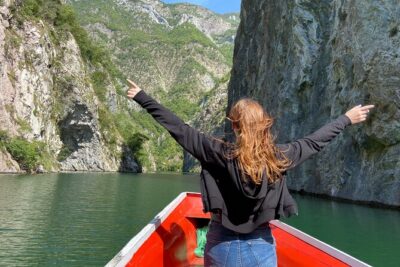
Shala river & Komani lake -Day trip departure from Tirana/Shkodra
Read our review →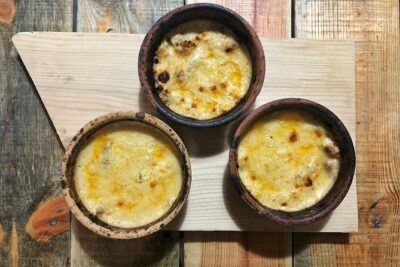
Cooking Classes and Traditional food tasting in Tirana
Read our review →Browse the lists this tour appears in