
Reviewed · GJIROKASTËR TOURS
Private Cold War City Tour in Gjirokaster
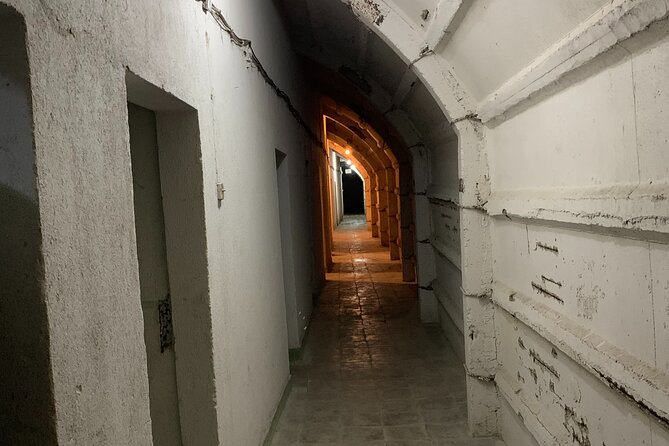
The most striking part of this Gjirokaster tour is the Cold War Tunnel, a chilly underground shelter built to protect Albania’s political leaders in the 1970s. You’ll hear how the bunker was meant to keep the ruling group safe while military decisions continued above and below ground.
I like the small private format, which lets you ask questions instead of being swept along with a large crowd. I also like the human side of the route: Musine Kokalari’s story gives the communist period a personal face, while coffee or tea at the end gives you a pleasant pause after several serious stops. The main drawback is that the tour is offered in English only, and the €14 entrance cost is not included in the advertised price.
Key points to know before booking
- The Cold War Tunnel is the central experience: Expect about 50 minutes underground, with stories about political protection, military planning, and life under the communist regime.
- Musine Kokalari adds a personal story: Her memorial focuses on Albania’s first female writer and her persecution for opposing communist rule.
- Enver Hoxha’s former home has an unusual past: The building was burned, rebuilt at five times its former size, and later became the Ethnographic Museum.
- This is a private tour: Only your group takes part, which makes the pace and questions more flexible than on a standard group outing.
- Coffee and tea are included: The tour closes with a short presentation and a drink at the operator’s hall.
- Bring extra money for admission: Entry tickets cost €14 per person and are separate from the $75.74 tour price.
A Cold War tour with a personal Albanian story
Gjirokaster is often introduced through its stone roofs, steep streets, and hilltop castle. This tour takes a different route through the city. Its subject is not only architecture, but also the fear, control, punishment, and resistance that shaped Albania during the communist period.
That makes the experience more useful than a quick bunker visit on its own. You see the physical places where power was protected, then move toward the people who suffered under that power. The route also connects Enver Hoxha, Albania’s longtime dictator, to Gjirokaster through the house where he was born and raised.
The tone is serious, but not grim from start to finish. A private guide can explain the difficult parts in plain language, and the included coffee or tea offers a simple break at the end. Guide Elisa has been singled out for being kind and well informed, so you may want to request her when booking if the operator can accommodate that.
A few more Albania half-days to weigh up
- Walking Tour Baazar – The Argjiro Castle – Zekate house
★ 4.5 · 18 reviews - Cooking Class
★ 4.5 · 12 reviews - Vegetarian Cooking Class @Teta Marjeta
★ 5.0 · 11 reviews
Entering the 1970s Cold War Tunnel
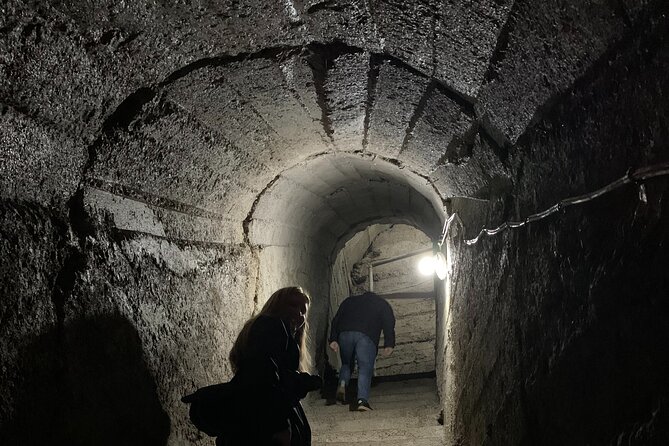
The first stop lasts about 50 minutes and goes below ground into the Cold War Tunnel. It was built to shelter Albania’s political bureau in the 1970s, allowing senior leaders to remain protected while directing military action in a crisis.
The tunnel matters because it shows how the communist regime imagined danger. Albania’s leadership expected threats from outside powers and also feared internal opposition. The bunker was not simply a place for ordinary residents to hide. It was planned for the people at the top of the system.
Inside, your guide explains the tunnel’s intended role through stories, confessions, and historical facts. That mix gives the visit a human edge. You are not just walking past concrete rooms. You are considering how a government prepared to preserve itself, and how much energy went into guarding political authority.
The underground setting is one of the tour’s strongest features. It is cool inside, even when Gjirokaster is warm above ground. Wear a light layer if you are sensitive to cold, though the supplied information does not specify a dress requirement.
The tunnel visit can feel quick if you want a highly detailed technical account of the construction. One visitor specifically wished for more translated written material and a longer explanation. Since the tour is in English only, you will get the most from it if you are comfortable following spoken historical detail.
Meeting Musine Kokalari at My Muse
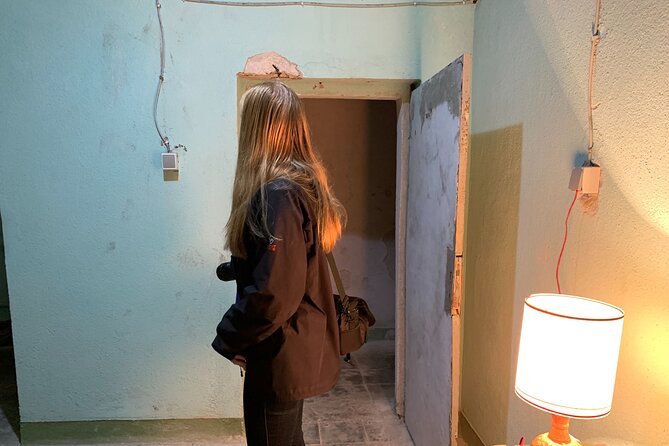
The second stop is the My Muse Memorial, devoted to Musine Kokalari. She was an Albanian writer, intellectual, and politician from Gjirokaster, and is recognized as Albania’s first female writer.
Kokalari opposed the communist regime and paid a heavy price. She was imprisoned at Burrel and sent to hard labor in Rreshen. The memorial presents her as more than a political victim. It also shows her as a person who kept reading and writing despite poverty and punishment.
This is an important change of pace after the tunnel. The bunker presents the state’s fear of attack. Kokalari’s story shows the cost of refusing to accept the state’s ideas. Her life helps you understand that communist history is not only about leaders, buildings, and official speeches. It is also about writers, political opponents, and ordinary people trying to hold on to their own minds.
The visit lasts about 40 minutes and has no separate admission charge listed. Because the tour is private, you should be able to ask questions about Kokalari’s writing, political views, and treatment by the regime. The available details do not specify whether books or translated texts are provided, so English speakers should plan to rely mainly on the guide’s explanation.
Enver Hoxha’s house and the Ethnographic Museum
The third stop takes you to the house where Enver Hoxha was born and raised. The building’s own story is unusual. It was burned and rebuilt at five times its former size, later became a Museum of Weapons, and eventually turned into the Ethnographic Museum.
That changing identity gives the building a strange, layered role in Gjirokaster. It began as a family home connected to the future dictator, then became a place for weapons, and now presents local life and traditions through an ethnographic collection.
Your guide connects the house to Hoxha’s rise as a leader and to the punishments directed at his opponents. The explanation also covers the resentment surrounding people who knew him, challenged him, or simply failed to accept his authority. The supplied description uses strong language about persecution reaching opponents, acquaintances, and even childhood friends, so expect this part to focus on the personal reach of dictatorship.
The stop lasts about 40 minutes and includes admission. It is likely to appeal to you if you want to connect Albania’s national political story with one specific Gjirokaster building. It may be less satisfying if you are looking for a conventional museum visit focused only on furniture, clothing, or domestic life. Here, the building’s political past is a major part of the point.
After the museum, the tour closes with a short presentation at the operator’s hall. The subject is the less visible side of Gjirokaster, followed by coffee or tea. This final pause is useful because it gives you time to absorb the material rather than ending abruptly at the last exhibit.
More Private Tours in Albania
- Semi-Private Tour of North Macedonia: Ohrid & Struga from Tirana
★ 5.0 · 170 reviews - Private Half-Day Jeep Safari in Northwestern Corfu
★ 5.0 · 73 reviews - Private Ohrid Day Tour and Authentic Village from Tirana & Durres
★ 5.0 · 71 reviews - Semi-Private Day Tour of Montenegro: Budva & Kotor from Tirana
★ 5.0 · 71 reviews
What the castle and prison add to the experience
The tour’s advertised highlights include Gjirokaster Castle and its prison building, along with the Cold War Tunnel. The detailed timing provided for the experience names the tunnel, My Muse Memorial, and Ethnographic Museum as the three main stops, so you should confirm exactly how the castle prison is handled when booking.
That small point matters. Gjirokaster Castle is one of the city’s main historic sights, and its prison connects naturally with the tour’s focus on imprisonment and communist control. But the published stop-by-stop details do not give a separate duration or admission arrangement for the prison building.
You should also note that one of the tour’s descriptions says the historical area of Gjirokaster will be covered during the visit. This suggests the experience is meant to link several parts of the old city rather than remain underground. Still, do not assume every castle room or exhibit is included unless the operator confirms it.
If the castle prison is a must-see for you, ask about it before paying. The entrance tickets are not included, and the total cost may change depending on which sites are entered.
Why the private format matters
The listed price is $75.74 per person, and the tour is private. That means only your group participates, rather than joining a large public departure. For a history-heavy visit, this can be a real advantage.
You can stop to ask what a term means, request more context about Hoxha, or spend longer on Kokalari’s story if it interests you. A private group also avoids the common problem of trying to hear a guide while several unrelated groups gather around the same doorway.
The tradeoff is price. A solo visitor pays the full per-person rate, and the separate €14 admission fee pushes the total higher. The value improves if two or more people in your party want the same focused discussion and would otherwise book separate visits.
The duration is listed as approximately two hours and 30 minutes to three hours and 10 minutes. That is enough time for a substantial introduction to Gjirokaster’s communist past without using an entire day. Allow the longer end of the range if you ask questions or if the route includes all the castle-related material described in the highlights.
Understanding the price and extra admission cost
At $75.74 per person, the tour is not a low-cost sightseeing walk. You are paying for a private English-language guide, a structured route, and a small-group setting rather than transport or a long list of included attractions.
Coffee or tea is included, as is the guided tour. Entrance tickets are not included and cost €14 per person. That distinction should be part of your budget from the start, especially because the tour focuses on historic interiors where admission is likely central to the experience.
I see the best value here for people who care about context. If you only want to see Gjirokaster Castle, a general city walk or independent visit may cost less. If you want the Cold War Tunnel explained, Kokalari’s life placed in context, and Hoxha’s connection to the city discussed by one guide, the private format makes more sense.
The current rating is 4.5 from four posted ratings, a positive signal but still a very small sample. The strongest pattern is praise for the guide’s friendly manner and clear knowledge of the city. The useful caution is equally clear: English is the only listed language, and some visitors wanted more written translations.
Practical details for a smoother visit
The tour begins at C-Adventures & Tours, 6001 Gjirokaster, Albania, and returns to the same meeting point. It is near public transportation, but no hotel pickup or drop-off is included in the supplied details.
Confirmation arrives at the time of booking. Service animals are allowed, and most people can participate. Since the route includes a Cold War tunnel and historic city sites, you should still consider your own comfort with walking and underground spaces, even though no specific mobility restrictions are listed.
The activity offers free cancellation if you cancel at least 24 hours before the local start time. Cancellations or changes made within 24 hours are not refunded or accepted.
Gjirokaster can attract many people around its central sights. One practical observation is that the center includes souvenir shops and places for an evening meal, so you can pair the tour with dinner afterward. If you want a quieter visit, ask the operator about the best start time rather than assuming the city will be calm.
An early arrival may also be useful. On one occasion, the operator helped an early-arriving participant with another attraction. That does not guarantee an extra activity, but it suggests it is worth contacting the company if your schedule brings you to the meeting point ahead of time.
Who will enjoy this tour most
I would choose this experience if you want political history presented through actual places. The tunnel, memorial, and former Hoxha home create a clear progression from state security to personal resistance and political power.
It is a good fit for:
- People interested in Cold War history and communist Albania
- Visitors who prefer a private guide to a large group
- English speakers who are comfortable with spoken explanations
- Anyone who wants a serious alternative to a standard castle visit
- Couples, families, or friends who can share the private-tour cost
I would think twice if you need multilingual interpretation, extensive written translations, or a low total price. The English-only format was a real limitation for one participant, and the short tunnel visit may feel too brief if you want a detailed museum-style study.
You should also confirm the castle prison details before booking. The highlights mention it, but the detailed schedule gives its clearest timings to the tunnel, My Muse Memorial, and Ethnographic Museum.
Should you book the Cold War City Tour?
Book it if you want Gjirokaster’s communist past explained by a guide rather than reduced to a bunker photo. The Cold War Tunnel is memorable, Musine Kokalari’s story adds moral weight, and the former Hoxha home gives the subject a strong local connection.
The private format and coffee break soften what could otherwise be a heavy three-hour history lesson. Just budget for the extra €14 admission, confirm how the castle prison fits into the route, and choose this only if an English-language tour works for you.
FAQ
How long does the Cold War City Tour last?
The tour lasts approximately two hours and 30 minutes to three hours and 10 minutes.
What is the price of the tour?
The listed price is $75.74 per person. Entrance tickets cost an additional €14 per person.
Are entrance tickets included?
No. The €14 entrance fee is not included in the tour price.
What is included in the tour?
A guided tour and coffee or tea are included.
What language is the tour offered in?
The tour is offered in English only.
Is this a private tour?
Yes. Only your group participates in the activity.
Where does the tour start and finish?
The tour starts at C-Adventures & Tours, 6001 Gjirokaster, Albania, and ends back at the same meeting point.
Can I cancel for a full refund?
Yes, if you cancel at least 24 hours before the local start time. Cancellations made within 24 hours are not refunded, and changes within that period are not accepted.
Just added around Albania
- Apollonia and Berat UNESCO tour from Tirana★ 5.0 · 3 reviews
- UNESCO heritage in Albania – 4 days★ 5.0 · 3 reviews
- Private Transfers from Tirana International Airport to Sarandë★ 4.5 · 3 reviews
- Transfers Tirana Airport – Sarande – Ksamil – Airport Tirana★ 4.5 · 3 reviews
- Berat 4×4 Off-Road and Vineyard Wine Tasting★ 5.0 · 3 reviews
- N. Macedonia &Kosovo; Semi – Private Tour; Tour Leader & Car★ 4.8 · 3 reviews
- Cultural Tour in Tirana including House of Leaves★ 5.0 · 3 reviews
- SOTIRA WATERFALL HIKING/TREKKING from Berat by 1001 Albanian Adventures★ 5.0 · 3 reviews
Gjirokastër Tours, compared.
Walking Tour Baazar – The Argjiro Castle – Zekate house
Read our review →
Walking Tour “The Old Bazaar, Cfake, Dunavat, Ali Pasha Bridge”
Read our review →
Gjirokaster walking Tour The Old Baazar, Cfake, Dunavat, Ali Pasha Bridge
Read our review →Browse the lists this tour appears in