
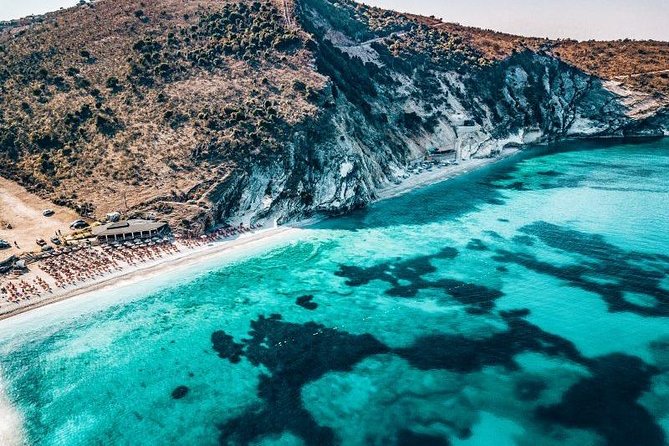
Reviewed · ALBANIAN RIVIERA TRIPS
The Albanian Riviera, Porto Palermo, Qeparo Village, And A Big Ol’ Kalaja.
Porto Palermo gives this outing its strongest hook: one small bay holds an Ali Pasha fortress, abandoned communist-era military remains, and a narrow link to the mainland. Add old Qeparo’s stone lanes and churches, and you get a useful look at Albania’s Ottoman, French, and Soviet-era past in one coastal trip.
I like the contrast between the two stops, and I like that the experience is private to your group, with guiding in English or Italian. The main caution is timing: the tour is described as a full-day outing, but the stated duration ranges from two to eight hours, so you should confirm the exact plan before booking.
Key points at a glance
- Porto Palermo combines fortress walls and a former submarine base: You see military history from two very different periods around the same bay.
- Qeparo keeps its old-world character: Expect cobbled alleys, traditional buildings, and old churches rather than a polished resort setting.
- Ali Pasha Tepelena links both sites: His power shaped the fortifications and the wider story of the region.
- French and Ottoman influences meet here: The castle’s design reflects outside military expertise, while the area’s political past reaches across empires.
- Your group stays together: The private format is limited to a maximum of 20 people.
- Saranda is the base: Pickup is offered, with the listed meeting point at Leka Tours & Rent a Car on Rruga Mitat Hoxha.
Why Porto Palermo is the right place to begin
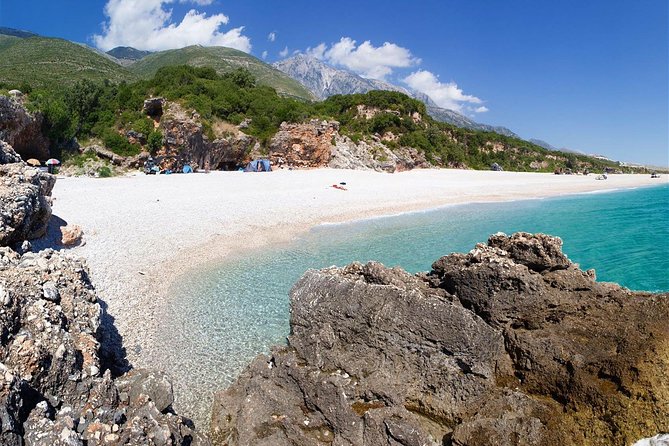
Porto Palermo sits near Himara on Albania’s southern Ionian coast. The fort occupies a small piece of land surrounded by a sheltered bay, connected to the mainland by a narrow strip. That setting matters. Instead of finding a castle far inland, you see a defensive site placed directly beside the water, where the bay itself helped protect ships and people inside the fort.
The view is part of the appeal, but the history gives the stop its weight. The fortress is linked to Ali Pasha of Ioannina, also called Ali Pasha Tepelena, a powerful ruler in the late Ottoman world. The site also reflects French military influence, since the castle is described as having been designed by a French Army architect.
That combination makes Porto Palermo more than a quick photo stop. You can look at the walls and gates while your guide explains how control of the coast, military engineering, and Ottoman administration shaped the region. The architecture is not presented as purely local or purely Ottoman. It belongs to a border zone where outside powers and local rulers constantly affected one another.
The castle is also tied to Albania’s communist period. During the Soviet-era communist regime, Porto Palermo served as a submarine base. The semi-abandoned tunnel and barracks remain part of the site’s story, giving you a sharp change of mood from fortress walls to modern military secrecy.
More of the Albanian Riviera:
- Riviera Tour Borsh-Qeparo-Himare-Porto Palermo-Vuno-Dhermi
★ 5.0 · 5 reviews - Full Day Tour from Albanian Riviera/Borsh to Dhermi and Llogara
★ 5.0 · 4 reviews - Albanian Riviera in 3 Days;Semi–Private Tour with Tour Leader&Car
★ 5.0 · 16 reviews
Reading the fort beyond its postcard view
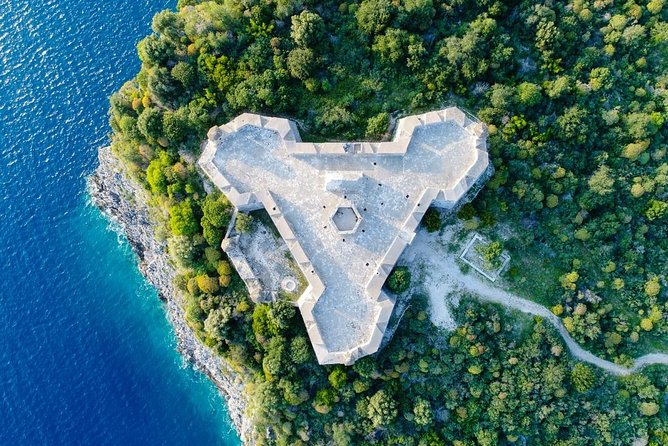
The castle’s location makes the first few minutes easy to understand. You see how a narrow approach and a protected bay could help defend the position. You can also appreciate why this place mattered to anyone controlling movement along the coast.
Inside and around the fortress, the experience is likely to feel more atmospheric than polished. The information provided describes semi-abandoned military tunnels and barracks, along with the older walls and gates. That means you should expect a historic site with rough edges, not a fully restored palace or a museum arranged with a large collection of displays.
I like that mix. A cleaned-up monument can explain the past, but abandoned spaces often show how later governments reused older strategic locations. At Porto Palermo, you are not looking at one single chapter. The fort’s Ottoman connections, French design influence, and communist military use overlap in the same compact setting.
Your guide’s explanation will be especially useful here. Without context, you might see an attractive stone fort beside the sea and miss the political story. The tour is offered in English and Italian, so you can choose the language that lets you follow the historical details most comfortably.
Allow about two hours for this part of the outing according to the stated schedule. The actual amount of time at the site can depend on the day’s route, so ask how long the full visit will be when you arrange pickup or meet the group.
Qeparo’s cobbled lanes and old churches
After Porto Palermo, the route continues to Qeparo, a village just beyond Palermo Bay. The old village is known for traditional architecture, cobbled alleys, and old churches. This stop changes the pace. Porto Palermo is about walls, military power, and strategic geography. Qeparo gives you a closer look at everyday settlement patterns and local building traditions.
Do not expect a modern seaside resort atmosphere in the old part of Qeparo. The appeal is in the older stonework and the narrow lanes. You may find the paths uneven or less convenient than a broad paved street, so sensible walking shoes are a good idea. The supplied information does not specify the walking surface beyond the cobbled alleys, so anyone with mobility concerns should ask the operator for current access details.
The village’s position above the coast adds to the sense of place. You can connect the houses, churches, and lanes to the wider bay and mountains without treating the village as a separate attraction. Qeparo is part of the same coastal corridor as Porto Palermo, but it tells a quieter story.
The tour allows about four hours for Qeparo in the stated itinerary. That is considerably longer than a brief stop for photographs. It suggests time for a guided walk and a closer look at the village’s architecture, though the exact breakdown between walking and other activities is not specified.
The French and Ottoman threads at Qeparo
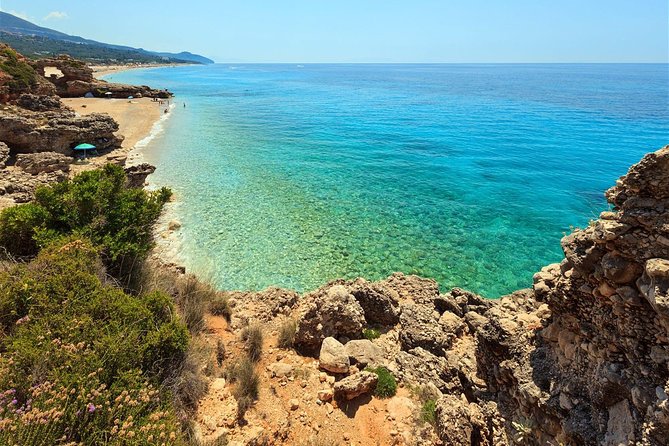
Qeparo also connects to Ali Pasha Tepelena. The information supplied describes a castle in the village, designed by a French Army architect, with special architectural and tourism value. This gives the stop a second fortress story, but you should clarify with the operator exactly which castle areas are included in the visit.
The wording around the two sites can be confusing because both Porto Palermo and Qeparo are linked with Ali Pasha. That is not necessarily a problem, but it is a good reason to ask your guide to explain the relationship between the fortifications rather than treating them as unrelated sights.
The wider historical setting is useful. The Ottoman Empire changed its provincial system during the 17th century, and the southern Albanian coast sat within a region shaped by shifting administrative and military control. You do not need a long political lecture to enjoy Qeparo, but this background helps explain why fortresses, coastal bays, and village positions mattered so much.
French involvement adds another layer. The castle’s connection to a French military architect shows that local power was not isolated from European engineering and military practice. You get a small but clear example of how Albania’s history crossed cultural lines.
More of the Himara coast:
- Visit Qeparo Village and The Beaches of Himara
★ 4.5 · 9 reviews - Tandem paragliding Albania (Llogara)
★ 4.0 · 22 reviews - Visit Vlore & Himare Beaches includes lunch
★ 4.5 · 13 reviews - Llogara Caesar’s Path,Orikum Park & Marmiroi Church Guided Tour
★ 5.0 · 3 reviews
What the communist-era remains add
Many coastal excursions focus only on pretty views and old stone. Porto Palermo offers something less expected: a reminder of Albania’s communist isolation and military priorities.
The former Soviet submarine base is important because it shifts the story from early fortification to 20th-century defense. The tunnel and barracks are described as semi-abandoned, which gives you a glimpse of a place that has not been fully transformed into a tidy tourist attraction.
That can be valuable, but it also calls for realistic expectations. You should not book this as a polished museum visit. The appeal lies in seeing the remains and hearing how the bay was reused during the communist period. The quality of your understanding will depend heavily on the guide’s explanation, since the site itself may not provide all the context you need.
This is one reason the private format helps. With a group restricted to your own booking, you can ask about the Soviet period, Ali Pasha, the castle’s design, and the transition between these eras. The maximum group size is 20, so private does not necessarily mean a tiny party of two or four. If your reservation includes a larger family or friend group, confirm the final size.
What $98 buys you from Saranda
The listed price is $98, but the value depends on how many people share the private booking and how the transportation is arranged. Pickup is offered, and the listed starting point is Leka Tours & Rent a Car on Rruga Mitat Hoxha in Saranda. The activity ends back at that meeting point.
For a small private group, the cost can make sense as a convenient way to combine two historical sites that would otherwise require separate planning. You get a guide, a route from Saranda, and a focused day along the coast instead of arranging each stop yourself.
For one person or a very small party, $98 is a more serious expense. You should compare it with the value of having the route handled and the history explained in your chosen language. The experience is offered in English and Italian, which is a practical advantage if you want more than a self-guided walk around the ruins.
The duration needs special attention. The tour is called a full-day experience, while the stated estimate is two to eight hours and the two stops add up to roughly six hours. That wide range may reflect pickup arrangements, road time, or different operating plans. Before paying, ask for the expected departure time, return time, and time at each stop.
Who will get the most from this outing
I would choose this tour if you are staying in Saranda and want history tied to actual places rather than a day spent only at the beach. It works particularly well for you if military architecture, Ottoman-era politics, communist history, and old villages all sound worthwhile.
It also suits a private family or friend group that wants to move at a shared pace. The English and Italian options make it easier to follow the guide, and pickup can simplify the start of the day.
You may want to reconsider if your priority is a long swim, a food-focused excursion, or a relaxed coastal drive with no scheduled history. Beaches are mentioned around Porto Palermo, but this is presented as a heritage tour, not a beach day. There is also no stated meal, boat ride, or swimming session, so do not assume those are included.
The route may be less suitable for anyone who finds cobbled lanes or uneven historic sites difficult. Most people can participate, and service animals are allowed, but detailed accessibility information is not provided. Ask before booking if you need a step-free route or specific assistance.
Practical details worth confirming before you go
The tour has free cancellation up to 24 hours before the start time. Inside that window, changes and cancellations are not accepted for a refund. Cutoff times use local time, so check the time shown in your booking rather than relying on your home time zone.
Good weather is required. If poor weather causes cancellation, you are offered another date or a full refund. The experience also requires a minimum number of participants, and if that condition is not met, you are offered another date or experience, or a full refund.
One booking problem is worth avoiding. A customer booked the Saranda departure by mistake after intending to search for Tirana, then asked to cancel the night before. The operator’s response referred to its terms and said cancellation had been possible, while the customer complained about not receiving money back. The practical lesson is simple: check the departure city carefully and cancel at least 24 hours ahead if your plans change.
The official starting point is Leka Tours & Rent a Car Sarande, at Rruga Mitat Hoxha, Saranda 9701. Pickup is offered, but the supplied details do not specify whether pickup is door to door or from a set point. Confirm the exact pickup instructions before the morning of the tour.
Should you book the Porto Palermo and Qeparo trip?
Book it if you want a history-heavy day from Saranda, especially one that links Ottoman fortifications with communist military remains. Porto Palermo supplies the dramatic setting and the strongest historical contrast, while Qeparo adds village architecture, churches, and a slower walk through old Albania.
I would be cautious if you need a fixed timetable. The two to eight hour range is unusually broad for a tour advertised as a full-day experience, so get the day’s schedule in writing. I would also ask what parts of the Qeparo castle and Porto Palermo military remains you will enter.
At $98, the outing is easiest to justify for a private group that values a guide and simple transport planning. If that sounds like your kind of day, this is a useful way to see a less polished and more historically layered stretch of the Albanian Riviera.
FAQ
Where does the tour start?
The listed meeting point is Leka Tours & Rent a Car Sarande, on Rruga Mitat Hoxha in Saranda, Albania. Pickup is also offered.
Where does the tour end?
The activity ends back at the listed meeting point in Saranda.
How long does the tour last?
The approximate duration is given as two to eight hours. The described stops allow about two hours at Porto Palermo and four hours at Qeparo.
What languages are available?
The tour is offered in English and Italian.
Is Porto Palermo Castle included?
Yes. The route includes Porto Palermo Castle, including its fortress walls and gates, with information about Ali Pasha and the site’s use as a former Soviet submarine base.
What will I see in Qeparo?
You will visit Qeparo’s traditional village area, including cobbled alleys, old churches, traditional architecture, and a castle associated with Ali Pasha Tepelena.
How large can the group be?
The private experience has a maximum of 20 participants.
Can I cancel for a full refund?
Yes, if you cancel at least 24 hours before the experience start time. Cancellations or changes made less than 24 hours ahead are not refunded._weather-related or minimum-participant cancellations may result in another date or experience, or a full refund.
Just added around Saranda
- Daily tour★ 4.5 · 3 reviews
- Visit Kroreza Beach by Boat★ 4.5 · 3 reviews
- Full Day Tour from Albanian Riviera/Borsh to Dhermi and Llogara★ 5.0 · 4 reviews
- Sarande: Private transfers from/to Tirana. 4,8 and 20pax groups.★ 5.0 · 4 reviews
- From Durres: Saranda, Blue Eye, Ksamil Islands Boat Tour★ 4.5 · 4 reviews
- Boat Trip Around the Hidden Gems of Saranda★ 4.0 · 4 reviews
- Riviera Tour Borsh-Qeparo-Himare-Porto Palermo-Vuno-Dhermi★ 5.0 · 5 reviews
- Daily Tour to Butrint National Park★ 4.5 · 6 reviews
Albanian Riviera Trips, compared.
Albanian Riviera in 3 Days;Semi–Private Tour with Tour Leader&Car
Read our review →
Private Tour from Tirana, Gjirokastër , Saranda and South Riviera
Read our review →
2 Day Tour of the Riviera, Gjirokastra UNESCO city and Blue Eye,
Read our review →
Small Group Tour of Albanian Riviera; Saranda, Ksamil & Dhermi
Read our review →
Riviera Tour Borsh-Qeparo-Himare-Porto Palermo-Vuno-Dhermi
Read our review →
Full Day Tour from Albanian Riviera/Borsh to Dhermi and Llogara
Read our review →
Discover Albania in 5-Day Adventure from the Peaks to the Riviera
Read our review →Browse the lists this tour appears in