
Reviewed · ALBANIAN RIVIERA TRIPS
4-Days UNESCO Towns and Albanian Riviera Tour
The best thing about this four-day tour is the range packed into one manageable loop. You move from Tirana’s city center to Ottoman towns, ancient Butrint, Ionian beaches, mountain passes, and Roman ruins without having to arrange a new hotel or transfer every day.
I like the small maximum group of eight, which should make the long drives and stop timing easier to manage. I also like the mix of major sights and less obvious stops, especially Belesh’s lake country and Qeparo’s shallow sandy beach. The drawback is simple: this is a busy route, and several stops are short, so you should expect a taste of many places rather than a slow stay in each one.
Four days from city streets to Ionian coves
This tour is designed for someone who wants Albania’s highlights without renting a car or building a route from scratch. It begins in Tirana and loops through southwestern Albania before returning north to Durres.
The route covers a lot of ground. That is its strength, but also its central compromise. You will see more of the country than you could from one base, yet some sightseeing windows are brief. I would choose this trip for variety, practical transport, and an overview of Albania. I would not choose it if your main aim is several quiet beach days or long museum visits.
The vehicle is air-conditioned, an important detail for summer drives along the coast and inland roads. Pickup is usually arranged at the airport or port, with the guide holding a sign bearing the company name. Other pickup requests can be arranged in advance.
The tour is offered in English, and the group size is capped at eight. That is a useful middle ground: more social and usually less costly than a private tour, but much more personal than a large coach.
Day one: Tirana, Belesh, and Berat
The first morning begins at about 8 a.m. in Tirana. The opening city visit gives you a quick orientation around the capital, including Skanderbeg Square, the main boulevard, the mosque, Mother Teresa Square, the Blloku area, Tirana’s national park, the Gallery of Arts, and the Mosaic of Tirana.
Skanderbeg Square is the natural starting point. It places several central sights within reach and gives you a sense of modern Tirana’s scale. Blloku offers a different mood. Once associated with the communist elite, it is now one of the city’s most frequented areas, filled with cafes, restaurants, and evening activity.
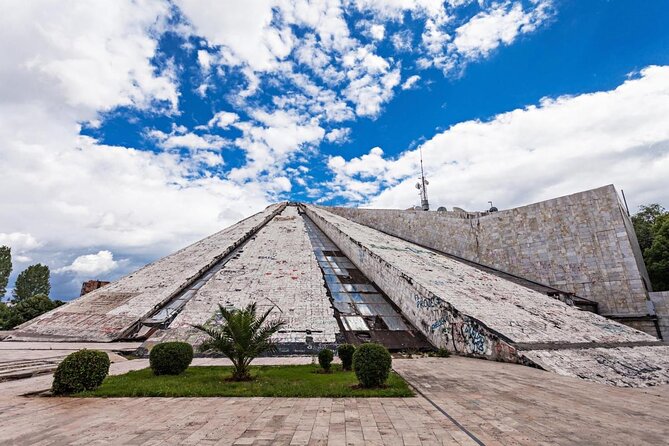
The former Enver Hoxha Pyramid receives a short stop of about 10 minutes for an explanation. Built in 1988 by Hoxha’s daughter and son-in-law, it was first a museum dedicated to Albania’s communist leader. Its worn marble exterior and graffiti make it one of Tirana’s most striking reminders of the country’s recent past.
You may also visit the National Historical Museum if you wish. The wording of the schedule suggests that this is optional, so ask early in the morning how much time is available. With several stops ahead, you should not assume there will be a long museum visit.
More of the Albanian Riviera:
- Albanian Riviera in 3 Days;Semi–Private Tour with Tour Leader&Car
★ 5.0 · 16 reviews - Small Group Tour of Albanian Riviera; Saranda, Ksamil & Dhermi
★ 5.0 · 10 reviews - Private Tour from Tirana, Gjirokastër , Saranda and South Riviera
★ 5.0 · 10 reviews
Belesh offers a quieter change of pace
From Tirana, the route continues to Belesh, a small agricultural town surrounded by lakes. This is not a headline attraction in the usual sense. Its appeal is the pause from city traffic and major monuments, with open views and a look at a less touristed part of central Albania.
The stop is planned for about two hours. That gives you time to slow down, take photographs, and see a side of Albania that can easily disappear from a standard highlights tour. On a four-day schedule, such a stop also breaks up the drive before Berat.
Berat brings the first major historic town
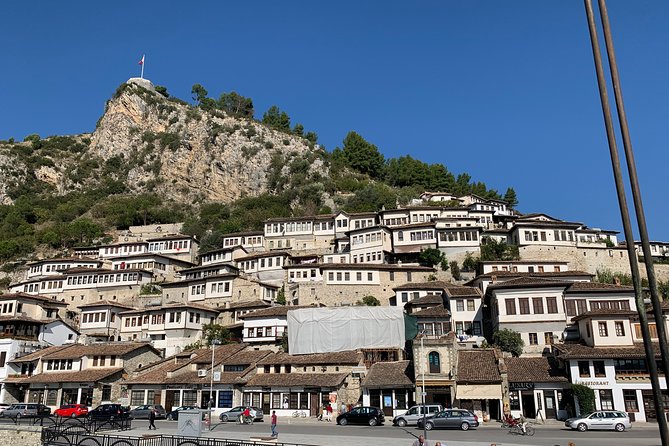
The visit to Berat focuses on the city and its castle, known for its preserved character and local culture. The hilltop fortress is the main reason to come, with old buildings and views over the town and surrounding area.
Two hours is enough for an introduction, but not for every corner of the castle district. Wear shoes you can walk in, since historic hill towns usually involve uneven surfaces and slopes. The tour does not list a separate admission charge here, so confirm with the guide what is included if you plan to enter any paid site.
Day one is a full introduction to Albania. Tirana supplies the political and urban context, Belesh adds rural scenery, and Berat shifts the focus to historic stone architecture.
Day two: Ottoman Gjirokaster and the ruins of Butrint
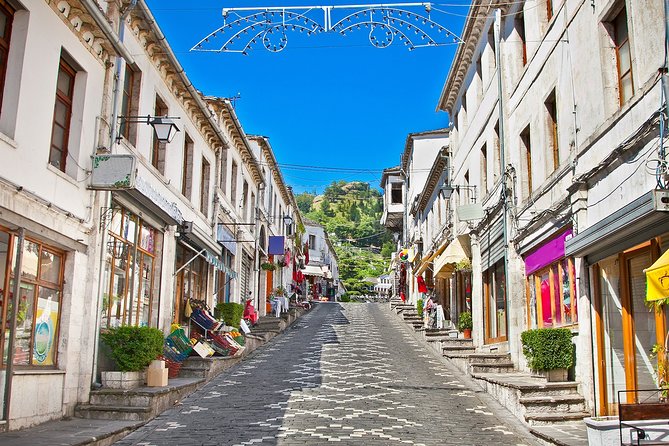
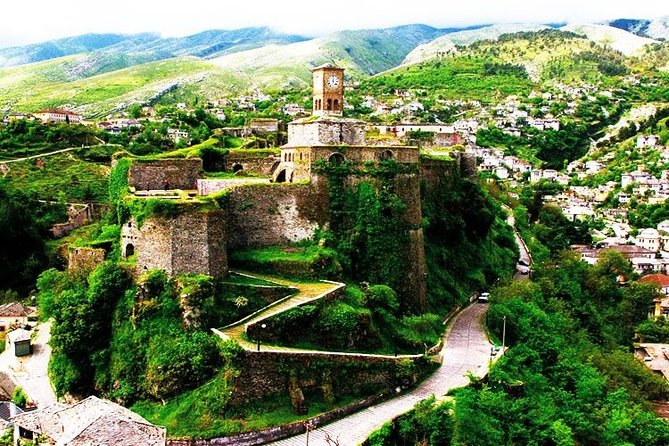
The second day moves inland to Gjirokaster, one of the tour’s strongest stops. The town is known for its Ottoman-era houses and stone-built setting. Here, the schedule gives special attention to Skenduli House, a family home dating from the early 1700s and partly rebuilt in 1827.
A member of the Skenduli family will most likely show you around. That makes the visit feel more direct than a standard walk through an empty historic building. You will see rooms built for different purposes, including a wedding room with 15 windows, several fitted with stained glass.
The house visit is listed as about one hour, with admission included. The itinerary also lists Gjirokaster separately, so allow roughly two hours in total for the house and the wider town visit. The descriptions overlap, but the practical point is clear: this is your main chance to see both a preserved Ottoman home and the old town around it.
A few more Tirana half-days to weigh up
- Hike Gamti Mountain with Bovilla lake view & canyon- From Tirana
★ 5.0 · 1,280 reviews - Berat city UNESCO tour, the Castle & Belshi lake- From Tirana
★ 5.0 · 804 reviews - Walking Tour of Tirana
★ 5.0 · 646 reviews - Kruja castle, the old Bazaar & Sarisalltik- Departure from Tirana
★ 5.0 · 592 reviews
The bazaar and castle require steady walking
Gjirokastra Bazaar is part of the old town experience, while the castle rises above the city. The fortress occupies a long hillside position and is described as extending across a site roughly 1,100 feet high. The schedule allows around two hours for the castle, including the walk to and from it, though the stop description also lists 30 minutes.
Treat the timing as approximate. Gjirokaster rewards a relaxed pace, but the hill and stone streets can make the visit tiring. If you want to spend extra time browsing the bazaar or exploring the castle’s exhibits, ask the guide what must be shortened.
Butrint connects Greek, Roman, and medieval Albania
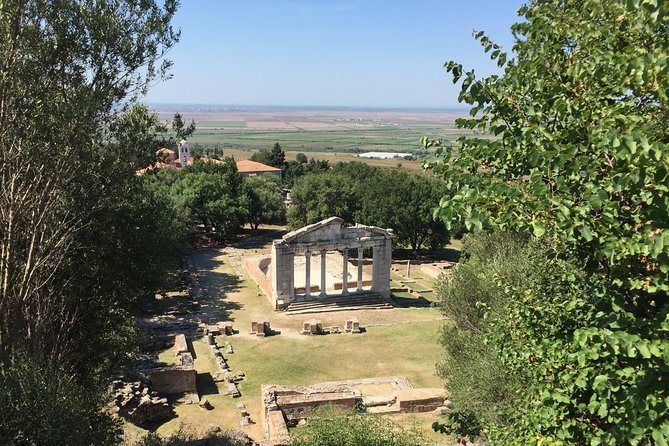
After lunch, the tour continues to Butrint National Park. The archaeological site began as an ancient Greek city, later became a Roman colony and a bishopric, and was eventually abandoned after a major earthquake flooded much of the settlement.
Butrint is valuable because several periods sit close together. You are not seeing a single isolated monument. You are walking through the remains of a place that changed as rulers, religions, and regional power shifted.
Admission is included, and the visit is scheduled for about an hour. That is enough for the main archaeological highlights, but it is a brisk visit for a site with such a long story. Listen closely to the guide and keep moving with the group if you want to make the most of the time.
The day ends with hotel check-in and free time in Saranda. This coastal city is the unofficial capital of the Albanian Riviera, with a busy seaside promenade, beaches, restaurants, and summer nightlife. Saranda is a lively base, not a sleepy fishing village. If you prefer a quiet evening, use your free time to walk along the water or ask Genci for a restaurant suggestion.
Day three: Qeparo, Porto Palermo, and the road over Llogara
Day three turns toward the Ionian Coast. The scenery becomes a major part of the experience, with the road itself linking beaches, cliffs, bays, and mountain views.
Qeparo is the best beach stop for an easy swim
Qeparo Beach is planned for about three hours. Unlike many rocky southern beaches, Qeparo has fine sand and shallow water for the first few meters. That makes it a practical choice for families and for anyone who prefers an easier entry into the sea.
There is also an old pier built across large rocks. You can use the beach time for swimming, a walk, or simply a break from the schedule. Because beach conditions and weather affect any coastal stop, bring what you need for several hours by the water.
The route from Himara to Qeparo is only about 13 kilometers, but the views make the drive worthwhile. The area is associated with cypress trees, which help give the coast its Mediterranean character.
Porto Palermo adds a fortress to the beach day
Porto Palermo Castle sits in a picturesque bay south of Himara. Also called the Castle of Ali Pasha, it is a 19th-century fortress with dark interior rooms and battlements that look out over the sea.
The visit is scheduled for about two hours, and admission is included. The castle is less about lavish decoration than mood, structure, and location. Inside, the rooms can feel stark. Outside, the views are the reward.
I would pay attention to the guide’s explanation here, since the fortress can be explored fairly quickly on your own. The stop works well because it prevents the coastal day from becoming only a sequence of beach visits.
Llogara Pass provides the big coastal view
The road crosses Llogara Pass in the Ceraunian Mountains, connecting the Dukat Valley with Himara. The tour makes a short picture stop for views of the Albanian Riviera.
Do not expect a long mountain walk. This is a viewpoint pause, not a hiking excursion. Still, it is one of the route’s most memorable visual moments, especially if the weather is clear.
Vlore gives you a brief independence lesson
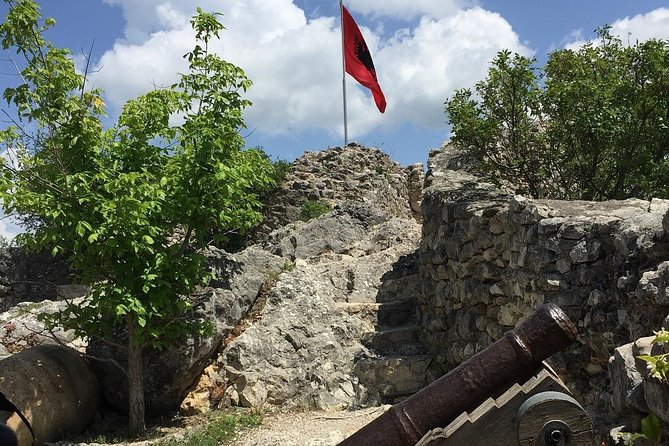
In Vlore, the tour stops at the Monument of Independence in Flag’s Plaza for about 10 minutes. The monument marks Albania’s Declaration of Independence, and the first Albanian government worked nearby in 1913.
The listed stop lasts about 30 minutes, so this is an orientation visit rather than a full exploration of Vlore. If you are especially interested in Albanian national history, ask the guide for a little extra context during the stop.
Day four: Durres and Albania’s ancient port
The final day moves to Durres, one of Albania’s most important ancient and coastal cities. The main visit is the Roman Amphitheatre, scheduled for about one hour with admission included.
The amphitheatre was discovered in 1966 after archaeologist Vangjel Toçi became curious about a fig tree that had fallen below ground level. Excavations revealed the structure beneath it. That discovery story gives the site a human scale: major ruins can remain hidden under an ordinary city for centuries.
The amphitheatre is described as one of the largest and most impressive ancient structures in the region. Its partially uncovered remains are especially interesting because the site sits within the modern city rather than in an isolated archaeological park.
The tour also takes in the Venetian Tower and surviving city walls. The walls seen today were mainly built by the Byzantine emperor Anastasius I in the fourth century and later reinforced by Justinian. Their original height reached about 18 meters, showing how seriously the city’s defenses were once taken.
The Venetian Tower stop is listed as about one hour, while the amphitheatre visit is another hour. Together they give you a compact final look at Durres as a city shaped by Greek, Roman, Byzantine, and later powers.
What the $806.76 price includes in practical terms
At $806.76 per person, this is not a budget day tour. The value depends on how much you would otherwise spend arranging four days of transport, accommodation, admissions, guiding, and meals yourself.
The price includes accommodation and some meals, along with an air-conditioned vehicle and the guide’s services. Admissions are specifically included for Skenduli House, Butrint, Porto Palermo Castle, and the Durres Amphitheatre. Other listed stops are free or sightseeing stops.
The route also saves you from the hardest part of an Albania road trip: connecting inland towns, archaeological sites, and beaches in a sensible order. If you are comfortable planning hotels and driving, you may find a self-guided trip cheaper. If you value a prepared route and a guide who can explain what you are seeing, the cost becomes easier to justify.
The strongest value comes from the range. In four days, you cover Tirana, Belesh, Berat, Gjirokaster, Butrint, Saranda, Qeparo, Porto Palermo, Llogara Pass, Vlore, and Durres. That is a lot of Albania for one short holiday.
Guide style, group size, and the real pace
Genci is the guide named in the tour information. His approach is described as professional, relaxed, and informative. He also recommends restaurants for meals not covered in the price, a useful service in places where you may otherwise lose time choosing somewhere to eat.
The maximum of eight people matters. Small groups usually make airport or port pickup easier, reduce waiting at stops, and give you a better chance to ask questions. It also makes the trip feel less like a fixed bus circuit.
Still, this is not a slow private journey. You should expect early starts, several hours on the road, and sightseeing blocks that may shift with traffic, weather, and group preferences. The trip was successfully arranged at short notice for one October departure, but the average booking time is 39 days ahead. I would book well ahead if your dates are fixed.
You can cancel for a full refund up to three full days before the local start time. Changes or cancellations inside that window are not accepted for a refund.
Who should book this Albanian route?
I would recommend it to first-time visitors who want a broad introduction to Albania in four days. It suits people who want historic towns and archaeological sites balanced with beaches and coastal roads.
It is also a good fit if you arrive through Tirana Airport or a port and want pickup handled for you. The English-language format and small group should work well for independent-minded people who still want the transport and route organized.
Families may particularly appreciate Qeparo’s shallow sandy beach, though the schedule also includes hills, castles, old stone streets, and long road sections. Anyone with limited mobility should ask for more detail before booking, since the route includes castle areas and historic towns with uneven ground.
You may want a different trip if your priority is a long stay in one place. Berat, Gjirokaster, Saranda, and the Riviera all deserve more time than this itinerary can provide.
Should you book the four-day tour?
Book it if you want maximum variety with minimum planning. The strongest parts are Gjirokaster and Skenduli House, Butrint, the Ionian Coast, and the road over Llogara Pass. Genci’s relaxed guiding style and restaurant advice add practical value, while the small group keeps the experience manageable.
Before paying, confirm the exact hotels, which meals are included, and how much time will be available at optional sites such as the National Historical Museum. If you are comfortable with a fast pace and want to see Albania’s major contrasts in one loop, this $806.76 tour is a sensible, well-rounded choice.
FAQ
Where does the tour begin?
The tour begins in Tirana, with a stated start time of 8:00 a.m. Pickup is usually available from the airport or port.
Is airport or port pickup offered?
Yes. The guide usually waits with a sign showing the company name. Other pickup locations can be requested, with details provided in advance.
How many people can join the tour?
The activity has a maximum of eight participants.
Is the tour offered in English?
Yes. English is the listed tour language.
Are hotels and meals included?
Accommodation and some meals are included. The available information does not specify the exact hotels or the complete list of included meals, so confirm those details before booking.
Which admissions are included?
Admission is included for Skenduli House, Butrint National Park, Porto Palermo Castle, and the Durres Amphitheatre. Several other stops are sightseeing visits or have no admission charge listed.
Can most people participate?
The tour states that most people can participate and that it is near public transportation. The route does include castles, historic towns, and uneven areas, so ask for current mobility details if needed.
What is the cancellation policy?
You can cancel for a full refund at least three full days before the experience start time. Cancellations or changes made less than three full days in advance are not accepted for a refund.
Just added around Tirana
- UNESCO heritage in Albania – 4 days★ 5.0 · 3 reviews
- Apollonia and Berat UNESCO tour from Tirana★ 5.0 · 3 reviews
- Private Transfers from Tirana International Airport to Sarandë★ 4.5 · 3 reviews
- Transfers Tirana Airport – Sarande – Ksamil – Airport Tirana★ 4.5 · 3 reviews
- Berat 4×4 Off-Road and Vineyard Wine Tasting★ 5.0 · 3 reviews
- Cultural Tour in Tirana including House of Leaves★ 5.0 · 3 reviews
- N. Macedonia &Kosovo; Semi – Private Tour; Tour Leader & Car★ 4.8 · 3 reviews
- SOTIRA WATERFALL HIKING/TREKKING from Berat by 1001 Albanian Adventures★ 5.0 · 3 reviews
Albanian Riviera Trips, compared.
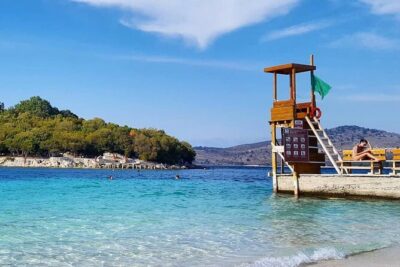
Albanian Riviera in 3 Days;Semi–Private Tour with Tour Leader&Car
Read our review →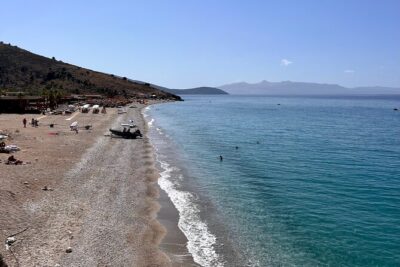
Private Tour from Tirana, Gjirokastër , Saranda and South Riviera
Read our review →
2 Day Tour of the Riviera, Gjirokastra UNESCO city and Blue Eye,
Read our review →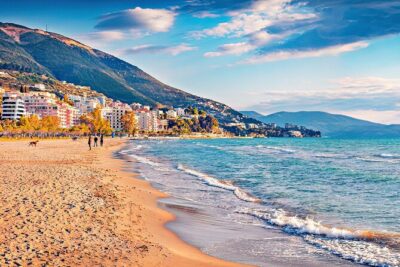
Small Group Tour of Albanian Riviera; Saranda, Ksamil & Dhermi
Read our review →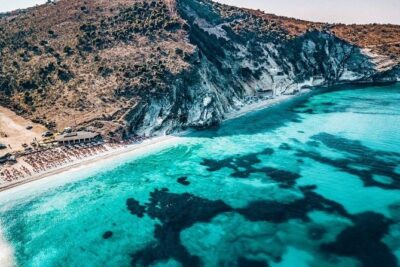
The Albanian Riviera, Porto Palermo, Qeparo Village, And A Big Ol’ Kalaja.
Read our review →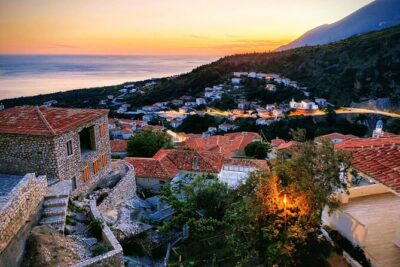
Riviera Tour Borsh-Qeparo-Himare-Porto Palermo-Vuno-Dhermi
Read our review →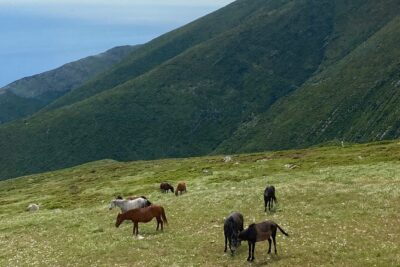
Full Day Tour from Albanian Riviera/Borsh to Dhermi and Llogara
Read our review →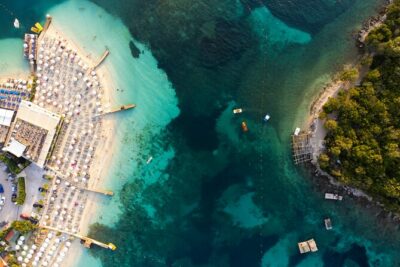
Discover Albania in 5-Day Adventure from the Peaks to the Riviera
Read our review →Browse the lists this tour appears in