
Reviewed · GJIROKASTËR TOURS
2-Hours Guided Drino’s Valley Ride
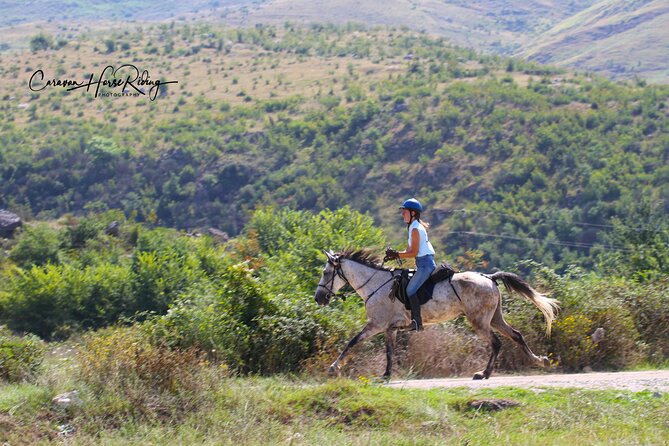
The best part of this ride is its change of pace. Within two hours, you leave Gjirokaster’s stone lanes behind and enter the rural Drino Valley, where horses, cattle, old irrigation works, farms, and Cold War bunkers tell a quieter story of Albania. The route ends with a photo stop at Cini Lake, where the hills frame horses and cattle in one fine scene.
I like the sure-footed Albanian horses, especially for riders who want a real outing rather than a slow pony walk. I also like the chance to ride at a level suited to experienced horsemen and women. Guide Kristina has offered riders a more active ride, including mountain gallops when conditions and ability allowed.
The main catch is clear: this is only for experienced riders. A moderate level of fitness is also required, and the 10-kilometer route may feel too demanding if you are new to horseback riding or prefer a gentle sightseeing trip.
Key points at a glance
- A 10-kilometer ride through Drino Valley: Expect farms, grazing animals, old irrigation structures, and open country beyond Gjirokaster.
- A photo stop at Cini Lake: The artificial lake provides the prettiest setting for pictures with horses and cattle.
- A ride for experienced equestrians: The outing is not designed for beginners or first-time riders.
- A glimpse of Albania’s recent past: You pass Cold War bunkers, former collectivized land, and infrastructure built for state farming.
- Protected bird habitat: Egyptian vultures, golden eagles, and other birds may be seen in the area.
- A small group setting: The maximum group size is 10, which should help keep the ride manageable.
Leaving Gjirokaster behind on horseback
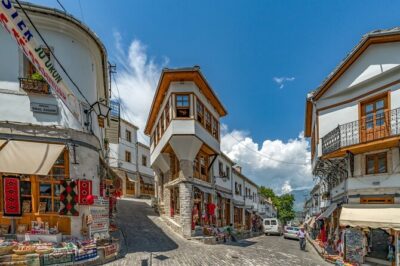
Gjirokaster is famous for its steep lanes, Ottoman-era houses, and hilltop setting. This ride gives you a different view of the area. Instead of spending another morning among stone buildings and souvenir shops, you head into the Drino Valley, where agriculture and village life still shape the view.
The meeting point is Caravan Horse Riding Albania on an unnamed road in Albania. The start time is 9:00 am, and the ride returns to that same meeting point after about two hours. The setting is practical rather than polished, so I would treat this as a working riding center and country outing, not a staged show built for short photo sessions.
You should arrive ready to ride. The operator describes the outing as suitable only for experienced riders, and the route covers about 10 kilometers. That distance is not extreme for a practiced rider, but it matters because the tour is short in time yet active in nature. You are not simply sitting on a horse while someone leads it along a flat path.
The horses are described as sure-footed and easy to ride. That combination matters in rural terrain. A steady horse can make you feel more relaxed, but it does not remove the need for balance, confidence, and basic riding control. If you have not ridden for years, be honest about your ability before booking.
A few more Albania half-days to weigh up
- Walking Tour Baazar – The Argjiro Castle – Zekate house
★ 4.5 · 18 reviews - Cooking Class
★ 4.5 · 12 reviews - Vegetarian Cooking Class @Teta Marjeta
★ 5.0 · 11 reviews
The Albanian horses and the riding style
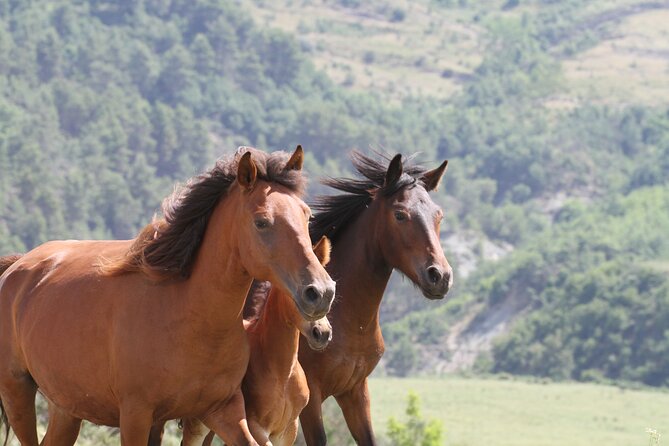
The horses are one of the strongest reasons to choose this outing. Albanian horses are known here for being reliable on the route, and their sure footing is useful as the ride moves through fields and hilly country. You can expect the horses to carry you through a working countryside rather than along a purpose-built track.
Kristina is the guide named in the available information. Her approach has suited riders with long riding experience, and the route can offer a faster pace when appropriate. One especially appealing detail is the possibility of galloping in the mountains in front of Gjirokaster, though you should not assume that every departure will include a gallop. Pace depends on the group, the horses, the route, and the guide’s judgment.
That makes this a better choice for an experienced rider who wants some freedom and movement. It is less suitable for someone hoping to take a few pictures from the saddle and spend the rest of the time at a walk.
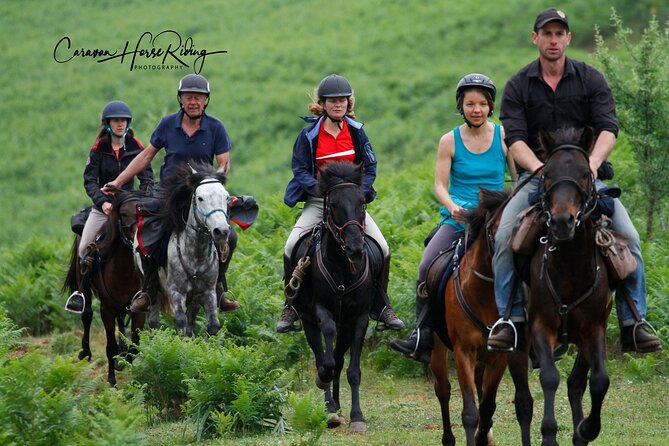
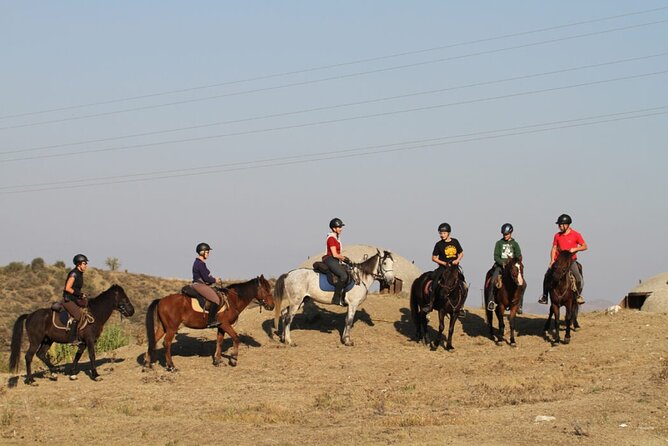
The group limit is 10 people. That is small enough to be more personal than a large riding procession, though the exact feel will depend on how many people book your departure. A small group also makes it easier for the guide to keep an eye on riding ability and manage the pace.
Farms, herds, and the marks of collectivization
The ride’s appeal is not limited to scenery. You pass cultivated land and pastoral areas where agriculture remains visible in daily life. Herds of cattle add movement to the view, while former irrigation infrastructure shows how much work went into farming this valley.
You also see traces of Albania’s collectivization period. Under the former communist system, farmland and agricultural production were organized on a state-controlled basis. The route passes former collectivized spaces and old infrastructure linked to that period, giving you a direct look at the physical remains of a difficult and important part of Albania’s recent past.
This is valuable because the countryside does not appear as a blank natural setting. It has been shaped by villages, state planning, farming, water management, and political change. You see some of that history from horseback, at ground level, without turning the ride into a formal history lecture.
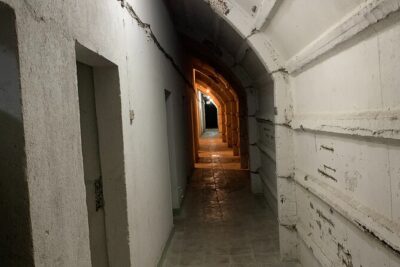
The ride also passes a network of Cold War bunkers. These concrete structures are among Albania’s most recognizable reminders of the communist era. Their presence beside farmland and grazing areas can feel strange at first. That contrast is exactly what makes the route interesting: ordinary rural life continues around objects built for fear and military defense.
Do not expect every bunker or old structure to come with a long explanation. The information provided focuses on what you will see along the route, not on a detailed guided talk about each site. If you want a full political history of communist Albania, you will need a separate museum or walking tour in Gjirokaster.
Asim Zeneli and the rural story of the valley
The ride passes the village of Asim Zeneli, one of several villages created in the 1950s and named after fallen partisans from World War II. The village continued to grow into the mid-1960s, when the surrounding agricultural system and its supporting infrastructure were being developed.
That detail gives the ride a useful sense of time. The countryside you see is not just old village Albania. It also reflects the period when new settlements were built near collectivized farming spaces and linked to state agricultural plans.
Alongside the village, infrastructure was built to support agriculture, including the artificial lake of Cini. The lake is supplied by several hilly streams and remains in operation. It covers about 15 hectares and holds roughly 600,000 cubic meters of water.
You do not need to be an agriculture specialist to appreciate why Cini Lake matters. It is both a working water source and the visual centerpiece of the ride. Its presence connects the surrounding hills, fields, cattle, and village to the practical business of growing food and managing water.
More Guided Tours in Albania
- Blue Cave & Grama Bay Full Day Guided Boat Tour
★ 5.0 · 141 reviews - Bike or E-Bike Tour Tirana: Highlights & Grand Park Guided Cycle
★ 5.0 · 124 reviews - Tirana Walking Tour: History, Culture &Gems by a Passionate Guide
★ 5.0 · 52 reviews - Guided Rafting Tour – Vjosa River National Park – Permet, Albania
★ 5.0 · 46 reviews
Cini Lake is the photo stop to watch for
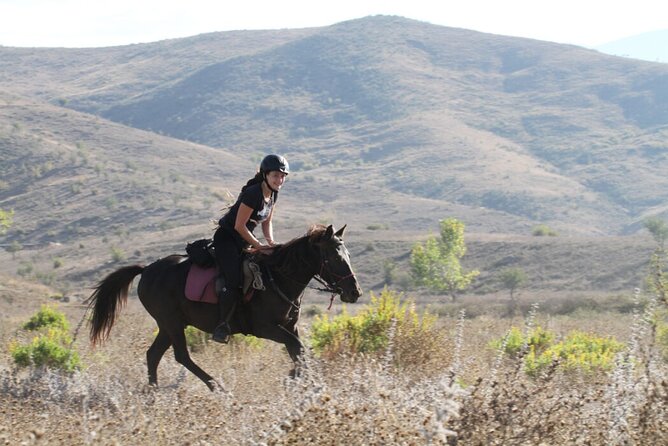
Bring your camera or phone. Cini Lake is singled out as the main photo stop, and the setting should give you the kind of picture that is difficult to find in town: horses in the foreground, cattle nearby, water below, and hills around the lake.
The lake is not presented as a resort or a place for a long recreational break. Think of it as a scenic pause during the ride. You will have a chance to take photographs and enjoy the view, but the outing remains a horseback route rather than a lake excursion.
This stop also gives you a moment to appreciate the scale of the valley. The lake’s 15 hectares are large enough to shape the area around it, while the surrounding hills keep the scene enclosed and calm. If you want pictures of yourself riding, this is likely the strongest opportunity on the route.
A practical tip: keep your camera secure while riding. The information confirms a mobile ticket, but it does not state that the operator provides special bags, lockers, or riding equipment for personal items. Use whatever secure method you normally rely on when horseback riding.
Bird habitat beyond the town
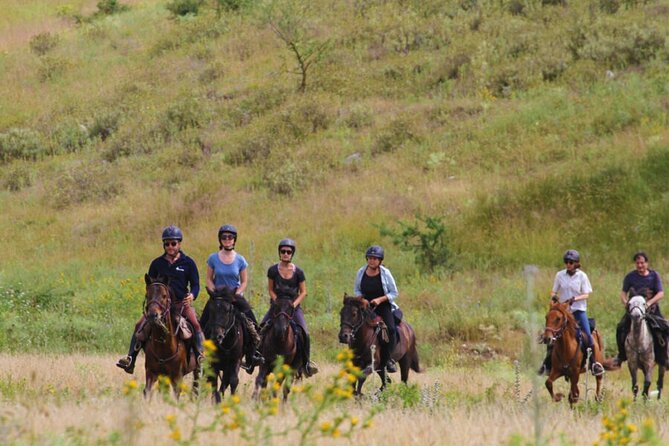
The route passes habitat used by the Egyptian vulture, golden eagle, and other protected birds. That adds a wildlife element, but you should keep expectations sensible. The presence of these species does not guarantee a sighting during a two-hour ride.
Birds may be easier to notice in the open country than in Gjirokaster’s dense historic center. The valley’s fields, hills, water, and grazing areas provide a varied setting, which is part of the reason the ride feels more than a simple horseback transfer through the countryside.
If you hope to spot birds, stay alert during quieter stretches and bring a camera with a useful zoom if you have one. Still, the main purpose of the outing is riding, not birdwatching. You should book it for the combination of horses, rural views, and cultural remains, with wildlife as an added possibility.
Is $70.98 a fair price?
At $70.98 per person, this is not the cheapest way to spend two hours near Gjirokaster. The price makes more sense if you value the horses, the guided route, the active riding time, and the chance to reach a rural area that you might not see on foot.
You are paying for a focused equestrian outing rather than a long full-day tour. The route covers about 10 kilometers, includes a stop at Cini Lake, and returns to the riding center. For a confident rider, that can be good value because the ride is built around the activity itself, not padded with long transfers or unrelated stops.
The value is weaker for a beginner. You may pay the same price but get less enjoyment if the pace feels too fast or the terrain makes you uneasy. The same is true if you are mainly interested in Gjirokaster’s architecture and history. A walking tour, castle visit, or museum would be a better use of your time and money.
The maximum group size of 10 helps support the price. You are not booking an enormous group where the guide must manage a long line of riders at one slow pace. Still, there is no information about included transportation from hotels, meals, riding helmets, or other equipment, so you should not assume those extras are part of the fee.
Who should book this ride?
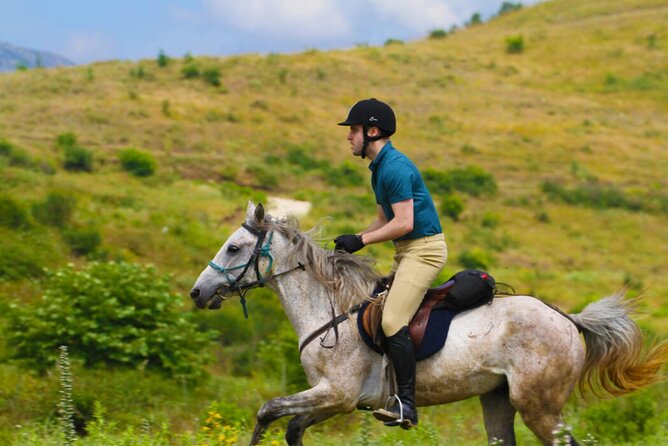
I would recommend it to riders who are comfortable in the saddle and want to spend time outdoors near Gjirokaster. It is especially appealing if you like the idea of riding through working farmland, seeing old communist-era structures, and taking photographs at a functioning artificial lake.
It also suits riders who enjoy a little speed. Kristina has offered an active ride to people with long riding experience, and the possibility of a mountain gallop adds real appeal. That said, a gallop should be treated as a possibility, not a promise.
You should think twice if you are a first-time rider, have not ridden for a long period, or want a calm beginner lesson. The operator specifically limits this outing to experienced riders. A moderate level of physical fitness is also required, so the ride is not a good choice if you are looking for a low-effort sightseeing activity.
Families should pay close attention to the rider requirement. The supplied information does not give a minimum age, so you cannot assume children are accepted. Ask the operator before booking if a young rider is involved.
Timing, cancellation, and practical planning
The ride starts at 9:00 am and finishes back at the meeting point after roughly two hours. That leaves much of the day free for Gjirokaster’s castle, old town, or another activity. A morning departure may also be a sensible way to fit an active ride into a wider day of sightseeing.
Confirmation is provided at booking, and the ticket is mobile. The experience is offered in English. The information does not specify hotel pickup, so plan to reach Caravan Horse Riding Albania independently unless the operator gives you different instructions after booking.
Free cancellation is available if you cancel at least 24 hours before the local start time. A cancellation made inside that period is not refunded, and late changes are not accepted. The activity also requires a minimum number of riders. If that minimum is not reached and the operator cancels, you can receive a full refund or choose another date or activity.
These rules are standard enough, but the timing matters. Do not leave cancellation until the night before if your plans are uncertain.
Final decision: should you book it?
Book this ride if you are an experienced rider who wants a genuine rural outing rather than a beginner lesson. The 10-kilometer route, Cini Lake photo stop, cattle, farmland, Cold War bunkers, and protected bird habitat create a strong mix of nature and recent history.
Skip it if you are new to horses, uncomfortable with an active ride, or mainly interested in Gjirokaster’s historic center. At $70.98, it earns its price through the riding itself, especially for confident equestrians who may appreciate the freedom and possible gallop that Kristina can offer.
FAQ
Where does the horseback ride start?
It starts at Caravan Horse Riding Albania on an unnamed road in Albania.
What time does the ride begin?
The scheduled start time is 9:00 am.
How long is the experience?
The ride lasts approximately two hours.
How far do you ride?
The journey covers about 10 kilometers and ends back at the equestrian center.
Is the ride suitable for beginners?
No. The activity is only for experienced horse riders.
What level of fitness is required?
You should have a moderate level of physical fitness.
Is the experience offered in English?
Yes. The activity is offered in English.
How many people can join?
The maximum group size is 10 travelers.
Can I cancel for a full refund?
Yes, if you cancel at least 24 hours before the experience start time. Late cancellations and changes made less than 24 hours before the start are not refunded.
Just added around Albania
- Apollonia and Berat UNESCO tour from Tirana★ 5.0 · 3 reviews
- UNESCO heritage in Albania – 4 days★ 5.0 · 3 reviews
- Private Transfers from Tirana International Airport to Sarandë★ 4.5 · 3 reviews
- Transfers Tirana Airport – Sarande – Ksamil – Airport Tirana★ 4.5 · 3 reviews
- Berat 4×4 Off-Road and Vineyard Wine Tasting★ 5.0 · 3 reviews
- N. Macedonia &Kosovo; Semi – Private Tour; Tour Leader & Car★ 4.8 · 3 reviews
- Cultural Tour in Tirana including House of Leaves★ 5.0 · 3 reviews
- SOTIRA WATERFALL HIKING/TREKKING from Berat by 1001 Albanian Adventures★ 5.0 · 3 reviews
Gjirokastër Tours, compared.
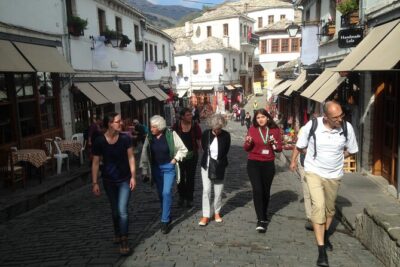
Walking Tour Baazar – The Argjiro Castle – Zekate house
Read our review →
Walking Tour “The Old Bazaar, Cfake, Dunavat, Ali Pasha Bridge”
Read our review →
Gjirokaster walking Tour The Old Baazar, Cfake, Dunavat, Ali Pasha Bridge
Read our review →Browse the lists this tour appears in