
Reviewed · COMMUNIST HISTORY TOURS
A Communist Manifesto: Tirana before and after
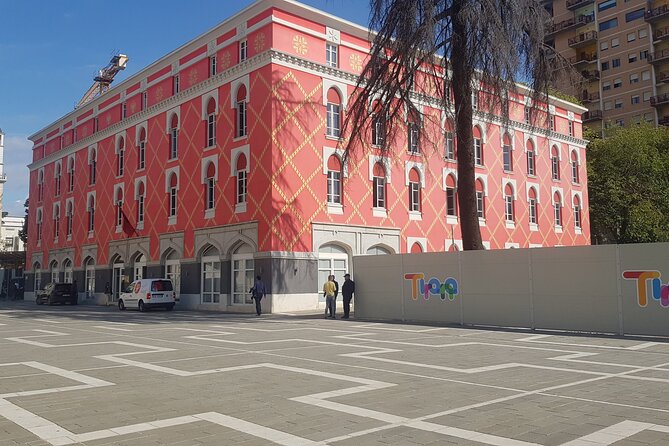
Tirana’s communist past is not locked away in a textbook. It sits in the middle of town, in the former political quarter, outside the House of Leaves, and in the concrete Pyramid built for Enver Hoxha. This walking tour connects those places with stories about how daily life felt under the regime, including personal memories from guides such as Eri, who grew up during that period.
I like two things right away: the route gives you a useful first look at central Tirana, and the guide adds the human side of history rather than simply reciting dates. The small maximum of 15 people also makes it easier to hear the explanation and ask questions.
The main consideration is that several stops are viewed from outside, and the tour is a walking orientation rather than a museum-heavy visit. If you want long indoor visits or a detailed look at every exhibit, you may need to add those on your own.
Key points to know before booking
- Personal stories about communism: Guides such as Eri connect public monuments with memories of growing up under Albania’s former system.
- A useful central-Tirana route: The walk covers Skanderbeg Square, Blloku, Mother Teresa Square, the Pyramid, and the House of Leaves area.
- Mostly an outdoor tour: The House of Leaves is seen from outside, and the Pyramid is a brief stop rather than a full interior visit.
- Small group size: The maximum is 15 people, a good balance between social energy and a guide you can hear.
- Coffee or tea at Komiteti: The tour finishes at Komiteti Bar, where a short drink stop is included.
- Good value for a first afternoon: At $34.84, you are paying mainly for context, orientation, and a guide’s time, not a long list of paid admissions.
Why Tirana’s communist past works best on foot
Tirana can look easy to understand at first. Skanderbeg Square is broad and orderly, the central boulevards are easy to follow, and cafés fill the streets. But the city’s recent past is harder to read without help. A former residence, a renamed square, or an imposing concrete building can mean much more once someone explains who used it and why it mattered.
That is the strength of this tour. You walk between major places instead of viewing them as isolated photo stops. The route shows how the city changed from a tightly controlled capital into the open, social city you see today.
The subject also suits a walking tour because the story is tied to public space. You are not only hearing about Albania’s communist period in the abstract. You are standing in the center of the capital, close to buildings and neighborhoods connected with power, surveillance, public ceremony, and the lives of ordinary people.
The tour lasts about two and a half hours and is offered in English. The advertised meeting time is 2:00 pm at the Tirana Free Walking Tour point on Skanderbeg Square. Wear comfortable shoes, since the experience depends on moving through the city rather than sitting in one place.
More bunker and communist-era tours:
- The truest face of Communism
★ 5.0 · 18 reviews - Full-Day Tour of Albania’s Bunkers and Beaches, from Tirana
★ 5.0 · 16 reviews - Communist History Tour Tirana & Street Food
★ 5.0 · 15 reviews
Starting at Skanderbeg Square
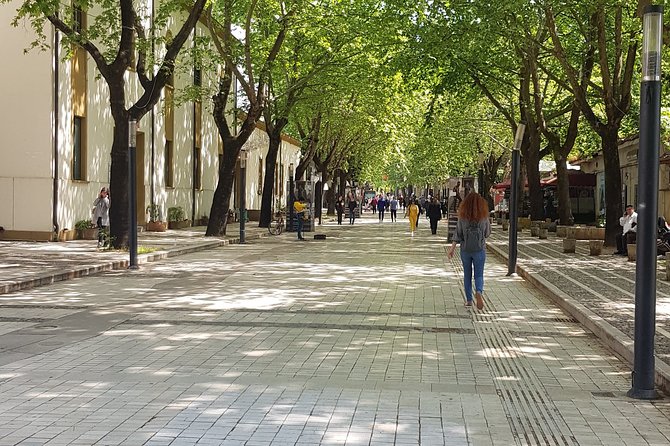
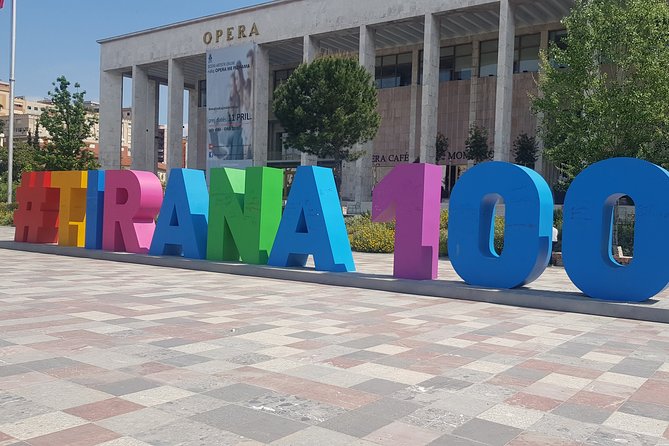
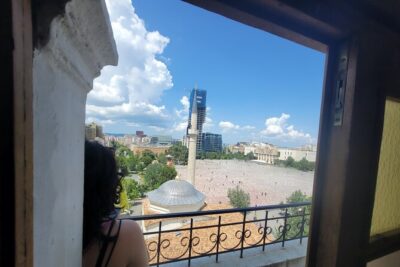
The tour begins at Skanderbeg Square, the most useful place in Tirana to get oriented. You see the main city square and begin with the broad political and civic setting that frames much of the tour.
The listed stop is about 10 minutes, but the square also works as the starting point for the wider walk. This is where the guide can place Tirana’s past against its present. You get a sense of the capital’s scale, the direction of the surrounding streets, and the central role of the square.
I like beginning here because it gives you a reference point for the rest of your stay. After the tour, you can return to the square and recognize how the city’s key areas connect. The stop is free, so there is no extra admission cost at the start.
Do not expect a long formal lecture in one spot. The value comes from the way the guide links this public space to the next parts of the route.
The House of Leaves and the cost of surveillance
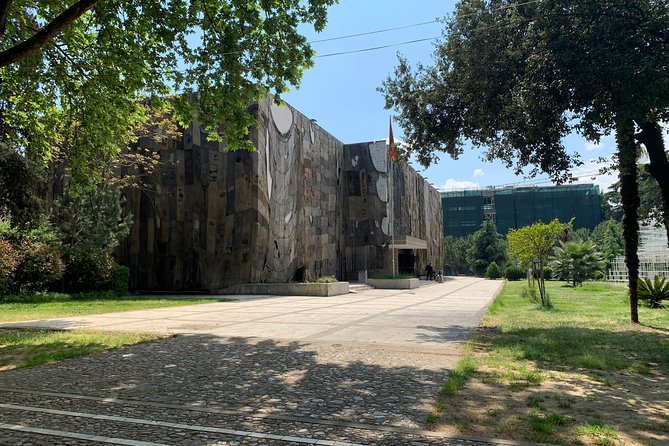
The next stop is the Museum of Secret Surveillance, also known as the House of Leaves. Here, the tour views the building from outside for about 10 minutes. Admission to the museum is not included, so this is important if you hoped to explore the interior.
Even from the street, the building fits the tour’s theme well. The name points to Albania’s system of secret surveillance, and the stop gives the guide a chance to explain how fear and control shaped everyday life. This is one of the places where a short explanation can add more meaning than a quick photograph alone.
You should treat this as an introduction, not a museum visit. If the House of Leaves interests you most, plan separate time to return and pay the admission yourself. The walking tour keeps moving, which lets you cover more ground but limits the time available for exhibits.
That tradeoff is fair for a city walk. You get the setting and historical frame without spending the whole afternoon indoors. Still, people focused on surveillance history should not assume the tour includes entry.
Blloku, from restricted quarter to social district
The walk continues into Blloku, with about 10 minutes spent in the area. Blloku is especially useful in a before-and-after tour because the neighborhood carries a strong connection to Albania’s former ruling class and its later transformation.
The guide’s job here is not simply to point out cafés. Blloku helps explain the social geography of communist Tirana, including who had access to certain spaces and how the area’s meaning changed after the regime. This makes the neighborhood more than a modern stop for food and nightlife.
I like this part because it puts political history into an ordinary street setting. You are walking through an area that feels social and current, while hearing how different its role once was. That contrast is one of the clearest ways to understand change in Tirana.
The stop is brief, so you will not get an exhaustive tour of every street. Think of Blloku as a focused example of change, not a separate neighborhood tour.
A few more Tirana half-days to weigh up
- Hike Gamti Mountain with Bovilla lake view & canyon- From Tirana
★ 5.0 · 1,280 reviews - Berat city UNESCO tour, the Castle & Belshi lake- From Tirana
★ 5.0 · 804 reviews - Walking Tour of Tirana
★ 5.0 · 646 reviews - Kruja castle, the old Bazaar & Sarisalltik- Departure from Tirana
★ 5.0 · 592 reviews
Mother Teresa Square and the city’s ceremonial side
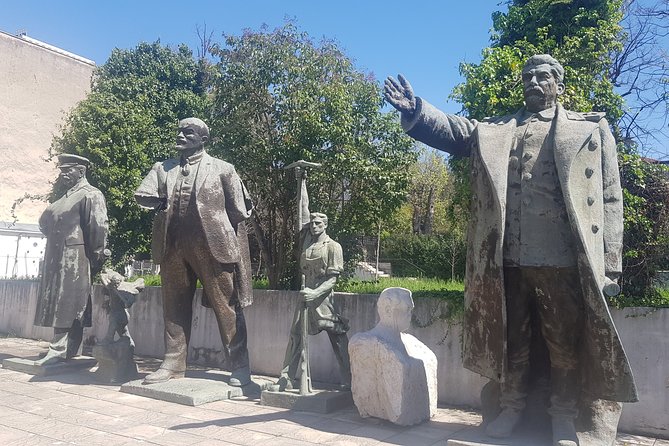
Mother Teresa Square is another short outdoor stop, listed at about 10 minutes. It gives the route a different kind of public space, broader and more formal than the café streets of Blloku.
The square helps show how Tirana uses monumental spaces for civic identity and ceremony. Along with Skanderbeg Square, it gives you two large urban settings that can be compared during the walk.
This is also a useful orientation point. You are not only collecting names of landmarks. You are learning how the central parts of Tirana fit together and where to go next during your own visit.
The drawback is the same as at several other stops: the time is limited. You will hear the guide’s explanation and walk through the space, but this is not a detailed architectural tour. If you enjoy taking photographs, the stop may feel short.
The Pyramid and the physical weight of the past
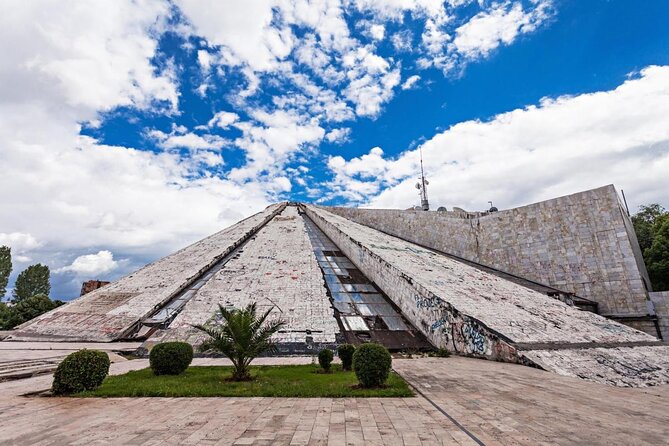
The Enver Hoxha Pyramid is one of the tour’s most memorable stops. The group pauses there for about 10 minutes, and the building provides a striking symbol of the communist era and the ways Albania has continued to argue with its past.
Its concrete form is hard to ignore. The guide can give the building a political and personal context, helping you understand why it matters beyond its unusual shape. This is where the tour’s title, A Communist Manifesto: Tirana before and after, comes into focus.
The Pyramid is viewed as a stop on the route, not presented as a full interior attraction. That distinction matters. You get time to see it, hear its background, and understand its place in the city, but you should not book this expecting an extended visit inside.
For many people, this will be a strong photo stop and one of the clearest examples of Tirana’s old and new identities meeting in one place. The building’s story is easier to grasp after hearing the guide explain the period around it.
Finishing with coffee at Komiteti
The tour ends at Komiteti Bar on Rruga Papa Gjon Pali II. The stop lasts about 15 minutes and includes coffee or tea. The venue is described as Komiteti kafe-museum, so the finish continues the tour’s link between social life, objects, and memory.
I appreciate this ending because it gives the group a chance to slow down after walking. A drink stop also leaves room for questions that may not fit naturally while crossing streets or moving between landmarks.
The included coffee or tea adds modest value, but the larger benefit is the setting and the chance to talk with the guide. Lunch is not included, and this is not meant to replace a meal. If you are hungry, plan food separately before or after the experience.
The end point is different from the starting point, which is useful to remember when planning the rest of your afternoon. You finish at Komiteti rather than returning to Skanderbeg Square.
What the guide adds to the experience
The guide is the deciding factor here. The route itself includes well-known central sights, but the communist period is not always easy to understand through signs or online summaries. A good guide can explain how official power affected ordinary choices, movement, work, and family life.
Eri receives especially warm praise for bringing the subject to life with personal stories and anecdotes. Another strong point is the guide’s account of growing up under communism. These details give the tour a human scale and help prevent the past from becoming a list of political names.
You should also expect a guide who takes time with explanations rather than rushing from stop to stop. The experience is described as well paced, with room to talk through the subject. That matters on a history walk, since the best questions often come after you have seen a building or neighborhood.
Guide assignments can vary, so Eri may not be the person leading your particular departure. Still, the repeated emphasis on personal accounts tells you what kind of guiding style the experience aims for: direct, conversational, and tied to lived experience.
Price, group size, and what you get for $34.84
At $34.84 per person, this is not the cheapest free-style city walk, but it includes more than basic directions. You are paying for a two-and-a-half-hour English-language experience, historical interpretation, a small group capped at 15, and coffee or tea.
No private transportation is included, but that should not be a problem for this route. The tour is designed to be walked, and using a vehicle would weaken the connection between the landmarks. The listed stops are in central Tirana, with time also used for the walking between them.
There are no separate admission charges for Skanderbeg Square, Blloku, Mother Teresa Square, the Pyramid stop, or the walking portions. The House of Leaves is seen from outside, and its interior admission is not included. Lunch is also your responsibility.
I see the price as reasonable if you want historical context and an efficient introduction to Tirana. It is less attractive if you only want a quick landmark walk or if you plan to visit every museum independently. The tour earns its fee through the guide’s stories, not through included entries.
The small group cap is a practical plus. Fifteen people is large enough to keep the tour lively, but smaller than a mass walking group. You should still expect a group experience, not a private conversation.
Who should book this Tirana walking tour
This tour is a strong fit for a first visit to Albania, especially if you have only a short stay in Tirana. It gives you a sense of direction and points out places you can revisit later.
History fans will get the most from it, particularly those interested in twentieth-century Europe, authoritarian governments, and how political change affects city life. The personal stories make the subject easier to connect with than a simple monument checklist.
I would also recommend it to anyone who wants to understand Blloku and the Pyramid in context. Both are easy to see on your own, but their meaning is less obvious without background.
You may want a different plan if your priority is indoor museum time, a private guide, food tasting, or transport between distant sights. This is an outdoor walking experience, and several stops are short.
Most people can participate, and service animals are allowed. The tour is near public transportation, though private transportation is not part of the experience.
Timing, weather, and cancellation details
The scheduled start is 2:00 pm, and confirmation is provided when you book. The tour requires good weather, so a poor-weather cancellation may lead to another date or a full refund.
The experience also requires a minimum number of participants. If that minimum is not reached, you can be offered another date or experience, or receive a full refund.
You can cancel for a full refund up to 24 hours before the start time. Changes or cancellations made within 24 hours are not accepted for a refund, and the cut-off uses local time.
Should you book A Communist Manifesto: Tirana before and after?
Book it if you want Tirana explained rather than simply photographed. The route covers the city’s central landmarks, but the real reason to choose it is the guide’s account of life under communism and the way those stories connect Skanderbeg Square, Blloku, the House of Leaves, Mother Teresa Square, and the Pyramid.
At $34.84, the tour makes sense for a first afternoon, a short stay, or anyone who prefers human stories to a self-guided list of facts. Just keep your expectations clear: you will see some places from outside, walk between stops, and finish with coffee or tea rather than a full meal.
If the House of Leaves is your main goal, add a separate museum visit. Otherwise, this small-group walk is a practical way to get your bearings and understand why modern Tirana still carries so many reminders of its communist past.
FAQ
Where does the tour begin?
It begins at the Tirana Free Walking Tour meeting point on Skanderbeg Square in Tirana, Albania.
What time does the tour start?
The scheduled start time is 2:00 pm.
Where does the tour end?
The tour ends at Komiteti Bar on Rruga Papa Gjon Pali II. The end point is also described as Komiteti kafe-museum.
How long does the experience last?
The tour lasts approximately 2 hours and 30 minutes.
What language is the tour offered in?
The tour is offered in English.
How much does the tour cost?
The listed price is $34.84 per person.
Is coffee or tea included?
Yes. Coffee and/or tea are included, with a short stop at Komiteti Bar.
Is admission to the House of Leaves included?
No. The tour sees the Museum of Secret Surveillance, or House of Leaves, from outside, and admission is not included.
Is lunch included?
No. Lunch is not included in the tour price.
What is the maximum group size?
The tour has a maximum of 15 participants.
Just added around Tirana
- UNESCO heritage in Albania – 4 days★ 5.0 · 3 reviews
- Apollonia and Berat UNESCO tour from Tirana★ 5.0 · 3 reviews
- Private Transfers from Tirana International Airport to Sarandë★ 4.5 · 3 reviews
- Transfers Tirana Airport – Sarande – Ksamil – Airport Tirana★ 4.5 · 3 reviews
- Berat 4×4 Off-Road and Vineyard Wine Tasting★ 5.0 · 3 reviews
- N. Macedonia &Kosovo; Semi – Private Tour; Tour Leader & Car★ 4.8 · 3 reviews
- Cultural Tour in Tirana including House of Leaves★ 5.0 · 3 reviews
- Tirana to Ksamil and Saranda Bus★ 4.5 · 3 reviews
Communist History Tours, compared.
Full-Day Tour of Albania’s Bunkers and Beaches, from Tirana
Read our review →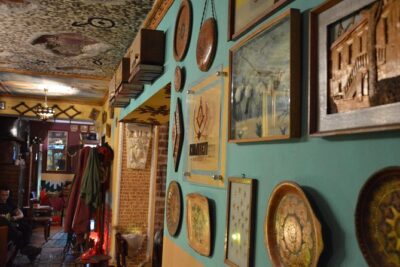
Tirana’s Communist Past: A Tasting Tour with Traditional Lunch
Read our review →Browse the lists this tour appears in