
Reviewed · GJIROKASTËR TOURS
Prepare Osa with Teta Marjeta
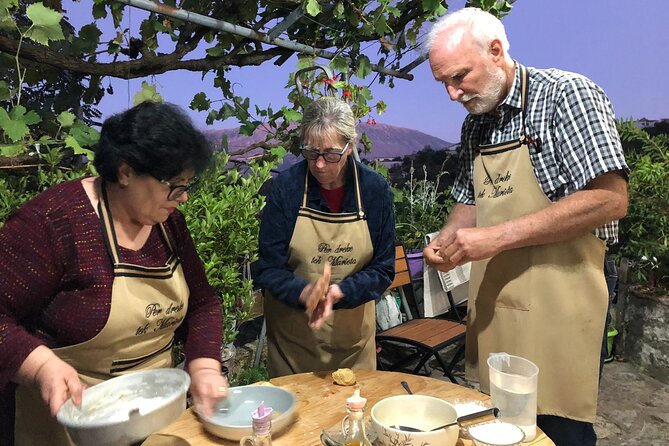
The most memorable part of this Gjirokastër cooking class is its setting: Teta Marjeta opens her home and teaches you recipes that belong to her kitchen and her city. You make Osa, Qifqi, and Hasude from scratch, then sit down with Marjeta and your guide to eat what you prepared.
I like two things right away. First, the menu is tightly tied to Gjirokastër, especially Qifqi, a rice dish described as unique to the city. Second, the small maximum of 10 people gives the class a friendly, personal feel, with drinks, a seasonal salad, and recipe cards included.
The main consideration is timing. The class lasts about two and a half hours, and the cooking is part of the meal, so this is not a quick stop between sights. You also need to meet at Çerçiz Topulli Square before walking to Marjeta’s home.
Key points to know before you book
- Three local recipes: Prepare Qifqi, Osa, and Hasude, with a seasonal salad already prepared by Marjeta.
- A real home setting: The class takes place in Teta Marjeta’s home, including a cute veranda mentioned in the experience feedback.
- Drinks are part of the meal: Start with raki or a soft drink, then pair your food with wine, raki, or another soft drink.
- Small group format: The class accepts no more than 10 people, which suits visitors who prefer conversation over a large demonstration.
- Recipes to take home: You receive recipe cards so you can try the dishes again after returning home.
- Simple meeting plan: Meet at Sheshi Çerçiz Topulli 5 in Gjirokastër, then walk with the host to the house.
Cooking Gjirokastër food in Teta Marjeta’s home
This class gives you something a restaurant meal cannot: a look at how local food is prepared in a home kitchen. You are not just handed a plate and told what it contains. You work with the ingredients, follow the steps, and eat the result while the process is still fresh in your mind.
Teta Marjeta is the central figure. She loves cooking and welcomes the group into her home, where the class has a more personal feel than a formal culinary studio. A local guide leads the activity, and Besi is named as a translator in the experience feedback. If you need help following the instructions in English, that language support matters.
The class begins at Çerçiz Topulli Square, officially listed at Sheshi Çerçiz Topulli 5. From there, you join the host and walk over to Marjeta’s home. The walking portion is part of the arrival, but the information does not specify how far the house is, so leave yourself enough time to reach the meeting point without rushing.
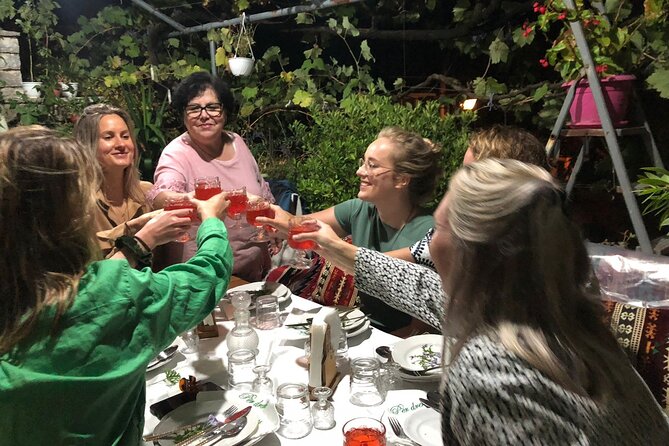
Once you arrive, the social part starts with a glass of raki produced by Marjeta’s husband, or one of the soft drinks she makes. The drink gives everyone a chance to settle in and chat before the cooking begins. If you do not drink alcohol, a soft drink is available, and the minimum drinking age for alcohol is 18.
A few more Albania half-days to weigh up
- Walking Tour Baazar – The Argjiro Castle – Zekate house
★ 4.5 · 18 reviews - Cooking Class
★ 4.5 · 12 reviews - Vegetarian Cooking Class @Teta Marjeta
★ 5.0 · 11 reviews
The menu: Qifqi, Osa, and Hasude
The menu is short, but that is a strength here. You focus on three named Gjirokastër dishes rather than racing through a long list of recipes.
Qifqi, a Gjirokastër specialty
Qifqi is the starter. It is made mainly with rice and is described as a dish found only in Gjirokastër. That makes it the most place-specific part of the meal, and the one I would pay closest attention to if you want a recipe that connects directly to the city.
The supplied details do not list every ingredient or cooking step, so you should expect Marjeta and the guide to explain those during the class. The important point is that you prepare it yourself, rather than simply sampling a finished local dish.
For food-focused visitors, Qifqi may be the best reason to choose this class. Osa and Hasude complete the meal, but Qifqi gives the menu a clear local identity.
Osa, the main dish
Osa is the main course. It is described as a kind of pasta combined with chicken, making it the heartier dish on the menu. You prepare it from scratch with the group, then eat it as part of the shared meal.
The name may be unfamiliar, which is exactly why a cooking class helps. You get to see how the dish comes together and can ask questions as you work. Since the recipe cards are included, you are not left trying to remember every step later.
The menu description places Osa after Qifqi, so expect the meal to move from the rice-based starter to the chicken and pasta main course. A seasonal salad prepared by Marjeta accompanies the dishes and adds a fresh side to the meal.
Same drive out, a completely different day:
- Hike Gamti Mountain with Bovilla lake view & canyon- From Tirana
★ 5.0 · 1,280 reviews - Day Trip to Saranda and Butrint National Park from Corfu
★ 4.2 · 847 reviews - Berat city UNESCO tour, the Castle & Belshi lake- From Tirana
★ 5.0 · 804 reviews - Walking Tour of Tirana
★ 5.0 · 646 reviews
Hasude, a traditional dessert
Hasude finishes the menu. It is listed as the dessert, and it is another traditional recipe you prepare during the class.
The details do not specify the exact ingredients or texture, so it is best to treat the dessert as a local surprise rather than arrive expecting a particular style of sweet. The useful part is that Hasude is included in the cooking session and in the recipe material you take home.
Together, the three recipes give you a clear beginning, middle, and end: Qifqi as the starter, Osa as the main course, and Hasude for dessert.
What the two-and-a-half-hour schedule feels like
The total duration is about 2 hours and 30 minutes. That is enough time for a relaxed class and meal, but not enough for a long culinary workshop with many separate dishes.
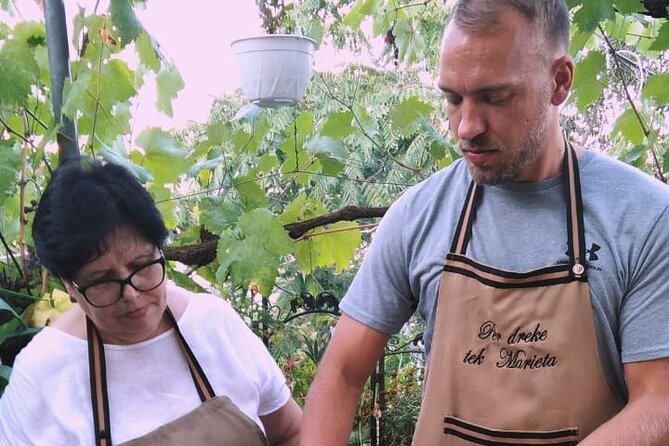
You first meet the host at the square, walk to the home, and have a welcome drink. The group then prepares the three recipes, with Marjeta teaching her special versions and the local guide helping explain the process.
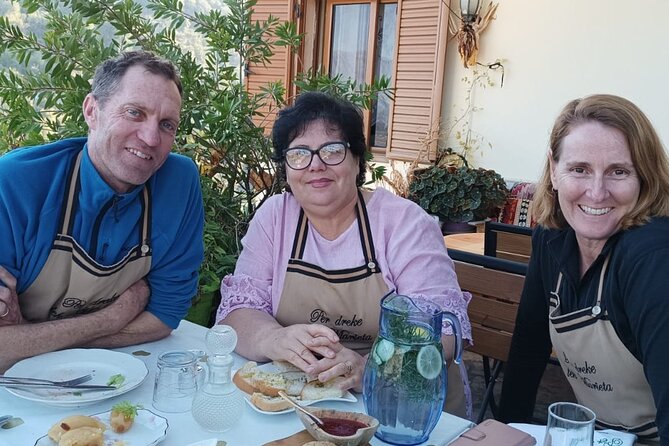
After the work is done, you sit down together to eat. The meal includes the food you prepared, Marjeta’s seasonal salad, and a complimentary glass of wine, raki, or a soft drink. The class ends back at the original meeting point.
That final detail is useful if you are planning the rest of your day. You are not being taken to a different part of town at the end. Still, because the activity includes both walking and a sit-down meal, I would avoid booking it immediately before an appointment or a tightly timed departure.
The class is offered in English. The presence of a guide and the mention of translator Besi suggest that the cooking instructions are supported for English-speaking participants, though the provided information does not say whether Besi leads every session.
Why the home and veranda setting matter
A home changes the tone. You are learning food in the place where it is made, with the host who has her own recipes and habits. That feels different from watching a chef perform at the front of a classroom.
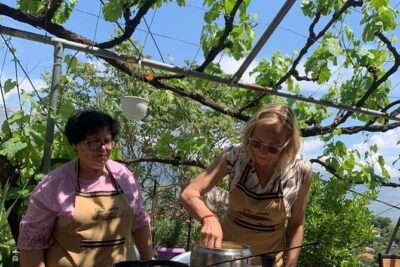
A review of the experience specifically describes cooking on a cute veranda with local ingredients. That detail is worth noting because the setting may be as memorable as the food. A veranda gives the group a place to work and talk together, rather than splitting everyone into separate stations.
The tradeoff is that a home setting may be less predictable than a purpose-built cooking school. The supplied information does not provide details about kitchen layout, seating, or accessibility. If those points matter to you, ask the provider before booking.
The group size helps keep the home atmosphere comfortable. With a maximum of 10 people, you should have a better chance to follow the instructions and speak with the guide than you would in a large class. It can still feel lively if the class fills, but it is not designed as a private lesson.
Drinks, food, and the social side
Raki is part of the welcome, and you may receive raki made by Marjeta’s husband. That gives the opening drink a direct connection to the household rather than making it just another paid add-on.
The class also includes beverages with the meal. You can choose wine, raki, or a soft drink, and the information also mentions drinks made by Marjeta. Nonalcoholic choices are therefore built into the experience, not treated as an afterthought.
The minimum drinking age is 18. If you are under 18, the listed soft drink options are the practical choice. The tour price includes the food and drinks described, so you should not need to budget separately for the meal.
The social setting is a major part of the value. You begin by chatting with your group mates, cook together, and then share the finished dishes at the table. This suits you if you like food experiences that include conversation and local contact.
It may suit you less if you prefer to cook alone, move quickly, or spend the entire class focused on technical instruction. This is a meal and cultural visit as much as it is a lesson.
Is the $66.09 price good value?
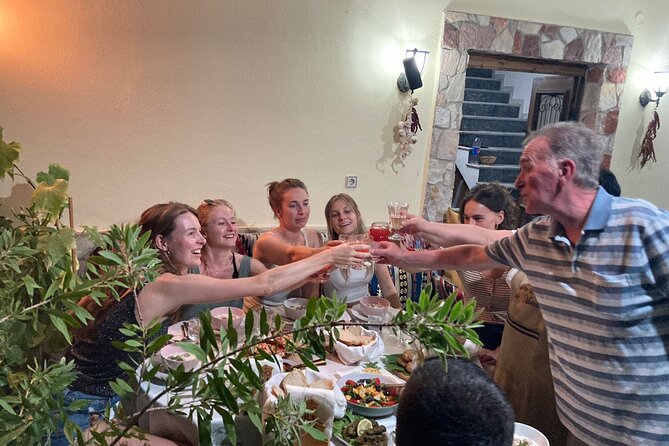
At $66.09 per person, the cost is more than simply buying a plate of Qifqi or Osa in town. You are paying for about two and a half hours, instruction, a home visit, three recipes, a salad, drinks, and the meal itself.
I think the price makes sense if you value the setting and the chance to prepare food yourself. The recipe cards add lasting value because you can repeat the dishes at home. You also get a small-group format, with no more than 10 people, rather than a large food demonstration.
The calculation is less favorable if you mainly want to eat. A restaurant meal will usually take less time and may cost less, though it will not give you the same contact with Marjeta or the same practical knowledge.
The strongest value comes from the combination. You get a local menu, a private-home setting, a guide, drinks, and a shared meal in one booking. For a food-focused visit to Gjirokastër, that is a fair package.
The activity is booked an average of 37 days in advance. That does not guarantee it will sell out every day, but it is a useful planning signal. If your dates are fixed, booking early is sensible.
Who will enjoy this class most?
This is a good match for you if you want to:
- Learn dishes that are specifically linked to Gjirokastër.
- Meet a local cook in her home.
- Cook rather than only watch.
- Eat a complete meal during the activity.
- Take recipes home and use them again.
- Join a small group with English support.
- Add a relaxed food activity to a day of sightseeing.
Families should check the age details before booking if anyone plans to drink alcohol, since the minimum drinking age is 18. The supplied information does not state a minimum age for the activity itself.
Couples, solo visitors, and small groups can all fit the format. A solo visitor may find the shared table especially useful, while a group of friends can make the cooking session part of a relaxed afternoon together.
You should think twice if you need confirmed accessibility information, dislike home-based activities, or have strict dietary requirements. No details are provided about dietary substitutions, allergy handling, or physical access, so contact Experience Gjirokastra before paying if any of those issues affect your decision.
Practical details that can save you trouble
The meeting point is Sheshi Çerçiz Topulli 5, Gjirokastër 6001, Albania. You meet the host there, then walk to Marjeta’s home. The activity ends back at the same meeting point.
A mobile ticket is accepted, and confirmation is received at the time of booking. The experience is offered in English, which is helpful for following cooking instructions and learning the names of the dishes.
Food and beverages are included. The menu is Qifqi, Osa, Hasude, and a seasonal salad. The drink choice includes wine, raki, or a soft drink with the meal, plus a welcome raki or soft drink at the start.
Free cancellation is available if you cancel at least 24 hours before the local start time. Canceling less than 24 hours before the start, or making changes inside that window, does not qualify for a refund.
I would plan to arrive at the square a little early. The group walks onward, and the class is limited to 10 people, so a late arrival could be awkward even though the exact walking time is not given.
What the cooking results are like
The clearest practical benefit is that you do not leave with only a memory of the meal. You receive the recipes for the dishes you cooked, giving you a chance to make them again at home.
That matters because local food often disappears from memory once you return home. With Osa, Qifqi, and Hasude written down, you can turn the class into a repeatable part of your trip rather than a one-time tasting.
The food itself received strong marks in the available feedback. One detailed comment describes preparing three local dishes with wine and local ingredients, and specifically praises the welcoming atmosphere, the food, and the translator Besi. Another says the dishes tasted great and could be cooked at home.
I would still keep expectations realistic. The class teaches Marjeta’s special recipes, but the provided information does not give exact quantities or promise that every ingredient will be available in your local market. Recipe cards are helpful, but you may need to adapt slightly when cooking outside Albania.
Final call: should you book Prepare Osa with Teta Marjeta?
I would book this class if you want local food with a personal setting, not just another restaurant meal. The home visit, small group, Gjirokastër-specific recipes, included drinks, and take-home recipes make the $66.09 price reasonable for the right kind of visitor.
The best fit is someone who enjoys cooking, conversation, and a slow shared meal. It is also a smart choice if Qifqi interests you, since the dish is closely identified with Gjirokastër and is not an everyday international recipe.
Skip it if you have only a short window in the city, need guaranteed accessibility or dietary arrangements, or would rather spend your afternoon sightseeing. For everyone else, this is a warm, practical way to connect a meal with the people and home behind it.
FAQ
Where does the cooking class meet?
The meeting point is Sheshi Çerçiz Topulli 5, Gjirokastër 6001, Albania.
Where does the cooking class take place?
You meet the host at Çerçiz Topulli Square and walk to Teta Marjeta’s home for the class.
How long does the experience last?
The activity lasts approximately 2 hours and 30 minutes.
What dishes do you prepare?
You prepare Qifqi as the starter, Osa as the main dish, and Hasude as dessert. A seasonal salad prepared by Marjeta also accompanies the meal.
Are food and drinks included?
Yes. All food is included, along with beverages. The options include wine, raki, and soft drinks.
Is the class offered in English?
Yes. The experience is offered in English.
How many people can join?
The activity has a maximum of 10 travelers.
Can you cancel for a full refund?
Yes, if you cancel at least 24 hours before the experience start time. Cancellations or changes made less than 24 hours in advance are not accepted for a refund.
Just added around Albania
- Apollonia and Berat UNESCO tour from Tirana★ 5.0 · 3 reviews
- UNESCO heritage in Albania – 4 days★ 5.0 · 3 reviews
- Private Transfers from Tirana International Airport to Sarandë★ 4.5 · 3 reviews
- Transfers Tirana Airport – Sarande – Ksamil – Airport Tirana★ 4.5 · 3 reviews
- Berat 4×4 Off-Road and Vineyard Wine Tasting★ 5.0 · 3 reviews
- N. Macedonia &Kosovo; Semi – Private Tour; Tour Leader & Car★ 4.8 · 3 reviews
- Cultural Tour in Tirana including House of Leaves★ 5.0 · 3 reviews
- SOTIRA WATERFALL HIKING/TREKKING from Berat by 1001 Albanian Adventures★ 5.0 · 3 reviews
Gjirokastër Tours, compared.
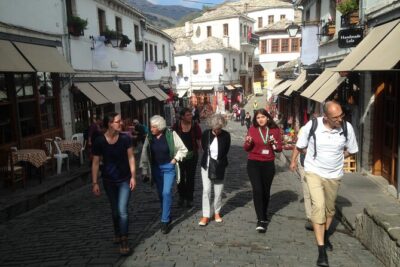
Walking Tour Baazar – The Argjiro Castle – Zekate house
Read our review →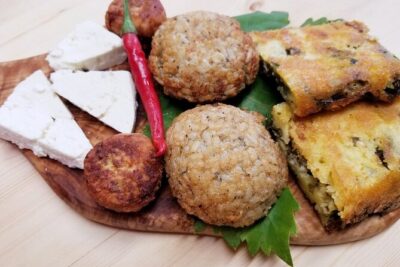
Walking Tour “The Old Bazaar, Cfake, Dunavat, Ali Pasha Bridge”
Read our review →
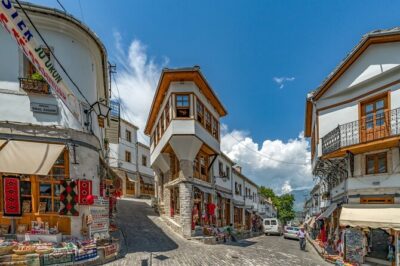
Gjirokaster walking Tour The Old Baazar, Cfake, Dunavat, Ali Pasha Bridge
Read our review →Browse the lists this tour appears in