
Reviewed · GJIROKASTËR TOURS
Walking Tour “The Old Bazaar, Cfake, Dunavat, Ali Pasha Bridge”
Gjirokaster’s best stories are not all inside its famous castle. This three-hour walk takes you below the fortress, through the old neighborhoods of the Old Bazaar and Cfaka, then toward the remains of the aqueduct built for Ali Pasha Tepelena. Local guides such as Arli, Viki, Marco, and Mario bring the streets to life with history, humor, and stories about present-day Gjirokaster.
I like the route for two clear reasons: it shows you the part of town many visitors skip, and it connects old homes, a Bektashi tekke, hills, sheep, and stone bridges into one walk. I also like that guides can adjust the pace and add local detail, rather than simply reciting dates.
The catch is the footing. The route includes uneven, uncomfortable terrain, and reaching the bridge itself may not always be practical. Wear sturdy sneakers, and think carefully before booking if rough walking is difficult for you.
Key points to know before you go
- A quieter side of Gjirokaster: Walk beneath the castle through old neighborhoods rather than spending the whole morning on the main tourist streets.
- A local guide makes the difference: Arli, Viki, Marco, Mario, and other English-speaking guides explain both town history and daily life.
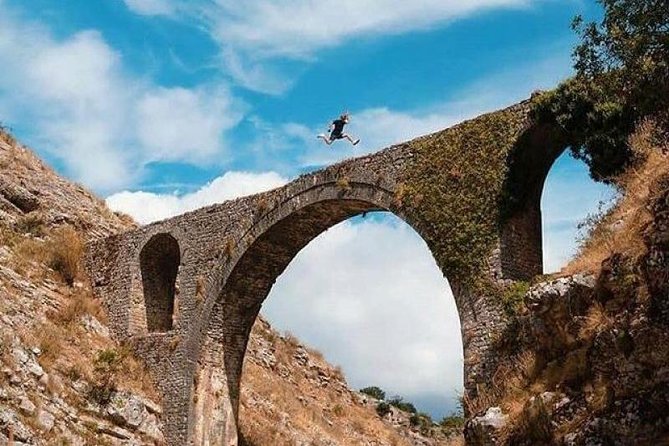
- Ali Pasha Bridge is the goal: The stone bridge is part of an aqueduct built more than 200 years ago to carry water to the castle.
- Three hours on foot: The tour begins at 9:30 am at Experience Gjirokastra and ends back at the meeting point.
- Bring proper shoes: Cobblestones, slopes, and rough paths are part of the experience, not a minor detail.
- Good value at $18.06: For a small-cost, guide-led introduction to lesser-seen Gjirokaster, the price is reasonable, especially if you enjoy local context more than a quick photo stop.
Why this walk gets below the castle walls
Gjirokaster is often approached as a castle town. You climb toward the fortress, cross the stone streets of the center, and look out over the rooftops. This walk changes the angle. Instead of heading straight for the main sights, you move along the neighborhoods beneath the castle walls, where the town feels less arranged for sightseeing.
That matters because Gjirokaster is not just a collection of monuments. It is also a place of old homes, working streets, religious buildings, hillside paths, and views that make sense only when you understand how the town was built. A guide helps connect those pieces.
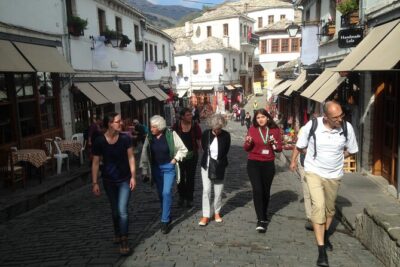
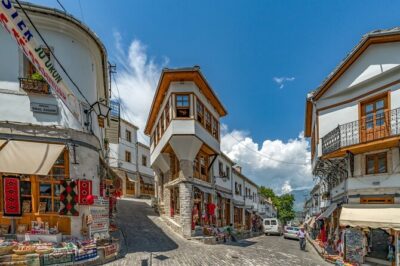
The tour begins at Cerciz Topulli Square in the center of the old town. From there, you head toward the Old Bazaar. The name can create the wrong picture. This is not a functioning bazaar filled with stalls and crowds. It is an old neighborhood, once the first settlement outside the castle walls, with stone lanes and some of the town’s oldest houses.
I like that the route starts here. You get your bearings in a familiar central spot, then quickly move into a quieter setting. The contrast is useful: you see how close the main square is to older residential quarters, but also how different the pace and character can feel.
More Market Tours in Albania
- Kruja castle, the old Bazaar & Sarisalltik- Departure from Tirana
★ 5.0 · 592 reviews - Kruja, Old Bazaar, Museum,Sari Saltik tour from Tirana
★ 4.5 · 33 reviews - Guided Tour to Kruja, Holy Mountain & Old Bazaar from Durres
★ 5.0 · 29 reviews
The Old Bazaar and its old stone houses
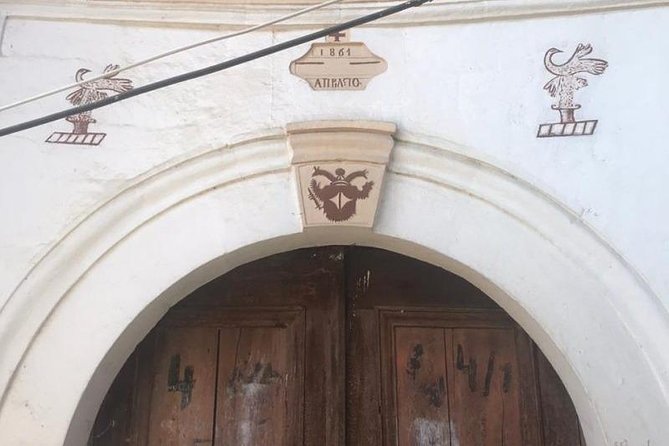
The Old Bazaar lies below the castle, and its strongest feature is not shopping. It is the built setting. Cobblestones, traditional houses, and the slope beneath the fortress give the neighborhood a sense of age without requiring a formal museum visit.
Your guide can explain how the neighborhood fits into Gjirokaster’s growth. The route description places it outside the castle walls, which helps you understand the town as a series of connected districts rather than one single old center. The castle dominates from above, while the houses and lanes below show how people lived around it.
This is also where a guide’s personal style matters most. A dry explanation of dates would miss much of the point. The best parts of this walk are the small links between architecture and daily life. Guides from Gjirokaster, including Viki, can add the perspective of someone who knows the town as home, not only as a historic site.
The neighborhood is not polished at every turn, and that is part of its value. You may see worn stone, uneven paving, and old buildings in different states of repair. If you want a smooth, carefully staged sightseeing route, this may feel rough around the edges. If you want to see how an old town actually functions, the imperfections make the walk more useful.
Crossing Zerzebili Bridge into Cfaka
After the Old Bazaar, the route passes over Zerzebili Bridge and continues into Cfaka, another old neighborhood. This transition gives the tour a good rhythm. You are not simply stopping at one monument after another. You are walking from one district to the next and seeing how the town changes as the path leads away from the central square.
Cfaka is known on this route for its old houses, some of which are classified as first-category monuments. That designation signals an especially important level of protection and historical value. You are not just looking at attractive stone buildings. You are seeing structures considered significant to Gjirokaster’s architectural heritage.
The practical point is that the experience depends on looking closely. The houses may not have large signs explaining every detail. Their value comes through their form, stonework, placement on the slope, and relationship to the street. I would listen carefully to the guide here, since the context will tell you what to notice.
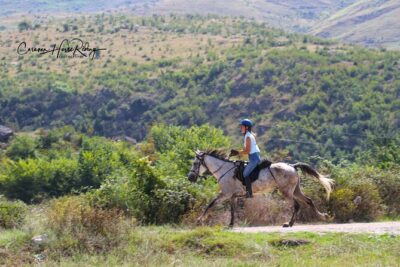
The route also gives you more open surroundings as you continue. The town begins to meet the hills, and the mix of old homes and countryside becomes one of the walk’s strongest features. You might see sheep on the hills, an ordinary scene that gives the area a lived-in quality. It is a welcome change from a standard old-town circuit focused only on grand buildings.
The Bektashi tekke and a different side of local culture
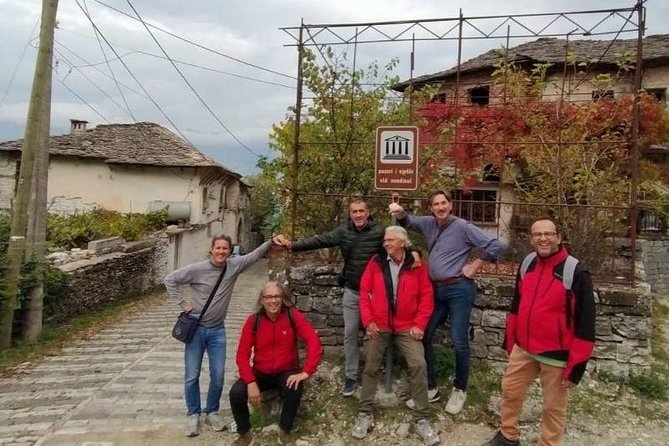
One of the stops in Cfaka is a tekke associated with the Bektashi Order. This adds a religious and cultural layer to the walk without turning it into a single-theme tour.
The tekke is important because it shows that Gjirokaster’s story is not limited to military walls and Ottoman-era houses. Religious traditions helped shape the town as well. A guide can explain the place in context and help you understand why it belongs in a walk through the old neighborhoods.
You should expect the experience here to depend on the guide’s explanation rather than on a large set of displayed objects. This is a place where questions are useful. If you are curious about local religious life, ask your guide to explain the Bektashi connection and how the tekke fits into the area.
The tour is offered in English, and the feedback about the guides points to clear, lively storytelling. One Dutch-language response specifically praised a young local guide who used humor and personal experience to make the information engaging. That suggests the tone is conversational rather than formal, which suits a neighborhood walk.
A few more Albania half-days to weigh up
- 5-hour Tour Kruja Castle and Old Bazaar from Tirana
★ 4.5 · 16 reviews - From Tirana and Durres, Kruja Old Bazaar and Castle Day Tour
★ 4.0 · 7 reviews
Reaching the Ali Pasha Bridge
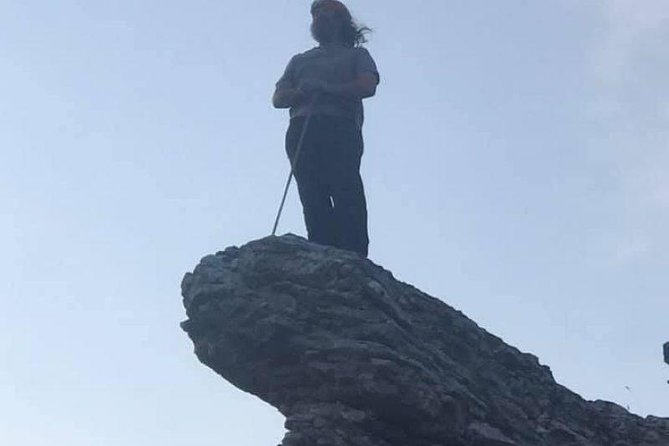
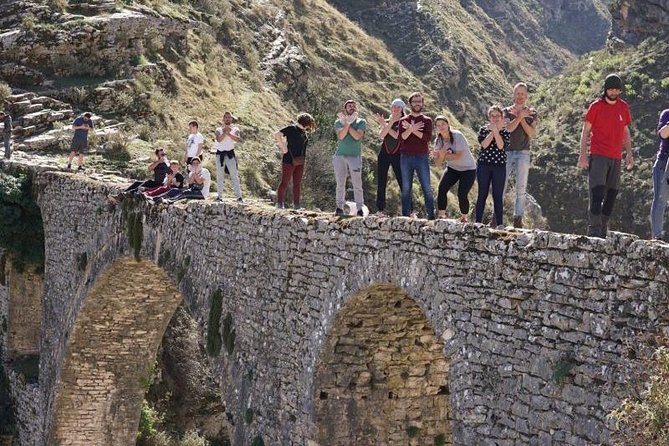
The walk’s final destination is Ali Pasha Bridge, a surviving section of the aqueduct built more than 200 years ago by Ali Pasha Tepelena. Its purpose was practical: to bring water to the castle.
That function gives the bridge more meaning than a simple photo stop. The castle needed a reliable water supply, and the aqueduct shows the work required to support a fortress town. The bridge is a physical reminder that Gjirokaster’s hilltop setting shaped daily needs as much as it shaped defense and architecture.
You should keep your expectations realistic. The route description says the ground is not comfortable, and one guide adjusted the outing because the path to the actual bridge was difficult. Instead, the group reached neighborhoods with a spectacular view of the bridge and learned about its importance from there.
This is not a flaw in the same way a missed attraction on a bus tour would be. It is a safety and terrain issue. Still, you should know that the advertised destination may be experienced from a viewpoint rather than by standing directly on the structure. The guide’s judgment matters here, especially on rough or slippery ground.
I like that this detail is made clear. A responsible walking tour should not force a group down a difficult path just to satisfy a route label. You may get a better view from a safer position, along with an explanation of how the aqueduct worked.
What the guides add to the experience
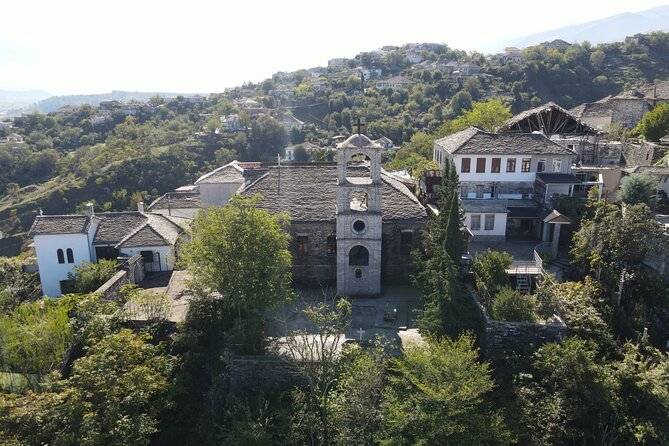
This tour is built around the guide. The route itself is appealing, but old streets and stone buildings can blur together without someone to explain their meaning.
Arli is praised for explaining the neighborhoods and the bridge while leading the group through changing terrain. Viki is described as a local guide who could tailor the schedule to individual interests. Marco and Mario are credited with making the walk feel like time spent with well-informed friends, rather than a stiff lesson.
Those details tell you what to look for when you book. The guide’s local connection is a major part of the value. You are not paying $18.06 only for directions to a bridge. You are paying for interpretation, local stories, and the chance to ask questions as the town unfolds.
Guide assignments can change, so you should not assume that a particular person will lead your departure. Still, the named guides give you a sense of the style to expect: English-language explanations, personal knowledge of Gjirokaster, humor, and flexibility when the group has a special interest.
The group limit is 30 people. That is not necessarily a tiny walking group, so the experience may feel more like a standard guided outing if it fills. On a route through narrow streets, a larger group can also affect pace. At the same time, the guide-led format gives you more structure than trying to find the bridge alone.
The physical side of the three-hour route
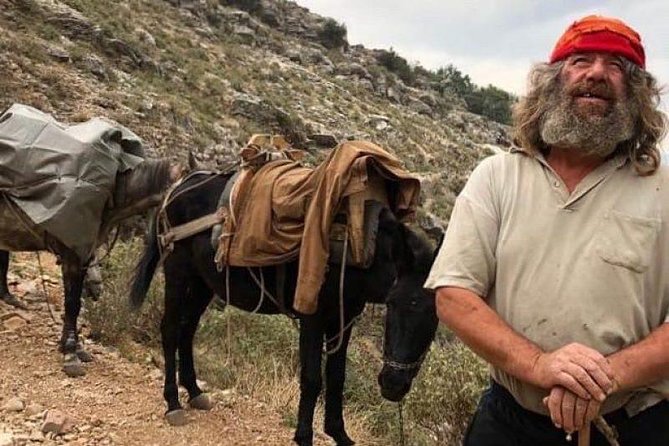
You should treat this as a real walking tour, not an easy stroll between flat city blocks. The route uses cobblestones, slopes, and terrain described as uncomfortable. Sneakers are the minimum sensible choice, and shoes with a firm sole will serve you better than thin casual footwear.
The physical challenge is not presented as extreme, but it is central to the experience. You may need to watch your step while also listening to the guide. If you have limited mobility, ask before booking, since the available information says most people can participate but does not promise a fully accessible route.
The tour begins at 9:30 am and lasts about three hours. That morning timing is useful in Gjirokaster, since it gives you the rest of the day for the castle, museums, food, or a slower return through the old town. It also means you should arrive ready to walk, rather than treating the meeting point as the start of a casual orientation.
The activity ends back at the meeting point. That makes planning easier, especially if you have arranged your day around the central old town.
Is $18.06 a fair price?
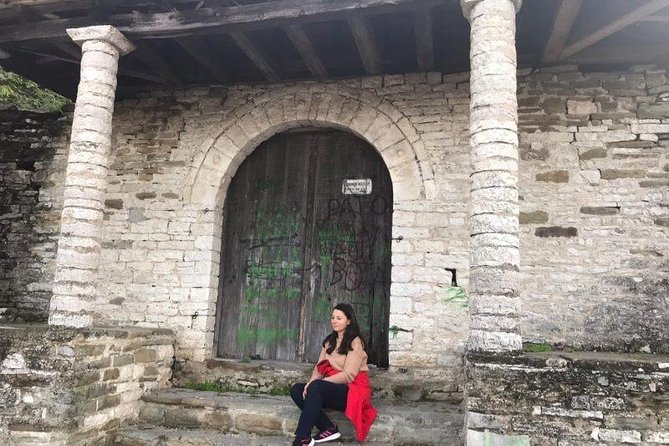
At $18.06 per person, this is a modestly priced guided experience. The value depends on how much you want from a guide.
If you only want to see the Ali Pasha Bridge, you may find the price less compelling, especially since rough terrain can mean viewing the bridge from a nearby neighborhood rather than reaching it directly. The bridge is not the whole experience, though. You are also paying for a three-hour route through the Old Bazaar and Cfaka, explanations of protected houses, the Bektashi tekke, and the aqueduct’s purpose.
I consider that good value for anyone who wants context. A self-guided walk can show you the same streets, but it may not explain which homes are important, why the neighborhoods developed where they did, or how the water system supported the castle.
The price also leaves room in your budget for other Gjirokaster sights. Since the guide is included and the activity uses a mobile ticket, the main cost is clear. Gratuities are not included, so plan to tip separately if the guide gives you a helpful and engaging morning.
Who should book this walk?
I would choose this experience if you have already seen the main center or want to go beyond the standard castle visit. It suits you especially well if you enjoy architecture, local history, religious culture, and ordinary hillside scenes as much as major monuments.
It is also a good fit for someone who likes to ask questions. The strongest part of the tour is the conversation with a local guide, not a long checklist of attractions. You can ask about the homes, the old neighborhoods, the bridge, or life in Gjirokaster today.
You may want a different activity if your priority is a gentle route, a guaranteed visit to the bridge itself, or a tightly controlled path. The terrain is the main limitation, and the final approach may be adjusted for safety.
Service animals are allowed, and the meeting point is near public transportation. Most people can participate, but the route’s uneven ground remains the key practical concern.
Booking, weather, and cancellation details
Confirmation is provided when you book. The experience is offered in English, starts at 9:30 am, and has a maximum group size of 30 people.
You can cancel up to 24 hours before the start time for a full refund. Changes or cancellations made less than 24 hours in advance are not accepted for a refund. The activity also depends on suitable weather and a minimum number of participants. If the provider cancels for either reason, you are offered another date or experience, or a full refund.
Should you book the Old Bazaar and Ali Pasha Bridge walk?
Book it if you want a less obvious Gjirokaster, a local guide, and a three-hour route that links old neighborhoods with the remains of a historic water system. The price is fair, the morning schedule is convenient, and the guides bring personal stories and humor that make the architecture easier to understand.
Skip it if rough paths are a serious problem or if you need to stand directly on the Ali Pasha Bridge. For everyone else, bring sturdy shoes and a curious mind. This walk is a useful companion to a castle visit because it shows how Gjirokaster lived below its walls.
FAQ
Where does the walking tour start?
It starts at Experience Gjirokastra, on Rruga Gjin Zenebisi in Gjirokaster, Albania.
What time does the tour begin?
The tour starts at 9:30 am.
How long does the experience last?
The walk takes approximately three hours.
Where does the tour end?
The activity ends back at the meeting point.
What language is the tour offered in?
The tour is offered in English.
Is the Ali Pasha Bridge always reached directly?
The route leads toward Ali Pasha Bridge, but the terrain on the final approach can be difficult. The guide may take you to a neighborhood with a strong view of the bridge and explain its historical importance from there.
How difficult is the walking?
You should expect cobblestones and uneven, uncomfortable terrain. Sneakers are recommended, and most people can participate.
What is included in the price?
A guide is included. Gratuities are not included.
Can I cancel for a full refund?
Yes. You can cancel at least 24 hours before the experience starts for a full refund. If poor weather or insufficient participation causes the provider to cancel, you are offered another date or experience, or a full refund.
More Walking Tours in Albania
- Walking Tour of Tirana
★ 5.0 · 646 reviews - Local food experience & walking tour of Tirana
★ 5.0 · 192 reviews - Berat Walking Tour
★ 5.0 · 86 reviews - Tirana Walking Tour: History, Culture &Gems by a Passionate Guide
★ 5.0 · 52 reviews
Just added around Albania
- Apollonia and Berat UNESCO tour from Tirana★ 5.0 · 3 reviews
- UNESCO heritage in Albania – 4 days★ 5.0 · 3 reviews
- Transfers Tirana Airport – Sarande – Ksamil – Airport Tirana★ 4.5 · 3 reviews
- Private Transfers from Tirana International Airport to Sarandë★ 4.5 · 3 reviews
- Berat 4×4 Off-Road and Vineyard Wine Tasting★ 5.0 · 3 reviews
- N. Macedonia &Kosovo; Semi – Private Tour; Tour Leader & Car★ 4.8 · 3 reviews
- Cultural Tour in Tirana including House of Leaves★ 5.0 · 3 reviews
- SOTIRA WATERFALL HIKING/TREKKING from Berat by 1001 Albanian Adventures★ 5.0 · 3 reviews
Gjirokastër Tours, compared.
Walking Tour Baazar – The Argjiro Castle – Zekate house
Read our review →
Gjirokaster walking Tour The Old Baazar, Cfake, Dunavat, Ali Pasha Bridge
Read our review →Browse the lists this tour appears in